
Dr Harsh Shah · Dr. Jivraj Mehta Hospital, Vasna, Ahmedabad
Tapping Book on WhatsApp will likely open the WhatsApp app on your phone.
Anal fissure care in Ahmedabad · for the tear that hurts with every stool and will not settle
Last updated: 03-Nov-2026
A sharp, burning pain during and after stool, with a streak of red blood on the paper, is usually an anal fissure. It is a small tear in the skin of the anal opening, and most tears settle with simple care.
Many people wait months and treat the pain with creams from a chemist. The tear keeps reopening because the muscle around it stays tight. This page explains how that cycle works, what really breaks it, and how to tell a fissure from piles or something that needs a different look.
Dr Harsh Shah is a surgeon of the digestive system. He treats the anal and rectal conditions that come with it, and he examines every patient himself.
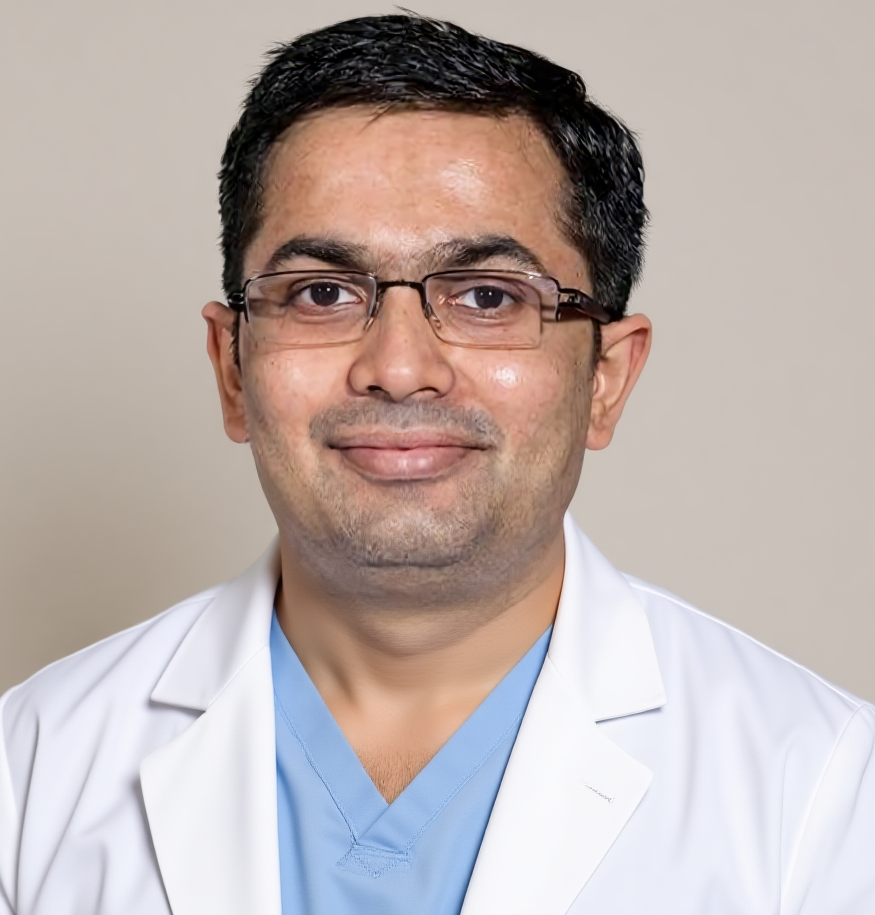
Dr Harsh Shah
MS, MCh (Surgical Gastroenterology), DrNB (Surgical Gastroenterology)
Registered with Gujarat Medical Council, Reg. No. G-38738
Gastro & Cancer Surgeon · Dr. Jivraj Mehta Hospital, Vasna, Ahmedabad
18 years of experience in surgery of the gut and the anal canal. He sees each patient himself, from the first visit to the last review.
He has 18 years of experience in surgery of the gut and the anal canal. The first visit is private and unhurried. You are asked about your stool habits, your food and what you have already tried, because these decide the plan as much as the examination does.
A fissure is a lengthwise tear in the skin just inside the anal opening. The skin there is rich in nerves, so even a small tear hurts out of proportion to its size.
| Step | What happens | Why it matters |
|---|---|---|
| 1. A hard stool tears the skin. | Sharp pain and a little bright blood. | The start of the problem. |
| 2. The inner muscle clamps shut. | The pain sets off a spasm that lasts for hours. | The tear is pulled apart and blood flow falls. |
| 3. You hold back the stool. | Fear of the next pain leads to constipation. | The next stool is harder, and tears the skin again. |
| 4. The tear does not heal. | After about six weeks it is called chronic. | A small skin tag and thickened edge may form. |
Treatment aims at one thing: break this loop, so the tear can close by itself.
The typical story is pain that peaks after the stool and can last for hours, with a thin streak of red blood on the paper.
Heavy bleeding that fills the bowl, weight loss, or a change in bowel habit that lasts is not typical of a fissure. Those signs need a fuller check.
Pain during stool points to a fissure. Bleeding that does not hurt, with a lump that comes out points more to piles. A swelling that throbs points to an abscess.
| What you notice | Most likely | What it needs |
|---|---|---|
| Sharp pain with stool, a streak of blood. | Fissure. | Examination and care to relax the muscle. |
| Blood dripping or spraying, a soft lump that comes out. | Piles. | Grading, then diet, medicine or a procedure. |
| A throbbing, hot, tender swelling. | Abscess. | Drainage without delay. |
| A boil that keeps discharging. | Fistula. | Examination, sometimes an MRI. |
| Blood with a new change in habit, or weight loss. | Needs a full check. | Colonoscopy or other tests. |
The names are easy to confuse, and a person can have more than one of these at once. If your problem sounds like piles or a fistula, the piles, fissure and fistula clinic page explains each.
Many tubes sold for “anal pain” only numb the skin. They do not relax the muscle, so the tear stays open once the numbness fades.
Always show the doctor the tubes you have used. It saves time and avoids repeating what has already failed.
The doctor asks about your stool habits, looks gently at the area, and decides if a full examination can be done in comfort that day.
Nobody is made to undergo a painful examination on the first day. If the pain is too sharp, the plan starts first and the full examination follows once the muscle has relaxed.
Soft, regular stool is the foundation of every fissure treatment. Without it, even an operation can fail.
| Habit | What to do |
|---|---|
| Water | Drink enough that the urine stays pale through the day. |
| Fibre | Add vegetables, fruit, whole grains and pulses. Increase slowly to avoid gas. |
| Stool softener | Use the one prescribed, at the same time each day. |
| Warm sitz bath | Sit in plain warm water for 10 minutes after each stool and twice more in the day. |
| Toilet time | Go when the urge comes. Do not strain or sit for long. |
| Cleaning | Pat dry or rinse. Avoid hard rubbing and scented wipes. |
Warm water relaxes the inner muscle for a while, which is why the sitz bath helps more than most people expect.
Prescribed ointments, such as diltiazem or glyceryl trinitrate, relax the inner muscle and bring blood back to the tear. They are used for a set course.
Most new fissures that are treated this way, with stool care, close without any operation.
A tear that has not healed after a full, correct course of care is a chronic fissure. For it, a small operation on the tight muscle is the usual next step.
| Your fissure | Usual advice |
|---|---|
| New, in the centre line. | Stool care, sitz baths and an ointment. |
| Chronic, in the centre line, after a full course. | Discuss lateral internal sphincterotomy. |
| Away from the centre line. | Look for another cause before any operation. |
| Very painful, cannot be examined. | Start care first, examine under short anaesthesia if needed. |
A fissure off to the side can come from other conditions. It is checked first, not operated on by routine.
The operation makes one small cut in the inner muscle, to lower its tension. The tear then gets the blood and the rest it needs to close.
Dr Harsh Shah does this operation himself. He does not use laser, and he explains each choice before you decide.
Every operation carries risk. The ones linked to this operation are few, and they will be explained to you in person before you consent.
Most patients feel clearly better within a week, and the wound is closed by about six weeks. Soft stool remains the key during this time.
| When | What to expect |
|---|---|
| First days | Mild soreness. Sitz baths, a stool softener and rest. |
| Around one week | Back to light work. Pain on stool much reduced. |
| Two to three weeks | Normal food and routine. A small amount of spotting can still occur. |
| About six weeks | The wound has closed. A review visit confirms it. |
Call the clinic if the pain suddenly worsens, bleeding is heavy, or a fever starts.
The plan changes a little with the person. Pregnancy, new mothers and children are common examples.
Blood and pain from the anus are not always a fissure. Some signs call for a wider check without waiting.
In such cases a colonoscopy or other tests may be advised. This is routine care, not a reason to be afraid.
Care in the clinic is by consultation. If an operation is advised, an estimate is given in writing before admission.
The cost of an operation depends on the hospital room and the anaesthesia. Many insurance plans cover day-care anal surgery, and the hospital desk helps with the paperwork. Bring your earlier prescriptions and any reports. For questions before you book, call +91-63555-64601.
Cashless at Dr. Jivraj Mehta Hospital
Fissure surgery is on Dr. Jivraj Mehta Hospital’s PPN package list, so it is cashless if your policy is with one of the four public-sector insurers: New India Assurance, Oriental Insurance, United India Insurance or National Insurance (GIPSA PPN). The hospital’s TPA desk handles the pre-authorisation. Bring your policy card, photo ID and reports. If you are insured elsewhere, insurance is still accepted and the desk applies for cashless approval under your policy.
It is a small lengthwise tear in the skin of the anal opening. It causes sharp pain during stool and a streak of red blood.
Most new fissures do, with soft stool, warm sitz baths and a prescribed ointment used for the full course of six to eight weeks.
The pain makes the inner muscle clamp shut. The spasm can last for hours and pulls the tear apart.
Lateral internal sphincterotomy is a short day-care operation. Slight leakage of gas can occur early, and the risks are explained to you before you consent.
Yes, if constipation returns. Keeping stool soft and regular is the surest protection.
Pain during stool points to a fissure. Bleeding that does not hurt, with a lump that comes out, points more to piles. Only an examination can say for sure.
See a doctor soon if there is heavy bleeding, weight loss, a change in bowel habit after 40, or a tear that does not heal.
Yes, for policyholders of New India Assurance, Oriental Insurance, United India Insurance and National Insurance, because it is a PPN package operation. The hospital's TPA desk handles pre-authorisation. With other insurers, the desk applies for cashless approval under your policy.
Dr Harsh Shah — Dr. Jivraj Mehta Hospital, Vasna, Ahmedabad
Dr. Jivraj Mehta Hospital, Dr Jivraj Mehta Marg, Vasna, Ahmedabad 380007.
Consultations, review of reports and scans, operations and follow-up. OPD Monday to Saturday, 9 am to 5 pm.
Appointments: +91-63555-64601 · +91-63590-11009 · Hospital 079-2663 6363
Directions to the hospital · WhatsApp +91-63555-64601
Has the pain after stool lasted more than a few weeks? Bring any earlier prescription or report when you come. The visit then goes to the plan and not to repeat questions. Call +91-63555-64601 · Ask on WhatsApp
Tapping Book on WhatsApp will likely open the WhatsApp app on your phone.
Swasth Parivar: every week, practical advice on recovery, diet and warning signs. No advertising. Stop any time.
Your number is used for these updates and for the clinic to reach you. It is never sold or passed on. To stop, reply STOP on WhatsApp.