

WhatsApp

Desmoid Found on the Scan? What a Surgeon Weighs First

Dr. Jivraj Mehta Hospital · Vasna, Ahmedabad

Tapping Book on WhatsApp will likely open the WhatsApp app on your phone.

Desmoid tumour surgeon in Ahmedabad · Dr. Jivraj Mehta Hospital, Vasna, Ahmedabad

Last updated: 27-Oct-2026

A desmoid tumour does not spread to distant organs, but it can grow into its neighbours. For many people the first step is careful watching, not an operation.

A report that says “desmoid fibromatosis” or “aggressive fibromatosis” sounds alarming. It is a rare, firm growth that arises from the tissue which holds muscles and organs together. It is not a usual cancer, yet it behaves in its own awkward way. This page explains when watching is safe, when an operation helps, what the other options are, and what to ask before you agree to a plan. Our page on retroperitoneal sarcoma covers a related group of deep belly tumours.

About the surgeon

Dr Harsh Shah is a gut and cancer surgeon. He operates on the belly wall, the bowel and the deep tissues behind it, where many desmoid tumours sit.
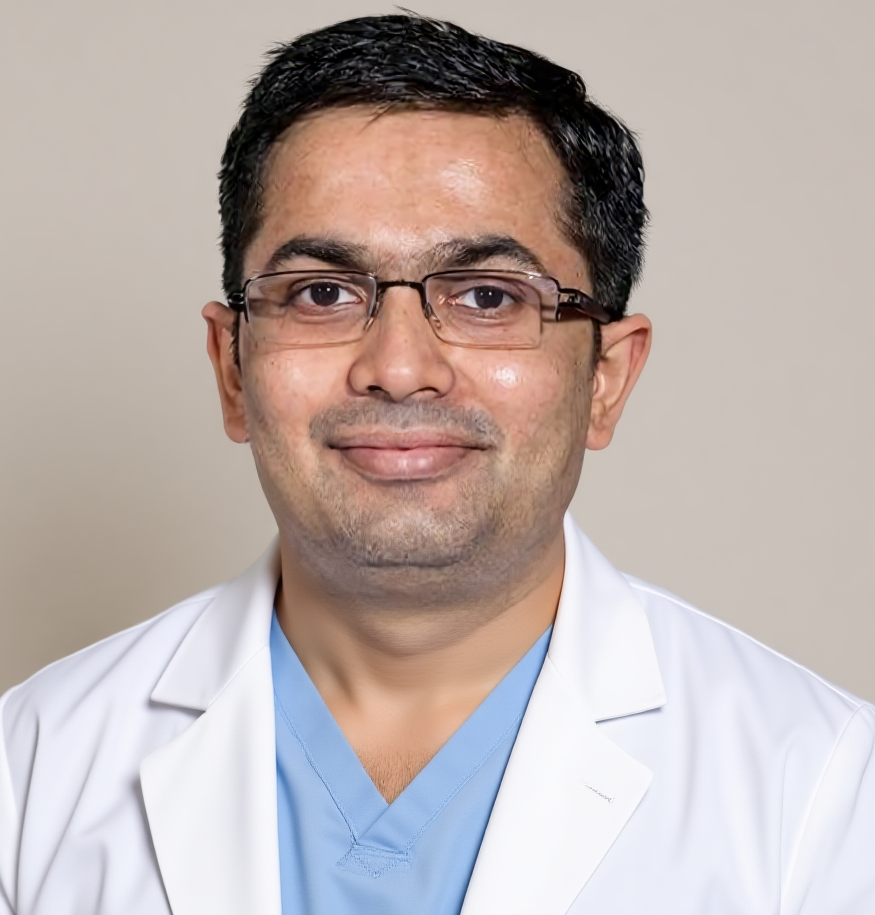
Dr Harsh Shah, desmoid tumour surgeon, Ahmedabad
Dr Harsh Shah — MS, MCh (Surgical Gastroenterology), DrNB (Surgical Gastroenterology).

Dr Harsh Shah. He trained at Maulana Azad Medical College and GB Pant Hospital in Delhi. His work is cancer and major surgery of the food pipe, stomach, liver, pancreas, gallbladder and bowel. He operates by the open and 3D HD laparoscopic routes. You see the same surgeon from the first visit to the last follow-up.

Dr Harsh Shah
MS, MCh (Surgical Gastroenterology), DrNB (Surgical Gastroenterology)
Registered with Gujarat Medical Council, Reg. No. G-38738
Gastro, Cancer & Laparoscopic Surgeon · Dr. Jivraj Mehta Hospital, Vasna, Ahmedabad

Google rating 4.94 from 18 reviews at Dr. Jivraj Mehta Hospital, Vasna, Ahmedabad.

Patients are first seen at Dr. Jivraj Mehta Hospital, Vasna in Ahmedabad, and operations are done at Dr. Jivraj Mehta Hospital, Vasna, Ahmedabad. A desmoid case calls for a radiologist, a pathologist and a medical oncologist alongside the surgeon. Radiation and genetic advice are added when needed.

What a desmoid tumour is

A desmoid is a growth of fibrous tissue. It does not send cells to the lungs or liver, but it can press on and invade nearby structures.

Where desmoid tumours arise and what each site means
SiteCommon settingWhat shapes the plan
Belly wall.After pregnancy or after an earlier belly operation, or with no clear cause.Size and the amount of muscle involved.
Inside the belly, in the bowel mesentery.Sometimes linked to an inherited polyp syndrome.Closeness to the main bowel blood vessels.
Limbs, shoulder or chest wall.Often with no clear cause.Nerves, vessels and function of the limb.

The tumour may stay the same size for years. In some people it shrinks without treatment. In others it grows steadily. That unpredictable course is the reason a plan must be built for each person.

Signs that call for a scan

Many desmoid tumours cause no pain. They are noticed as a firm lump or found on a scan done for another reason.

  • A firm lump in the belly wall, often near an old scar.
  • A dull ache or a feeling of fullness in the belly.
  • Blockage symptoms such as vomiting, bloating or constipation.
  • Swelling or stiffness of a limb or a shoulder.
  • A family history of bowel polyps or bowel cancer at a young age.

A lump that grows after pregnancy or surgery should be examined, not just watched at home.

Tests that decide the plan

A good work-up answers three questions. What is the growth? How far has it reached? Is it growing, or has it settled?

  1. MRI of the area. It shows the size, the shape and the relation to muscles, vessels and bowel.
  2. CT scan of the belly and chest. It maps a tumour inside the belly and its blood vessels.
  3. Biopsy. A needle sample confirms the diagnosis and rules out a true sarcoma.
  4. Gene tests on the tissue. They support the diagnosis in difficult cases.
  5. Colonoscopy and family review. They look for an inherited polyp syndrome when the tumour is inside the belly.
  6. A repeat scan after a few months. It shows whether the tumour is growing.

Watching first: when it is the right care

For many patients, a planned period of scans without treatment is the safest start. It spares the patient an operation that the tumour may not need.

Watching is not doing nothing. It is a set schedule of scans and examinations, with clear signs that would change the plan. Surgery that is done too early can leave a scar, and the tumour can grow back in the same place.

What tips the plan towards treatment
What is seenWhat it may mean
Steady growth on repeat scans.Treatment is likely to be needed.
Pain or loss of function.The tumour is pressing on something that matters.
Narrowing of the bowel or a blocked vessel.Treatment is needed sooner.
No change over several scans.Watching can safely continue.

The options, side by side

Several treatments exist for desmoid tumours. The right one depends on the site, the growth pattern and the symptoms.

  • Active watching. Scheduled scans and visits, with treatment started only if it grows or causes trouble.
  • Drug treatment. Tablets that slow the tumour, and in some patients low-dose chemotherapy. Newer targeted drugs are also used. The medical oncologist guides the choice.
  • Radiation. Used for selected sites, mostly in the limbs and the chest wall.
  • Freezing or heating the tumour. A radiologist treats small tumours through a needle in selected patients.
  • Surgery. Removal of the tumour with a margin of healthy tissue, when it can be done safely.

Often two of these are combined. Drugs may come first to shrink a tumour, so that a smaller operation becomes possible.

When surgery is the better choice

Surgery suits a tumour that can be removed completely without damaging an organ or a main vessel. Site matters more than size.

A tumour in the belly wall is usually the most suitable for an operation. The surgeon removes it with a rim of normal tissue, then rebuilds the wall. A tumour in the bowel mesentery is far more delicate, because it lies close to the vessels that feed the gut.

How the site affects the surgical plan
SiteSurgical consideration
Belly wall.Removal with a margin, and repair with mesh or the patient’s own tissue.
Mesentery near the main vessels.Surgery may risk the blood supply to the gut. Drugs or watching are often preferred.
Mesentery away from the main vessels.Bowel can be removed together with the tumour, when enough remains.
Behind the belly lining.Planning follows the approach used for deep belly tumours.

Removing too much bowel can leave a person unable to absorb food. This risk is weighed before every mesenteric operation.

Rebuilding the belly wall

After a belly-wall desmoid is removed, the gap must be closed in a way that stays strong. A weak repair risks a hernia.

  • Mesh repair across the gap, placed in the correct layer.
  • Muscle release to bring the edges together, when the gap is large.
  • Planned skin cover when skin has to be removed with the tumour.
  • Care of the old scar when the tumour arose in it.

The aim is to remove the growth and leave a wall that can bear everyday strain.

Inherited polyp syndromes

Some desmoid tumours inside the belly occur in families with a gene change that also causes bowel polyps. This changes the whole plan.

  • A colonoscopy checks for polyps, which can turn into cancer if left.
  • Genetic counselling is offered to the patient and to close relatives.
  • Any bowel operation is planned with the polyps in mind, since surgery can trigger a desmoid.
  • Relatives who carry the gene are screened on a set schedule.

Our page on inherited bowel cancer syndromes explains this group.

Keyhole or open surgery

Both methods aim to remove the tumour completely. The choice depends on the site, the size and earlier operations, not on fashion.

How the approach is chosen
FactorHow it affects the choice
Small tumour inside the belly, away from vessels.Keyhole surgery can be suitable.
Large tumour or one in the belly wall.An open operation gives clear access and a firm repair.
Scar tissue from earlier operations.Keyhole access may be harder.

If the keyhole route proves unsafe during the operation, the surgeon changes to an open one. That is a safe decision and not a failure.

How a plan is made here

Every case is looked at by the tumour board before a date is fixed. The question is simple: what is the least a patient needs for the safest result?

  1. First visit. Dr Shah takes the history, examines you and reads each report himself.
  2. Gaps filled. A missing MRI, biopsy or slide review is arranged first.
  3. Tumour board. The surgeon, medical oncologist, radiologist and pathologist agree the order of care.
  4. Family meeting. The plan is explained in plain words, with options and risks.
  5. After treatment. The reports are reviewed with you, and the next step is decided.

Getting ready for surgery

A patient who is strong, well nourished and free of infection recovers better. When time allows, a few weeks of preparation are worthwhile.

  • Protein-rich food and a dietitian’s advice.
  • Control of sugar, blood pressure and lung problems.
  • Stopping smoking, which affects wound healing.
  • Breathing and walking exercises before the operation.
  • A review of all medicines, including blood thinners and herbal products.

The risks, said plainly

Every operation carries risks. Yours depend on the site, your age and the extent of the surgery, and will be discussed in person before you consent.

  • The tumour coming back, which is the main reason surgery is chosen with care.
  • Bleeding, which is why vessels near the tumour are controlled first.
  • Hernia or weakness of the belly wall after a large repair.
  • Loss of bowel length if a mesenteric tumour needs bowel to be removed.
  • Infection of the wound or inside the belly.
  • Clots in the legs or lungs. Early walking and blood thinners lower this.

Recovery and follow-up

Most patients walk the day after surgery and eat within a few days. Follow-up scans continue for years, because a desmoid can return.

The usual path after surgery
WhenWhat happens
First days.Careful monitoring, walking, light fluids and then food, and drains if placed.
Going home.Small meals, wound care, a belly binder if advised, medicines and a review visit.
Some weeks later.The slide report is reviewed, with attention to the margin. Further treatment is planned if advised.
First two years.Examination and scans at set gaps.
Following years.Scans at longer gaps.

Keep every report and the final slide result. They tell any future doctor what was found and what was done.

Living with a desmoid tumour

Many people live a normal life with a desmoid that is being watched. Knowing what to report keeps that safe.

  • Report any new pain, a growing lump or a change in bowel habit.
  • Keep every scan appointment, even when you feel well.
  • Tell the doctor about pregnancy plans, since hormones can affect these tumours.
  • Ask before taking hormone tablets or injections.
  • Discuss any planned belly operation with your surgeon first.

When a second opinion helps

A second opinion is most useful before treatment starts, or when the advice seems rushed. It is also useful when the diagnosis rests on a small biopsy.

Signs that a second look would help
What you noticeWhy it matters
Advised an urgent operation, with no period of watching discussed.Many tumours can be watched safely first.
Told it is a cancer, but the slide report says desmoid.The treatment differs from a true sarcoma.
Told that nothing can be done.Drug and other options may still exist.
A tumour in the belly with no polyp check.An inherited syndrome should be looked for.
Advised surgery near the main bowel vessels.Risks to the gut’s blood supply must be explained.

A second opinion that agrees with your plan is not wasted. Bring the scan images on a disc, the slide report and all prescriptions.

Questions to ask any surgeon

  1. Is the diagnosis certain, and who reviewed the slides?
  2. Is it safe to watch first, and what would change that?
  3. Has a tumour board seen my case?
  4. Would drugs or radiation be better than an operation?
  5. How will the wall or the bowel be protected?
  6. What are the chances of it coming back, and what then?
  7. What does the follow-up schedule look like?

What patients and families have said

★★★★★

“Dr. Harsh performed my wife’s gallbladder surgery and has been a thorough professional. He truly assuaged our concerns and treated us with great care. I have never met a surgeon who is consistently upbeat, and that makes a real difference to families whose loved ones are undergoing a surgical procedure.”

— Gaurav Roy, Google review

★★★★★

“Precise and excellent surgical operation done by Dr.Harsh Shah, I really appreciate their consultation and guidance.”

— bikash tarafdar, Google review

★★★★★

“Dr harsh operated my sister for liver cancer .we came for follow up .Now she is good. Thank u so much sir”

— Natu Vadalia, Google review

Reviews are reproduced exactly as written on Google. They speak about Dr Harsh Shah’s care in GI surgery, and do not name desmoid tumours.

From first visit to follow-up

  1. First consultation. At Dr. Jivraj Mehta Hospital, Vasna, with every report and scan disc.
  2. Completing the tests. An MRI, a biopsy or a slide review, if anything is missing.
  3. Tumour board. A written plan follows, which may begin with watching.
  4. Treatment. Surgery at Dr. Jivraj Mehta Hospital, Vasna, Ahmedabad, or another route if advised.
  5. Drugs or radiation, if advised. Given with the medical oncologist, close to home when possible.
  6. Follow-up. Regular checks, and a clear plan if anything changes.

Cost, insurance and admission

The cost depends on the operation, the hospital room and the number of days in hospital. A written estimate is given before admission.

Dr. Jivraj Mehta Hospital, Vasna, Ahmedabad, works with the major insurers and offers cashless admission. The insurance desk handles pre-authorisation. On admission, bring the scan reports and images, the slide report, your medicines with doses, the insurance card and an identity proof. For questions before booking, call +91-63555-64601.

Frequently asked questions

Does a desmoid tumour always need an operation?

No. Many are watched with scheduled scans first. Treatment is started if the tumour grows, causes pain or presses on something important.

Is a desmoid tumour cancer?

It is not a usual cancer, because it does not spread to distant organs. It can still grow into nearby tissue, and it needs expert care.

Can a desmoid tumour come back after surgery?

Yes, it can return in the same area, even after complete removal. This is why the site, the margin and the timing of surgery are chosen with care.

Are drugs an alternative to surgery?

For some tumours, yes. Tablets, low-dose chemotherapy or newer targeted drugs can slow or shrink a desmoid. The medical oncologist and surgeon decide together.

Is a belly-wall desmoid easier to operate than one inside the belly?

Usually yes. A belly-wall tumour can be removed with a margin and the wall repaired. One near the main bowel vessels needs far more caution.

Should family members be checked?

If an inherited polyp syndrome is found, yes. Close relatives are offered genetic counselling and a colonoscopy schedule.

How long is the hospital stay?

Many patients go home within about a week after a belly-wall operation if recovery is smooth. A bowel operation may need longer.

Where Dr Harsh Shah sees and operates

Dr. Jivraj Mehta Hospital, Vasna, Ahmedabad
Dr. Jivraj Mehta Hospital, Dr Jivraj Mehta Marg, Vasna, Ahmedabad 380007.
Operations, endoscopic procedures and hospital stay.
Google: Dr Harsh Shah · 4.94 · 18 reviews
Directions to Dr. Jivraj Mehta Hospital, Vasna · WhatsApp +91-63555-64601

Families come to Ahmedabad from across Gujarat, including Gandhinagar, Mehsana, Banaskantha, Nadiad, Anand, Bhavnagar, Rajkot, Jamnagar and Kutch, and from southern Rajasthan and western Madhya Pradesh.

Told you have a desmoid tumour, or a growth that may be one? Send the MRI or CT report, the scan images on a disc and the biopsy slide report. Dr Shah reads them before you arrive, so the visit goes to the plan and not to repeat tests. Call +91-63555-64601 · Bring reports to the visit

Tapping Book on WhatsApp will likely open the WhatsApp app on your phone.

Get health updates from Dr Harsh Shah on WhatsApp

Swasth Parivar: every week, practical advice on recovery, diet and warning signs. No advertising. Stop any time.

Your number is used for these updates and for the clinic to reach you. It is never sold or passed on. To stop, reply STOP on WhatsApp.

Dr Harsh Shah, Gastro, Cancer & Laparoscopic Surgeon, Ahmedabad
Privacy Overview

This website uses cookies so that we can provide you with the best user experience possible. Cookie information is stored in your browser and performs functions such as recognising you when you return to our website and helping our team to understand which sections of the website you find most interesting and useful.