

WhatsApp

Peritoneal Cancer Surgery: Who Is a Candidate?

Dr. Jivraj Mehta Hospital · Vasna, Ahmedabad

Tapping Book on WhatsApp will likely open the WhatsApp app on your phone.

Peritoneal surface cancer surgeon in Ahmedabad · Dr. Jivraj Mehta Hospital, Vasna, Ahmedabad

Last updated: 25-Oct-2026

Cancer on the lining of the belly can sometimes be removed with a very long operation. That operation helps only a small, well-chosen group. Choosing the right patient is the real skill.

A scan that says “deposits on the peritoneum” often leads to one of two messages. Some families hear that nothing can be done. Others are urged toward a large operation at once. Neither is a safe way to decide. This page explains who is a candidate, who is not, and how Dr Shah makes that call. Our decision page on cytoreduction and HIPEC covers the operation itself in more detail.

About the surgeon

Dr Harsh Shah is a surgeon who trained in gastrointestinal surgery. Over 18 years he has performed major operations on the bowel, stomach, liver, pancreas and belly lining.
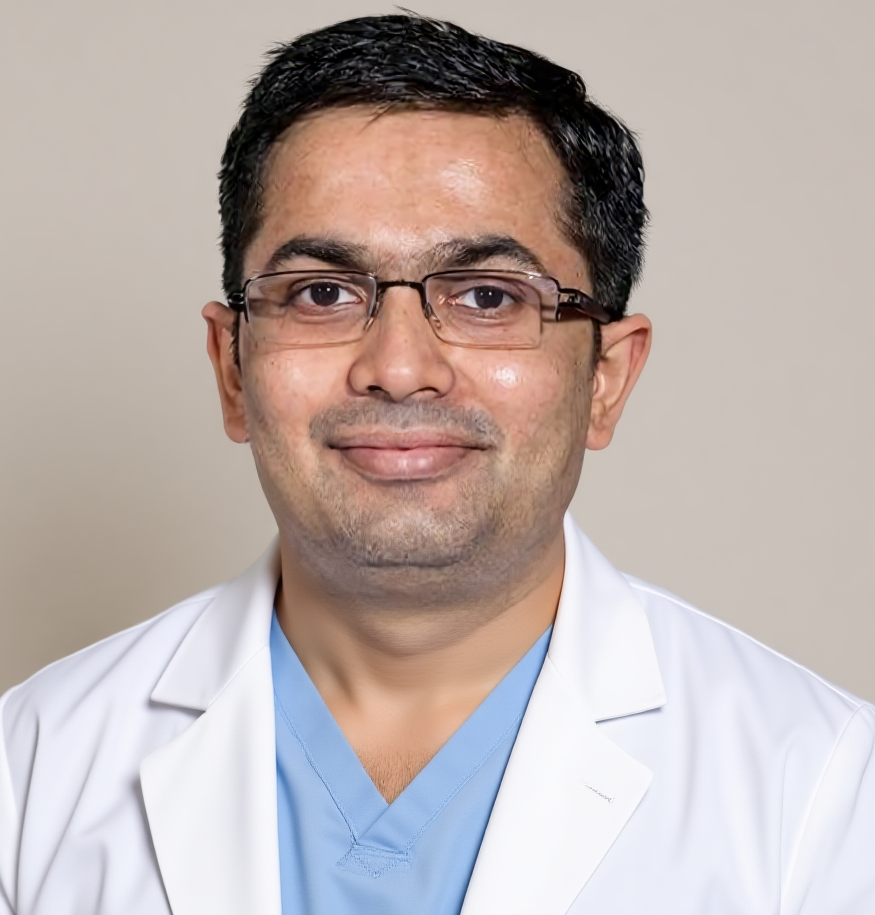
Dr Harsh Shah, peritoneal surface cancer surgeon, Ahmedabad
Dr Harsh Shah — MS, MCh (Surgical Gastroenterology), DrNB (Surgical Gastroenterology).

Dr Harsh Shah. He trained at Maulana Azad Medical College and GB Pant Hospital in Delhi. His work is cancer and major surgery of the food pipe, stomach, liver, pancreas, gallbladder and bowel. He operates by the open and 3D HD laparoscopic routes. You see the same surgeon from the first visit to the last follow-up.

Dr Harsh Shah
MS, MCh (Surgical Gastroenterology), DrNB (Surgical Gastroenterology)
Registered with Gujarat Medical Council, Reg. No. G-38738
Gastro, Cancer & Laparoscopic Surgeon · Dr. Jivraj Mehta Hospital, Vasna, Ahmedabad

Google rating 4.94 from 18 reviews at Dr. Jivraj Mehta Hospital, Vasna, Ahmedabad.

Outpatient visits are at Dr. Jivraj Mehta Hospital, Vasna in Ahmedabad. Operations are at Dr. Jivraj Mehta Hospital, Vasna, Ahmedabad. Skill cannot be proved on a web page, so the method is laid out below. Compare it with any other advice you have been given.

What peritoneal surface cancer means

The peritoneum is the thin lining that covers the inside of the belly and the organs in it. Cancer can spread onto it from the bowel, stomach or ovary, or begin there.

The deposits sit on the surface, like small seeds on a wall. They often stay in the belly for a long time before they reach the liver or lungs. That is why a few patients can be helped by surgery, even when the word “spread” has been used.

  • Mucinous tumours of the appendix. They can fill the belly with jelly-like material.
  • Bowel cancer that has reached the lining.
  • Stomach cancer that has reached the lining.
  • Ovarian cancer that has reached the lining. This is handled together with the gynaecological cancer team.
  • Mesothelioma. A rare cancer that begins in the lining itself.

Each disease behaves differently

“Peritoneal cancer” is not one disease. The tumour that started it decides what surgery can offer, so advice must never be pooled.

What surgery can offer, by the original tumour
Original tumourHow surgery fits
Mucinous appendix tumour.The strongest case for a large operation, even when the deposits are widespread.
Bowel cancer.For selected patients with limited deposits and no spread elsewhere, with drugs alongside.
Mesothelioma.For selected patients, at a specialist centre.
Ovarian cancer.Part of a joint plan with the gynaecological cancer team.
Stomach cancer.Rarely advised. The bar is very high.

An honest surgeon will say “no operation” when that is the right answer. Saying so early spares a family a hard road.

First, tuberculosis must be excluded

In India, tuberculosis of the belly lining can look exactly like cancer on a scan. Operating on it as if it were cancer would be a serious and avoidable mistake.

Fluid in the belly, thick omentum and small nodules all appear in both conditions. So tissue is taken before any plan is made. It is tested for cancer cells and also for the tuberculosis germ. Only when that is settled does the cancer plan begin.

The tests that decide candidacy

A good work-up answers three questions. How much disease is there, and where? Can all of it be removed? Is the patient strong enough for a long operation?

  1. Biopsy, with tuberculosis tests. It confirms the cell type and rules out the mimic.
  2. CT scan of chest, belly and pelvis. It maps the deposits and checks for spread to the liver or lungs.
  3. MRI with diffusion images. It picks up small deposits that a CT can miss.
  4. PET scan, selectively. It helps in some cancers, but it is poor for mucinous tumours.
  5. Endoscopy and colonoscopy. They look for the original tumour.
  6. Blood markers. CEA, CA 19-9 and CA-125, as the tumour suggests.
  7. Fitness review. Heart, lungs, kidneys, blood count and nutrition.

Often a keyhole look at the belly comes next. Dr Shah scores the disease himself. It can show deposits on the bowel that no scan can see. It also spares a patient a large operation that would not help.

Two scores that guide the decision

The Peritoneal Cancer Index measures how much disease is present. The completeness score records how much is left after the operation.

What the completeness score means
ScoreWhat remains after surgery
CC-0.No disease can be seen.
CC-1.Only tiny nodules remain.
CC-2.Small nodules remain.
CC-3.Large nodules remain.

Only CC-0 and CC-1 give a real gain. Anything less brings the full risk of the operation with none of the benefit. So if complete removal looks out of reach, the operation should not be done. This is why a scoring laparoscopy often comes first.

What the operation involves

Cytoreductive surgery is not one procedure. It is a set of steps, used as needed to leave no visible disease behind.

  • Removal of the omentum, the apron of fat that hangs in front of the bowel.
  • Peeling the lining from the diaphragm, the sides of the belly and the pelvis.
  • Removal of bowel segments and joining the ends, where the disease has gone deep.
  • Removal of the gallbladder, spleen or womb and ovaries, only if they are involved.
  • A temporary or permanent stoma, in some patients.

It takes many hours. Disease spread widely over the small bowel and its mesentery usually means complete removal is not possible. That finding is a reason to stop, not to push on.

HIPEC: where it helps and where not

HIPEC is a warm drug wash given inside the belly at the end of the operation. Its value depends on the original tumour, so it is not added to every case.

The warmed liquid carries chemotherapy to any cells that cannot be seen. It is a strong part of the plan for appendix tumours and mesothelioma. In bowel cancer, a large trial found that complete removal did most of the work. Adding the wash brought more complications without longer life. In that setting it is used with care, and the patient is told this plainly. For ovarian cancer it has a place at a set point in the plan. It is not a stand-alone treatment.

How a plan is made here

Every case is discussed by a tumour board before any decision. Patient selection is the treatment.

  1. First visit. Dr Shah takes the history, examines you and reads every scan himself.
  2. Gaps filled. A missing biopsy, tuberculosis test or MRI is arranged first.
  3. Scoring laparoscopy. It is done when completeness is in doubt.
  4. Tumour board. A surgeon, medical oncologist, radiologist and, for ovarian cases, a gynaecological cancer surgeon agree the plan.
  5. Family meeting. The plan, the alternatives and the risks are explained in plain words, including the option of no operation.

Preparing the body

This is among the most demanding operations in surgery. A body that is well prepared recovers faster and with fewer problems.

  • Protein-rich food and supplements for some weeks, with the dietitian’s help.
  • Correction of anaemia and control of sugar.
  • Stopping smoking and alcohol well before the date.
  • Daily walking and a breathing exerciser.
  • A visit from the stoma nurse, who marks the right site in advance.
  • A bed in the intensive care unit, booked before surgery.

The risks, said plainly

Cytoreductive surgery carries more risk than most operations. Your own risks are discussed at consent, in person, with numbers that fit your case.

  • Leak at a bowel join. It is watched for closely and treated early, sometimes with a drain or a second operation.
  • Infection and a low white cell count. The drug wash can lower the count about a week later.
  • Kidney strain. Fluids and urine output are watched closely, mainly with cisplatin.
  • Slow bowel recovery. A long pause in bowel work is expected, and feeding is arranged meanwhile.
  • Fluid around the lung, bleeding, or a clot in the leg.
  • The risk to life. It is real. It is lower in a team that does these operations often, which is why the choice of surgeon matters.
  • Disease coming back. It can happen even after a complete operation, so follow-up continues for years.

The operation may be stopped partway if complete removal turns out to be impossible. You will be told this before consent, so that it never comes as a surprise.

Recovery and follow-up

The first days are in the intensive care unit. Recovery is slower than after most operations, and the usual fast-track timetable does not apply.

The usual path after cytoreductive surgery
WhenWhat happens
First days.Intensive care, drains, pain relief, early sitting out of bed.
Next days.Feeding by drip first. Food by mouth as the bowel wakes up.
Around the first week.Blood counts are checked often, because the white cell count may dip.
Going home.Eating, walking alone, no fever, and a count that is rising. Often in the second week or later.
Following months.Visits for weight, bowel function, scans and blood markers. Further drug treatment if the report advises it.

Tiredness can last for months. Keep every copy of the final report. It decides whether more treatment is needed.

When a second opinion helps

A second opinion is most useful before a large operation, or before it is refused. Take one if you were told nothing can be done and no surgeon who does this work has read the scan.

Signs that a second look would help
What you noticeWhy it matters
You were told nothing can be done, with no surgeon’s review.A selected few patients can still be helped.
A large operation was advised with no scoring laparoscopy.Completeness may not have been judged.
Cancer was assumed with no tissue and no tuberculosis test.Tuberculosis can look the same.
A wash was proposed for bowel cancer with no talk of the trial results.You should hear the evidence before agreeing.
Nobody has discussed the intensive care stay or the stoma.These are part of the honest picture.

A second opinion that agrees with your plan is not wasted. Bring every scan on a disc and all reports, and the slides if you can get them.

Questions to ask any surgeon

  1. What was the original tumour, and what does that mean for surgery?
  2. Has tuberculosis been excluded?
  3. Will you do a scoring laparoscopy first?
  4. What is the chance that all disease can be removed?
  5. Will a drug wash be used, and what does the evidence say for my cancer?
  6. Has a tumour board seen my case?
  7. How often does your team do this operation?
  8. What happens if the operation is stopped partway?

What patients and families have said

Reviews are reproduced exactly as written on Google. They speak about Dr Harsh Shah’s care in complex GI surgery, and do not name peritoneal cancer.

From first visit to follow-up

  1. First consultation. At Dr. Jivraj Mehta Hospital, Vasna, with every report and scan.
  2. Completing the tests. Biopsy, MRI or tuberculosis tests, if anything is missing.
  3. Scoring laparoscopy. Only where it will change the decision.
  4. Tumour board. A written plan follows.
  5. Treatment. Drugs, surgery or both, as the plan says. Surgery is at Dr. Jivraj Mehta Hospital, Vasna, Ahmedabad.
  6. Report and follow-up. The final report is explained, and the follow-up plan starts.

Cost, insurance and admission

The cost depends on the tests, the extent of surgery and the days in hospital and intensive care. A written estimate is given before admission.

Dr. Jivraj Mehta Hospital, Vasna, Ahmedabad, works with the major insurers and offers cashless admission. The insurance desk handles pre-authorisation. On admission, bring all scans on a disc, all reports, your medicines with doses, the insurance card and an identity proof. For questions before booking, call +91-63555-64601.

Frequently asked questions

Does Dr Harsh Shah operate on peritoneal cancer himself?

Yes. He examines you, scores the disease himself, explains the plan and performs the operation himself at Dr. Jivraj Mehta Hospital, Vasna, Ahmedabad. He also sees you at every follow-up visit.

Can cancer on the belly lining be operated on at all?

In some patients, yes. It depends on the original tumour, how much disease there is, and whether all of it can be removed. Many patients are advised against a large operation, and they are told so early.

What is HIPEC, and will I need it?

It is a warm drug wash given inside the belly at the end of the operation. It is used for some cancers, such as appendix tumours, and not for others. Your surgeon should explain what the evidence says for your cancer.

Why is tuberculosis tested before cancer treatment?

Tuberculosis of the belly lining can look the same as cancer on a scan. Tissue is tested for both so that nobody is operated on for the wrong disease.

What happens if the operation is stopped partway?

If complete removal turns out to be impossible, the surgeon stops, because an incomplete operation carries risk without benefit. You are told about this possibility before you give consent.

Where does Dr Harsh Shah see patients and operate?

Consultation is at Dr. Jivraj Mehta Hospital, Vasna, Ahmedabad. Operations are at Dr. Jivraj Mehta Hospital, Vasna, Ahmedabad.

Where Dr Harsh Shah sees and operates

Dr. Jivraj Mehta Hospital, Vasna, Ahmedabad
Dr. Jivraj Mehta Hospital, Dr Jivraj Mehta Marg, Vasna, Ahmedabad 380007.
Operations, endoscopic procedures and hospital stay.
Google: Dr Harsh Shah · 4.94 · 18 reviews
Directions to Dr. Jivraj Mehta Hospital, Vasna · WhatsApp +91-63555-64601

Families come to Ahmedabad from across Gujarat, including Gandhinagar, Mehsana, Banaskantha, Nadiad, Anand, Bhavnagar, Rajkot, Jamnagar and Kutch, and from southern Rajasthan and western Madhya Pradesh.

Scan mentions the peritoneum, omentum or fluid in the belly? Share the CT or MRI films and reports, any biopsy or fluid report, and the file of the first cancer if there was one. Dr Shah studies all of it before the visit, so you hear his view at the first meeting. Call +91-63555-64601 · Bring reports to the visit

Tapping Book on WhatsApp will likely open the WhatsApp app on your phone.

Get health updates from Dr Harsh Shah on WhatsApp

Swasth Parivar: every week, practical advice on recovery, diet and warning signs. No advertising. Stop any time.

Your number is used for these updates and for the clinic to reach you. It is never sold or passed on. To stop, reply STOP on WhatsApp.

Dr Harsh Shah, Gastro, Cancer & Laparoscopic Surgeon, Ahmedabad
Privacy Overview

This website uses cookies so that we can provide you with the best user experience possible. Cookie information is stored in your browser and performs functions such as recognising you when you return to our website and helping our team to understand which sections of the website you find most interesting and useful.