... WhatsApp

Esophagectomy

A Complete Guide to Food Pipe Removal Surgery in India

You are here >> Home > Blog > CancerCancer Surgery > Surgery English > Esophagectomy

Facing a major surgery can feel overwhelming. If you or a loved one has been advised to undergo an Esophagectomy, you probably have a million questions. What is it? Why is it needed? What happens during and after the surgery? This guide is here to answer all your questions in simple, easy-to-understand language. We will walk you through everything you need to know about this life-changing procedure, from the different types of surgery to life after recovery.

Summary

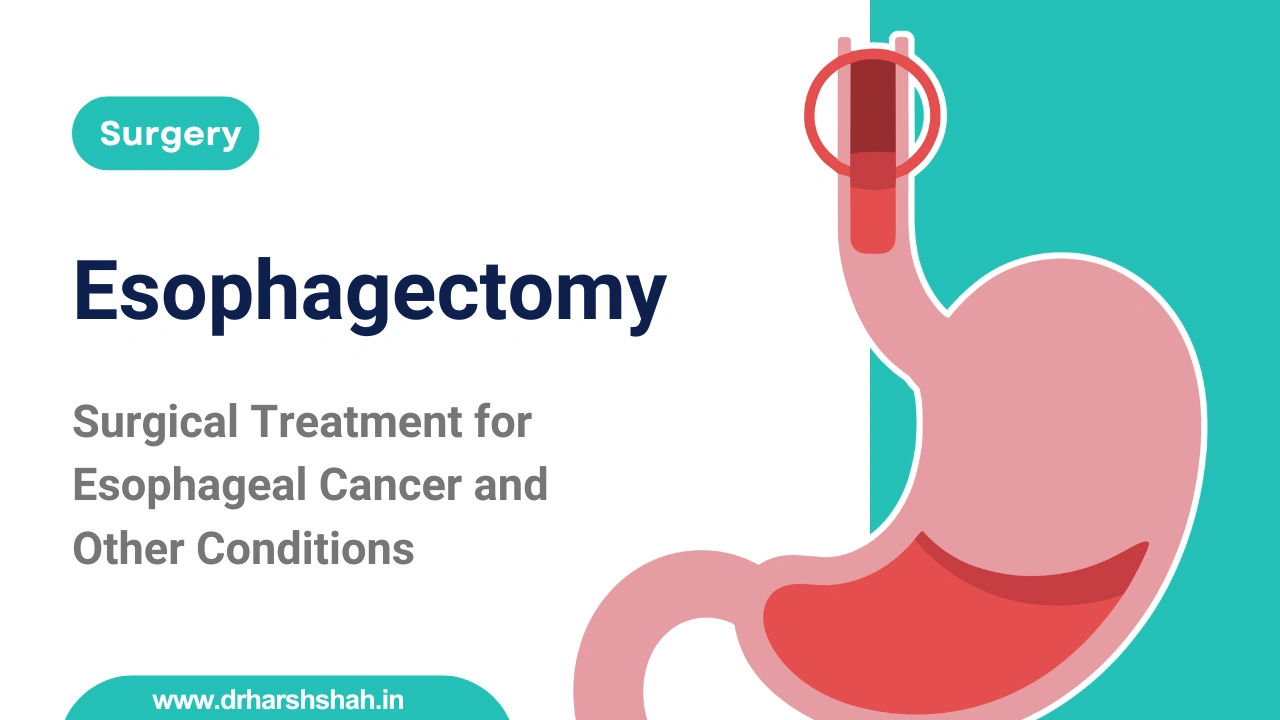
Esophagectomy is a major surgery to remove part or all of the food pipe (esophagus), usually done for esophageal cancer and some severe non-cancer problems. The remaining esophagus is joined to the stomach so that food can still pass into the digestive system.

In this surgery, the diseased part of the esophagus is removed.
⦿ Doctors then pull up the stomach or use a piece of intestine to form a new food tube.
⦿ The goal is to remove the cancer or damaged part and allow eating again.
The operation may be open (big cuts) or minimally invasive (small cuts with camera).
⦿ It is done under general anesthesia and can take many hours.
⦿ Patients usually stay in ICU first for close monitoring.
Eating starts slowly with liquids, then soft foods.
⦿ Weight loss, acid reflux, and small frequent meals are common after surgery.
⦿ Regular follow-up, chest exercises, and a healthy lifestyle help long-term recovery.
Esophagectomy

What is Esophagectomy ?

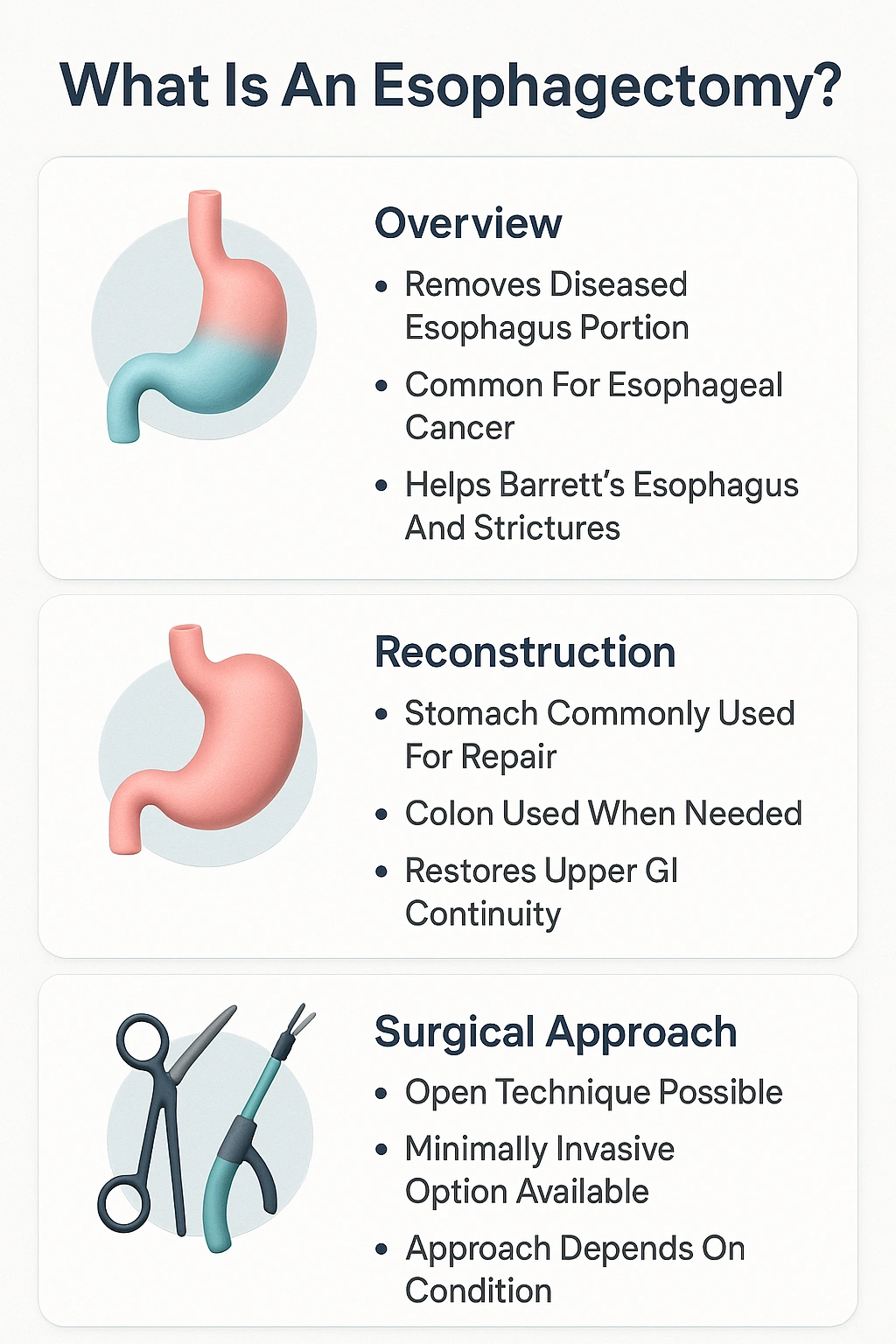
An Esophagectomy is a complex surgical procedure where all or part of the esophagus (the food pipe that connects your throat to your stomach) is removed. This is most commonly done to treat esophageal cancer. After removing the diseased part, the surgeon reconstructs the digestive tract, usually by pulling up the stomach and connecting it to the remaining part of the esophagus. This guide aims to be your trusted resource, providing clear, detailed, and reassuring information.
What Is An Esophagectomy

History of Esophagectomy

The first successful esophagectomy was performed in the early 20th century, and it has evolved significantly over the decades. Initially a high-risk operation with poor outcomes, advancements in surgical techniques, anesthesia, and postoperative care have made it much safer. Minimally invasive and robotic-assisted esophagectomy now offer patients faster recovery and fewer complications compared to traditional open surgery.

Types of Esophagectomy Surgery

When a doctor recommends an Esophagectomy, it’s not a one-size-fits-all procedure. The surgeon will choose the best method based on the location of the tumor, the stage of the cancer, and the patient’s overall health. There are several esophagectomy approaches, and understanding them can help you feel more prepared. These are the main esophagectomy surgery types performed today.

Imagine a tunnel being made without breaking the mountain. That’s similar to a Transhiatal Esophagectomy. This surgery is performed through incisions in the neck and the abdomen. The surgeon works through these two points to free the esophagus and remove it, avoiding a large cut in the chest. This generally means less pain and a quicker recovery from a breathing perspective. The detailed transhiatal esophagectomy steps involve careful dissection behind the breastbone to pull the esophagus out.

This is a more common approach, especially for tumors in the upper or middle part of the esophagus. It involves incisions in the chest (transthoracic) as well as the abdomen. While this means a larger operation, it gives the surgeon a much clearer view of the tumor and surrounding lymph nodes, allowing for a more thorough removal of cancerous tissue. A well-known variation of this is the mckeown esophagectomy, which involves three incisions—in the abdomen, chest, and neck.
This is the modern, “keyhole” surgery approach. Instead of large cuts, the surgeon makes several small incisions and uses a tiny camera (laparoscope or thoracoscope) and special long instruments to perform the Esophagectomy. This can be done either entirely through keyholes or as a hybrid esophagectomy, where one part of the surgery is done minimally invasively and the other part is done open. The benefits include less pain, smaller scars, and often a faster recovery. A specific type of Minimally Invasive Esophagectomy (MIE) is the thoracoscopic esophagectomy, which focuses on the chest portion using the keyhole technique.
This is the traditional method, involving larger incisions in the chest and/or abdomen. Although minimally invasive techniques are becoming more popular, open surgery is still the best choice for very large tumors, complex cases, or in hospitals where advanced equipment is not available. It allows the surgeon to directly see and feel the tissues, which can be crucial in difficult situations.
Feature Transhiatal Esophagectomy (THE) Transthoracic Esophagectomy (TTE) Minimally Invasive Esophagectomy (MIE)
Incisions Neck and Abdomen Chest and Abdomen (and sometimes neck) Several small "keyhole" incisions
Best For Tumors in the lower esophagus Tumors in the upper and middle esophagus Medically fit patients with early-stage tumors
Main Advantage Avoids a large chest incision, less lung-related issues Excellent view for complete tumor and lymph node removal Less pain, faster recovery, smaller scars
Main Disadvantage Limited view of the upper esophagus and lymph nodes More stressful on the lungs, potentially longer recovery Technically demanding, requires specialized skills and equipment

Indications for Esophagectomy

A doctor will only recommend a major surgery like an Esophagectomy if it is absolutely necessary. The goal is to remove a disease that is threatening your health and quality of life. Here are the main reasons why this surgery is performed.
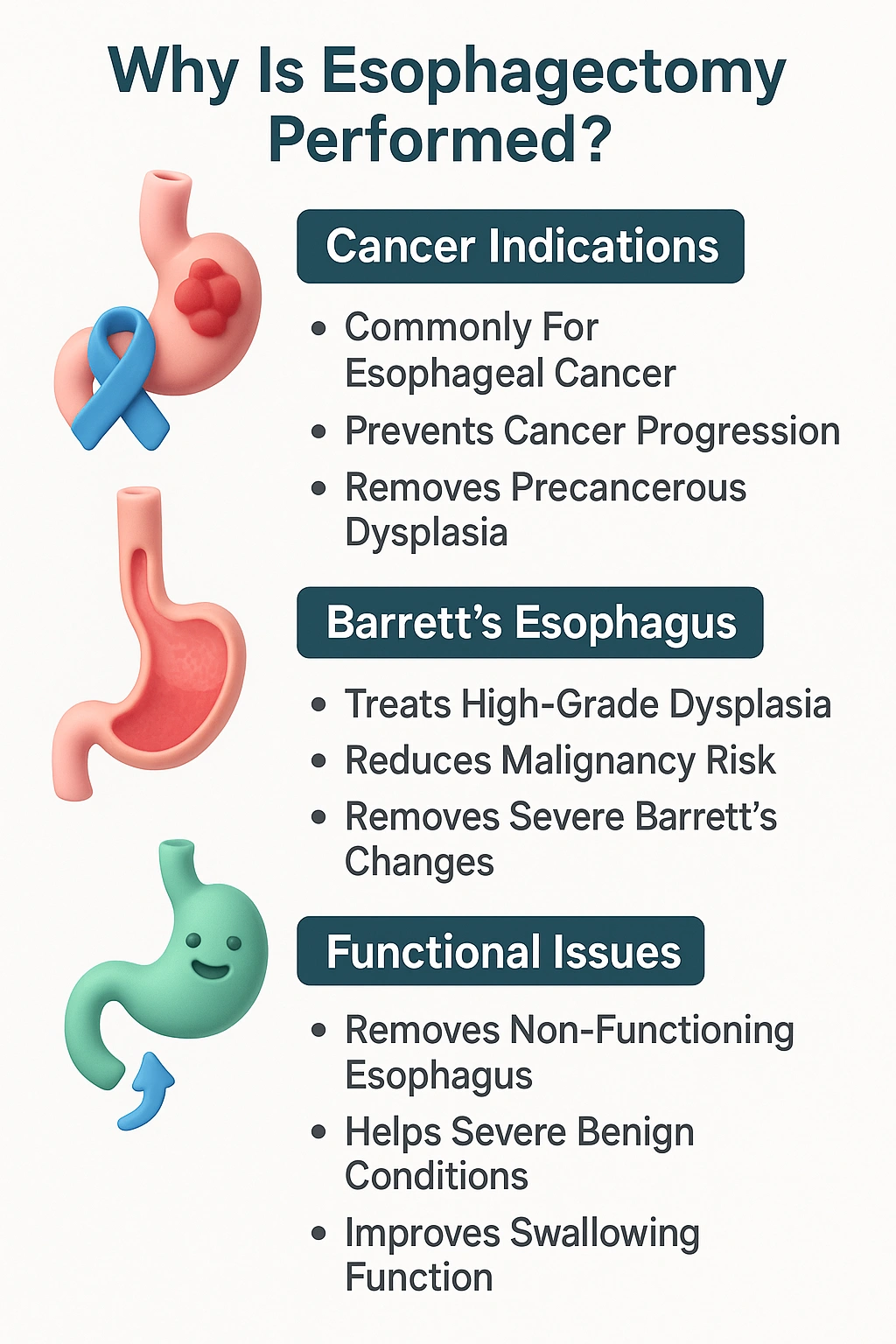
Why Is Esophagectomy Performed
This is the number one reason for an Esophagectomy. If cancer is found in the esophagus and has not spread to distant parts of the body (like the liver or lungs), removing the cancerous part of the food pipe offers the best chance for a cure. It is typically recommended for cancers in stages I, II, and III.

Barrett’s esophagus is a condition where the lining of the esophagus changes, usually due to long-term acid reflux. Over time, these changed cells can become pre-cancerous (a condition called dysplasia). When high-grade (severe) dysplasia is found, it means the cells are very close to turning into cancer. An Esophagectomy may be recommended to remove this tissue and prevent cancer from developing.
In some rare cases, the esophagus can be so badly damaged that it stops working properly. This can happen due to a severe injury, swallowing a corrosive chemical, or a benign (non-cancerous) stricture (narrowing) that cannot be fixed with other treatments. In these situations, removing the damaged section is the only way to allow the person to eat again.

Preoperative Evaluation and Preparation

Before undergoing an Esophagectomy, you will go through a series of tests and evaluations. This is to ensure your body is strong enough for the surgery and to give the surgical team a complete picture of your health and the disease.
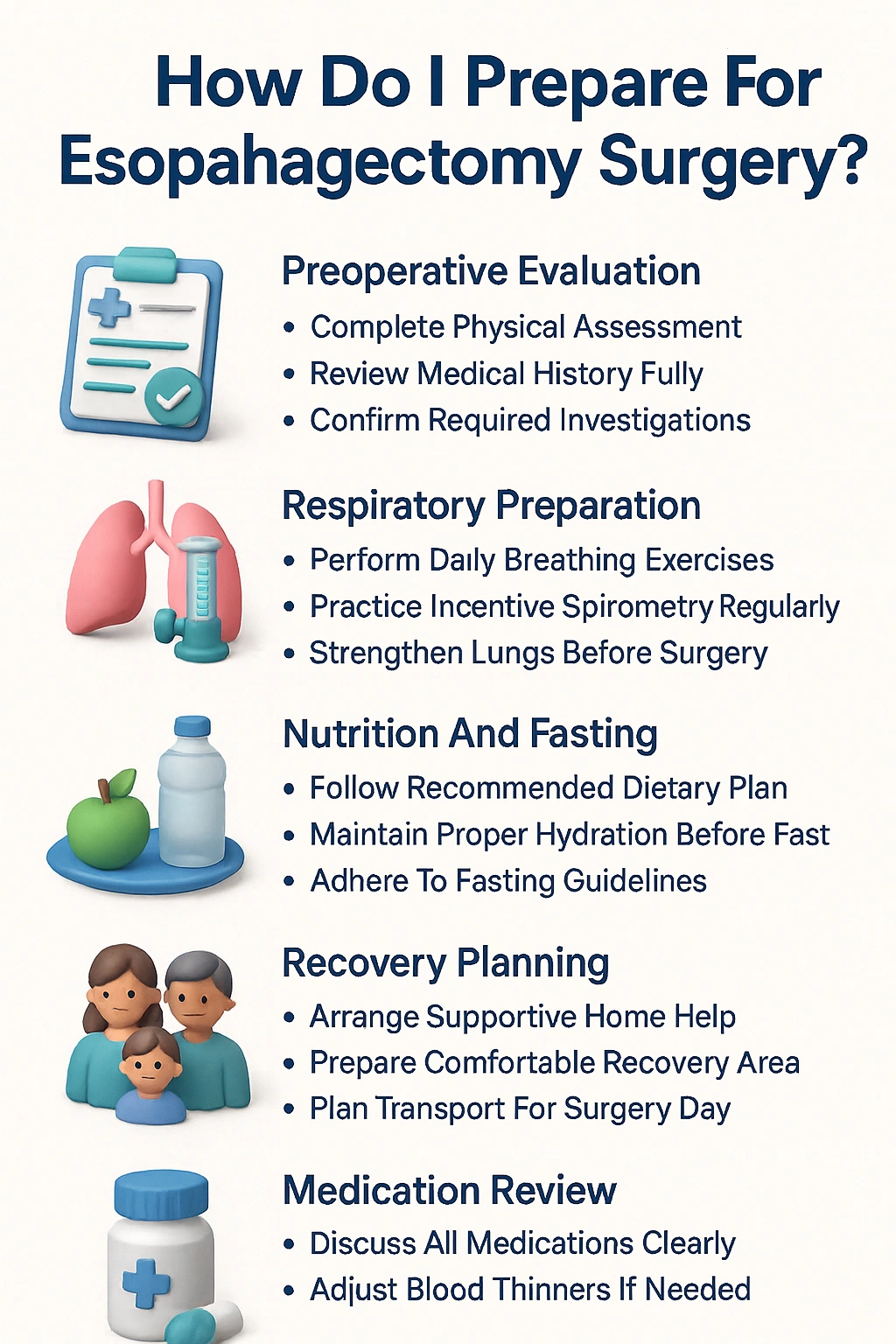
How do I prepare for Esophagectomy Surgery

⦿ CT Scan: This creates a detailed 3D picture of your chest and abdomen, showing the size of the tumor and whether it has spread to nearby lymph nodes or organs.

⦿ PET-CT Scan: This scan is even more sensitive. A special sugar dye is injected, which cancer cells absorb more than normal cells. This helps to find even small spots of cancer anywhere in the body.

⦿ Endoscopic Ultrasound (EUS): A thin tube with an ultrasound probe is passed down your throat. This gives a very close-up view of the tumor and shows how deep it has grown into the wall of the esophagus and if it has spread to nearby lymph nodes.
Many patients with esophageal problems have trouble eating and may have lost a lot of weight. Being well-nourished is crucial for healing after surgery. A dietitian will assess you and may recommend a high-protein, high-calorie diet. If you cannot eat enough, you might need a temporary feeding tube (placed in your nose or directly into your stomach/intestine) to build up your strength before the Esophagectomy.
This surgery can be tough on the lungs. These tests involve blowing into a machine to measure how well your lungs are working. This helps the anesthesiologist and surgeon understand how you will cope with anesthesia and recovery.
Your heart needs to be strong enough to handle the stress of the surgery. An ECG and sometimes an echocardiogram (an ultrasound of the heart) are done to check your heart function, especially for older patients or those with a history of heart problems.

Esophagectomy Procedure – Step by Step

Understanding the esophagectomy procedure steps can help demystify the surgery. While the exact details depend on the type of surgery, the basic goals are the same.
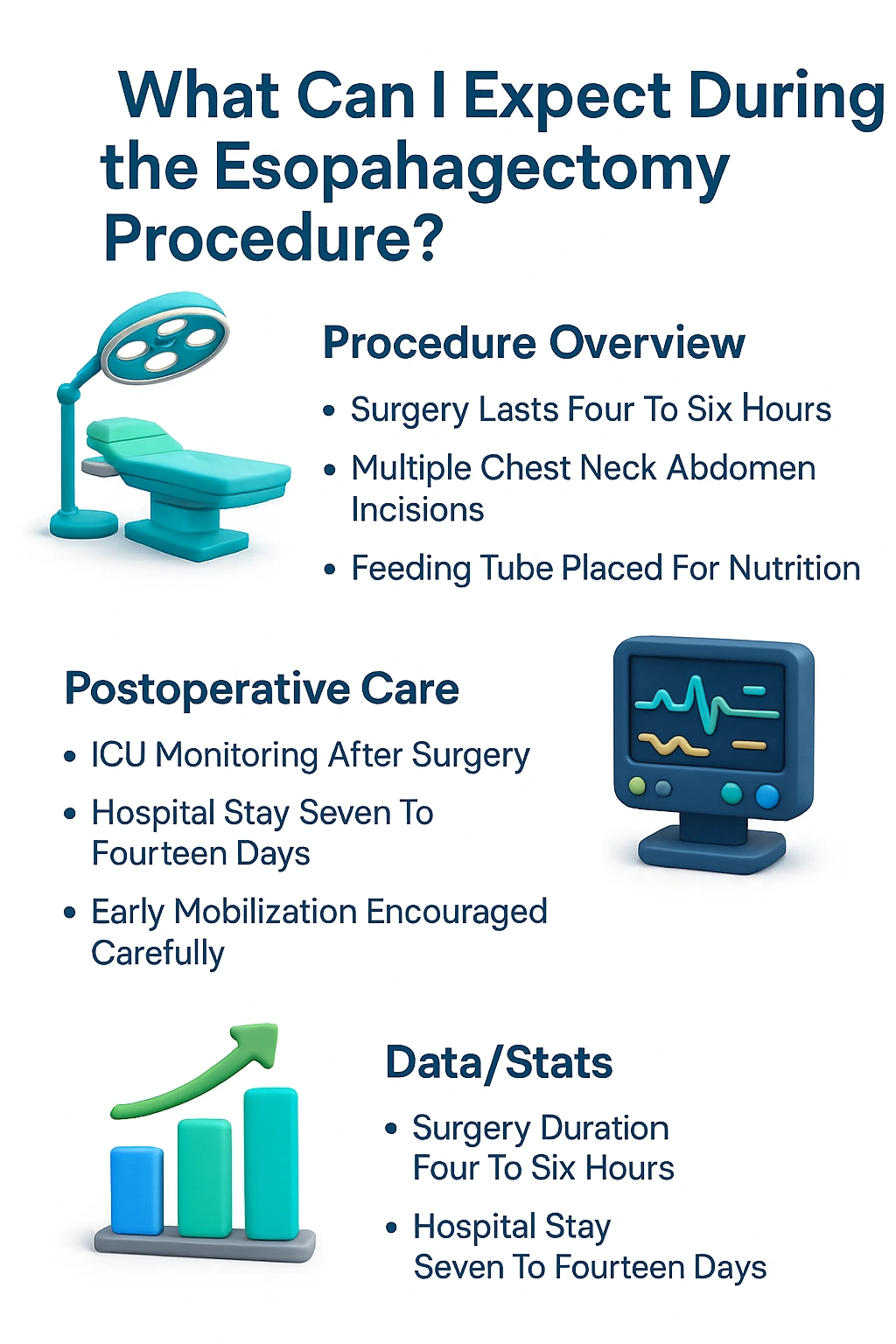
What can I exprect during the Esophagectomy procedure
The surgery starts with esophagectomy anesthesia. You will be put into a deep sleep by an anesthesiologist. There are special esophagectomy anesthesia considerations, such as using a double-lumen tube that allows the doctors to collapse one lung to give the surgeon space to work in the chest. Your body will be carefully placed in a specific esophagectomy position on the operating table to give the surgeons the best access.
The surgeon makes the esophagectomy incision (or incisions) based on the chosen surgical approach. The main task is to carefully free the esophagus from the surrounding tissues. The diseased part of the food pipe is removed. It’s very important for the surgeon to get clean esophagectomy margins, which means removing a small section of healthy tissue on either side of the tumor to ensure no cancer cells are left behind.

After the esophagus is removed, the food pathway needs to be rebuilt. This is a critical part of the Esophagectomy. The esophagectomy anatomy is permanently changed here.

⦿ Esophagectomy gastric pull through: This is the most common method. The stomach is reshaped into a tube, pulled up into the chest (or neck), and connected to the remaining part of the esophagus.

⦿ Esophagectomy colonic interposition: If the stomach cannot be used (for example, due to previous surgery or disease), a piece of the colon (large intestine) is used to create a new food pipe.

Cancer cells can travel through lymph channels. The surgeon will remove the lymph nodes near the esophagus. This is a crucial step because examining these nodes under a microscope helps determine the exact stage of the cancer and tells the doctors if further treatment, like chemotherapy, is needed after the Esophagectomy.

Postoperative Care and Recovery

Recovery from an Esophagectomy is a gradual process and requires careful management in the hospital. The goal of esophagectomy post operative care is to help you heal safely and regain your strength.

After surgery, you will be taken to the Intensive Care Unit (ICU). Here, nurses and doctors will closely monitor your heart rate, blood pressure, oxygen levels, and breathing. You will receive pain medication to stay comfortable. You might have a breathing tube for a short while.

It might seem difficult, but getting out of bed and walking as soon as possible is very important. Even sitting in a chair helps. This prevents serious complications like blood clots in the legs (DVT) and lung infections (pneumonia).

You will not be able to eat or drink anything for the first few days to allow the new connection to heal. The esophagectomy diet progression is very slow and careful. It usually starts with sips of water, then clear liquids, full liquids (like soup), pureed foods, and finally soft foods over several days or weeks. This careful progression is a key part of the esophagectomy diet.
Because you can’t eat normally at first, you will need nutritional support. A small feeding tube, called a jejunostomy tube (J-tube), is often placed in your small intestine during the surgery. Liquid food is given through this tube directly into your gut, providing all the calories and protein your body needs to heal.
Stage Time After Surgery (Approx.) What You Can Have Important Notes
Stage 1: NPO Days 1-5 Nothing by mouth (Nil Per Oral) All nutrition is given through an IV line or feeding tube.
Stage 2: Clear Liquids Days 5-7 (after a swallow study) Water, clear soups, clear juices, tea without milk Start with small sips. Your medical team will monitor for any issues.
Stage 3: Full Liquids / Pureed Week 2 Thin soups, yogurt, milkshakes, khichdi, dal (blended smooth) Focus on high-protein options. Eat slowly and in small amounts.
Stage 4: Soft Diet Weeks 3-6 Soft cooked vegetables, minced meat, soft fruits, idli, paneer Chew everything very well. Avoid hard, dry, or sticky foods.
Stage 5: Modified Regular Diet After 6 weeks Gradually return to a more normal diet Continue eating 5-6 small meals a day. Sit upright during and after meals.

Risks and Complications

Like any major surgery, an Esophagectomy has potential risks and complications. Knowing what these are helps you and your family watch for warning signs. The common esophagectomy risks are manageable with expert care.
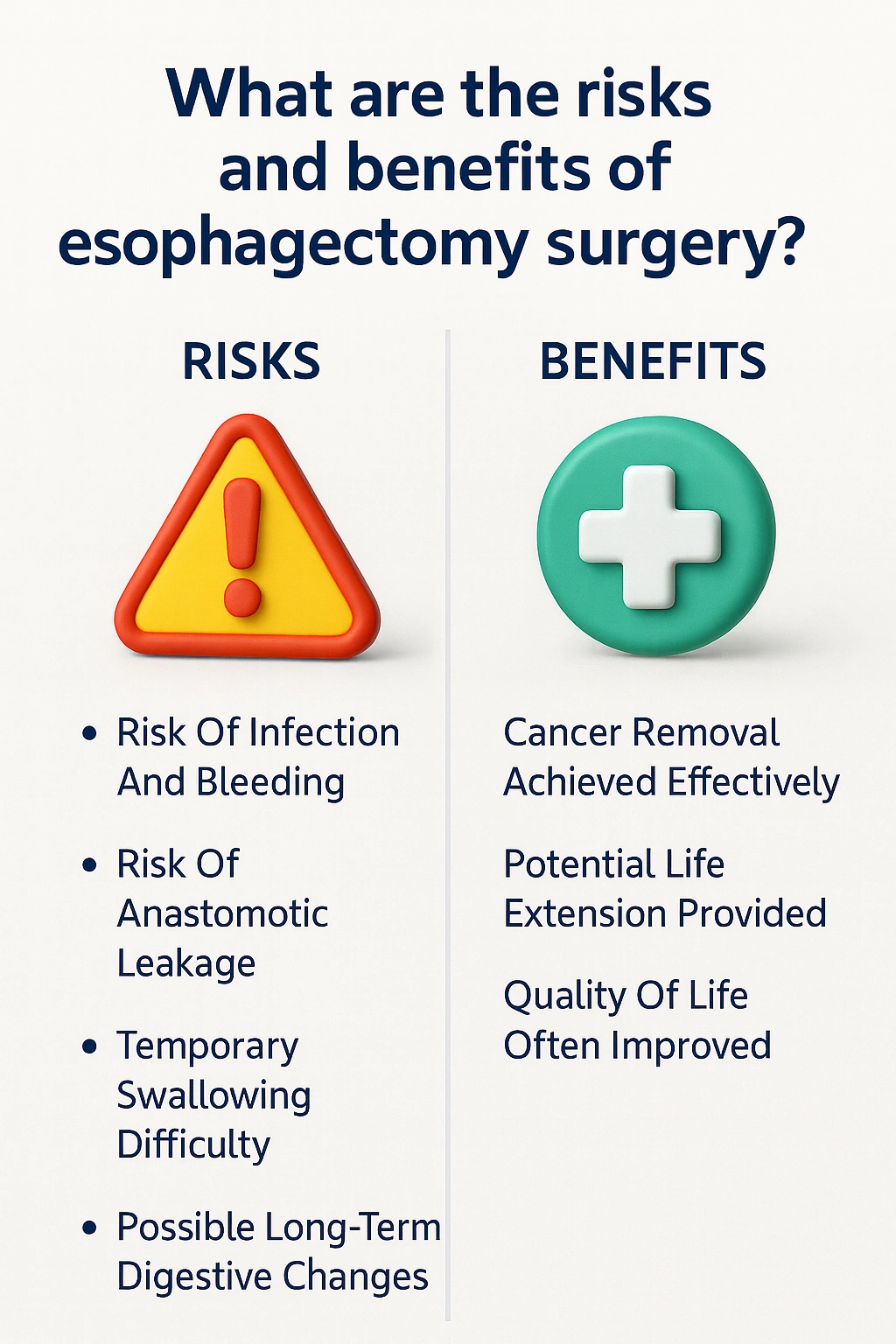
What Are The Risks And Benefits
The new connection made between the stomach (or colon) and the remaining esophagus is called the esophagectomy anastomosis. Sometimes, this connection doesn’t heal perfectly and can leak. This is a very serious complication that can cause infection in the chest. It requires immediate medical attention and may need another procedure or surgery to fix.

The lungs are very close to the esophagus, and the surgery can affect them. Pneumonia (lung infection), fluid buildup around the lungs (pleural effusion), and breathing difficulties are some of the most common complications after an Esophagectomy.

A nerve that controls the vocal cords runs very close to the esophagus in the neck. It can sometimes get stretched or damaged during the surgery, leading to a hoarse voice. This often improves with time, but in some cases, it can be permanent.
As the new connection heals, it can sometimes form a scar that narrows the passage. This is called a stricture. It can feel like an esophagectomy band is tightening around your food pipe, making it hard to swallow. This can usually be treated with a simple outpatient procedure called endoscopic dilation, where a balloon is used to stretch the narrowed area. The common esophagectomy side effects and esophagectomy after effects are manageable with proper follow-up.
Symptom Possible Complication What to Do
Fever, chest pain, rapid heart rate, feeling very unwell Anastomotic Leak Contact your doctor or go to the emergency room immediately. This is a medical emergency.
Coughing, shortness of breath, fever, yellow/green phlegm Pneumonia (Lung Infection) Inform your medical team right away. You may need antibiotics and breathing exercises.
Difficulty swallowing that gets worse over time Stricture Formation Inform your doctor. You may need an endoscopy and dilation.
Sudden, severe pain, swelling, or redness in one leg Deep Vein Thrombosis (DVT) Seek immediate medical attention. This is a serious condition that can lead to a pulmonary embolism.
Hoarseness or a weak, breathy voice Vocal Cord Injury Mention it to your surgeon during follow-up. A speech therapist may be able to help.

Life After Esophagectomy

Life after an Esophagectomy is different, but it can be a full and active life. Adjusting to the changes in your body takes time and patience.

Your new “stomach” in your chest is much smaller than your original one. This means you will feel full very quickly. You will need to eat 5-6 small meals a day instead of 3 large ones. It is very important to:

⦿ Eat slowly and chew your food thoroughly.
⦿ Sit upright while eating and for at least an hour afterward to prevent reflux.
⦿ Avoid drinking large amounts of fluid with your meals.

It is very common to lose weight after an Esophagectomy. Your body is healing, and it’s challenging to eat enough calories in the beginning. Working with a dietitian is key. They can help you with high-calorie, high-protein food choices and supplements to maintain a healthy weight.
After the surgery, you will need regular check-ups with your surgeon and oncologist. These appointments will include blood tests and scans (like CT scans) to monitor for any signs of cancer recurrence. They will also check your nutritional status and help you manage any long-term side effects.

Survival Rates and Prognosis

The prognosis after an Esophagectomy largely depends on the stage of the cancer at the time of surgery.
The earlier the cancer is caught and treated, the better the outcome. For very early-stage cancers (Stage I), the surgery can be curative, and survival rates are high. For more advanced stages, the surgery is part of a multi-pronged treatment plan to control the disease. The overall esophagectomy success rate is a complex number, but early detection is the biggest factor in your favor.
The most important factor for long-term survival is achieving an “R0 resection.” This is a medical term that means the surgeon was able to remove all visible and microscopic tumor cells. This gives the patient the best possible chance of being cancer-free.
For many patients, especially those with more advanced cancer, treatment doesn’t end with surgery. Adjuvant therapy, which is treatment given after surgery, is often recommended. This can include chemotherapy, radiation therapy, or a combination of both to kill any cancer cells that might have been left behind.

Frequently asked questions

Esophagectomy is a surgical operation to remove a diseased part of your food pipe. After removing it, the surgeon rebuilds a new path for food to travel, most often by pulling a part of your stomach up into your chest and connecting it to the remaining esophagus.
The typical hospital stay after an Esophagectomy is between 7 and 14 days. This can be longer if there are any complications. The first few days are usually in the ICU, followed by a stay in a regular room.
Yes, eventually you can eat most foods, but "normal" will be different. The biggest change is the portion size. You will need to adapt to eating smaller, more frequent meals for the rest of your life. Some foods may be harder to tolerate, and you will learn what works best for you over time.
An Esophagectomy offers the best chance for a cure, especially when the cancer is diagnosed in its early stages. When performed with the goal of a cure, it is known as a potentially curative surgery. For later stages, it is a crucial part of the overall treatment plan to control the cancer and prolong life.
The success rate depends on many factors, including the cancer stage, the patient's overall health, and the surgeon's expertise. In major cancer centers in India, the 5-year survival rate after surgery for esophageal cancer can range from 20% to over 50%, with much higher rates for early-stage disease.


The three main types depend on where the surgeon makes the cuts. They are the Transhiatal (through the belly and neck), Transthoracic (through the chest and belly), and Minimally Invasive (using small keyhole cuts). Your surgeon chooses the best approach for your specific condition.
Esophagectomy is a medical word for a surgery where a part of, or the entire, food pipe (esophagus) is removed. The word comes from 'esophago' (meaning esophagus) and 'ectomy' (meaning removal). It is a major operation done to treat serious diseases.
An esophagectomy is a very long and complex operation. On average, the surgery itself can take anywhere from 4 to 8 hours to complete. The exact duration depends on the surgical method used (open vs. keyhole) and the complexity of your case.
The esophagus is simply a muscular food pipe that connects your throat to your stomach. When you swallow, its muscles squeeze in a wave-like motion to push food and liquid downwards into the stomach for digestion. It plays a very important role in eating.
The most common reason (indication) to have an esophagectomy is for treating esophageal cancer that has not spread far. Other reasons include severe pre-cancerous conditions like high-grade Barrett's esophagus or major injury to the food pipe that cannot be fixed otherwise.
Yes, esophagitis, which is the swelling or irritation of the food pipe, can often be cured. With simple lifestyle changes, avoiding spicy or acidic foods, and taking medicines given by your doctor, most cases of mild esophagitis get better without needing any surgery.

Reader Interactions

Leave a Reply

Your email address will not be published. Required fields are marked *

Dr Harsh Shah Robotic Cancer Surgeon

Dr. Harsh Shah

MS, MCh (GI cancer Surgeon)

Dr Harsh Shah is a well known GI & HPB Robotic Cancer Surgeon in Ahmedabad. He treats cancers of Esophagus, stomach, liver, pancreas, colon, rectum & small intestines. He is available at Apollo Hospital.

Rate this post

Exclusive Health Tips and Updates

Dr Harsh Shah - GI & HPB Oncosurgeon in Ahmeadbad
Privacy Overview

This website uses cookies so that we can provide you with the best user experience possible. Cookie information is stored in your browser and performs functions such as recognising you when you return to our website and helping our team to understand which sections of the website you find most interesting and useful.