

... WhatsApp

Understanding High-Grade Appendix Tumors: What New Research Shows

You are here >> Home > Latest Updates > Appendix > Understanding…

Clinicopathologic and Molecular Characteristics of High-Grade Appendiceal Mucinous Neoplasms.DOI 10.1245s10434-025-18672-0

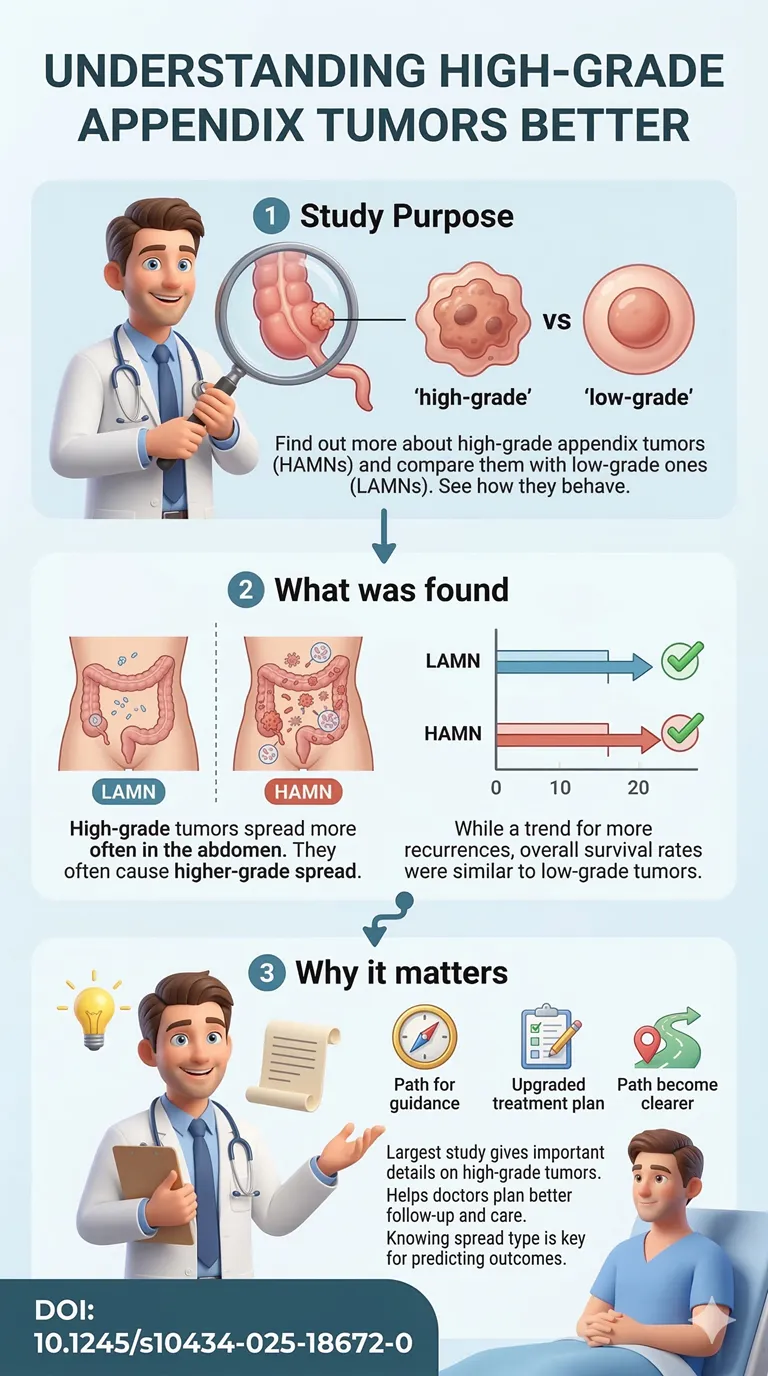
Tumors of the appendix are rare, but one type called appendiceal mucinous neoplasms can produce mucus and sometimes spread inside the abdomen. Doctors classify these tumors into two main types: low-grade (LAMN) and high-grade (HAMN). Understanding the differences helps doctors decide the best treatment.
This study looked at 375 patients treated at a major cancer center. Most had low-grade tumors, while about one-quarter had the high-grade type.
Researchers found that high-grade tumors were more likely to spread into the abdominal cavity, a condition called peritoneal disease. They were also more likely to be associated with more aggressive mucus-producing cancer cells.
The good news is that patients whose disease was limited to the appendix or had only mucus without cancer cells had an extremely low chance of recurrence. Even though high-grade tumors showed a slightly higher chance of the cancer returning over five years, overall survival was very similar between high-grade and low-grade cases.
This means that while high-grade tumors may behave more aggressively, many patients still have good long-term outcomes—especially when the disease is detected early and treated properly.
These findings help doctors better understand how to manage appendix tumors and monitor patients after surgery.

Rate this post
Dr Harsh Shah - GI & HPB Oncosurgeon in Ahmeadbad
Privacy Overview

This website uses cookies so that we can provide you with the best user experience possible. Cookie information is stored in your browser and performs functions such as recognising you when you return to our website and helping our team to understand which sections of the website you find most interesting and useful.