

... WhatsApp

How Gene Changes Affect Treatment Results in Gallbladder and Bile Duct Cancer

You are here >> Home > Latest Updates > Gallbladder Cancer Updates > How Gene…

Genomic pathway alterations and their prognostic impact in biliary tract cancer Insights from a multinational cohort treated with cisplatin DOI- 10.1016j.ejca.2025.116035

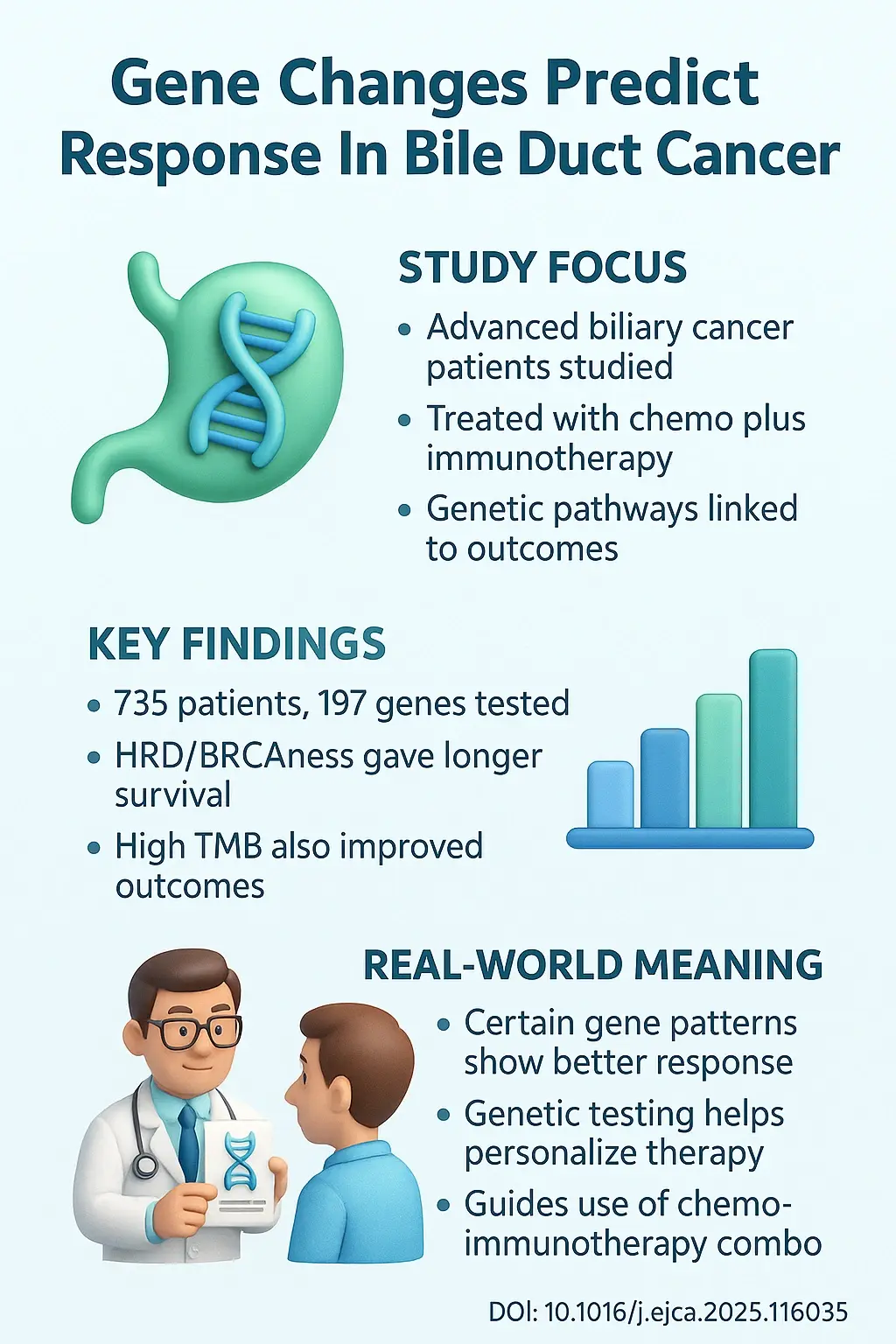
Biliary tract cancers are rare and aggressive. Even with strong treatments like chemotherapy and immunotherapy, results can vary widely. This new study looked at the genes inside the tumors to find out which patients may do better with treatment.

Researchers studied 735 people with advanced bile duct cancer. Everyone received a mix of chemotherapy (cisplatin and gemcitabine) and immunotherapy (durvalumab). Around 200 patients also had their tumor DNA tested to find changes in key pathways—sets of genes that control how cancer grows.

They found:

⦿ People with changes in a group of genes called HRD/BRCAness lived longer and had more time before the cancer got worse.
⦿ Changes in the TGF-beta pathway were also linked to slower cancer growth.
⦿ Patients with high tumor mutational burden (TMB)—meaning many genetic changes in the tumor—had better outcomes overall.

These results show that DNA testing might help doctors know who is likely to benefit most from chemo-immunotherapy.

Right now, this kind of gene testing isn’t done for every patient with bile duct cancer. But studies like this suggest it could help guide treatment and improve survival.

Rate this post