

... WhatsApp

A Gene Change May Link Chronic Gut Inflammation to Colon Cancer

You are here >> Home > Latest Updates >Ulcerative Colitis> A Gene Change…

Prevalence of germline MSH3 polymorphisms in ulcerative colitis and early-onset colorectal cancer patients that potentiates inflammation-to-cancer transformation. DOI 10.1093hmgddaf181

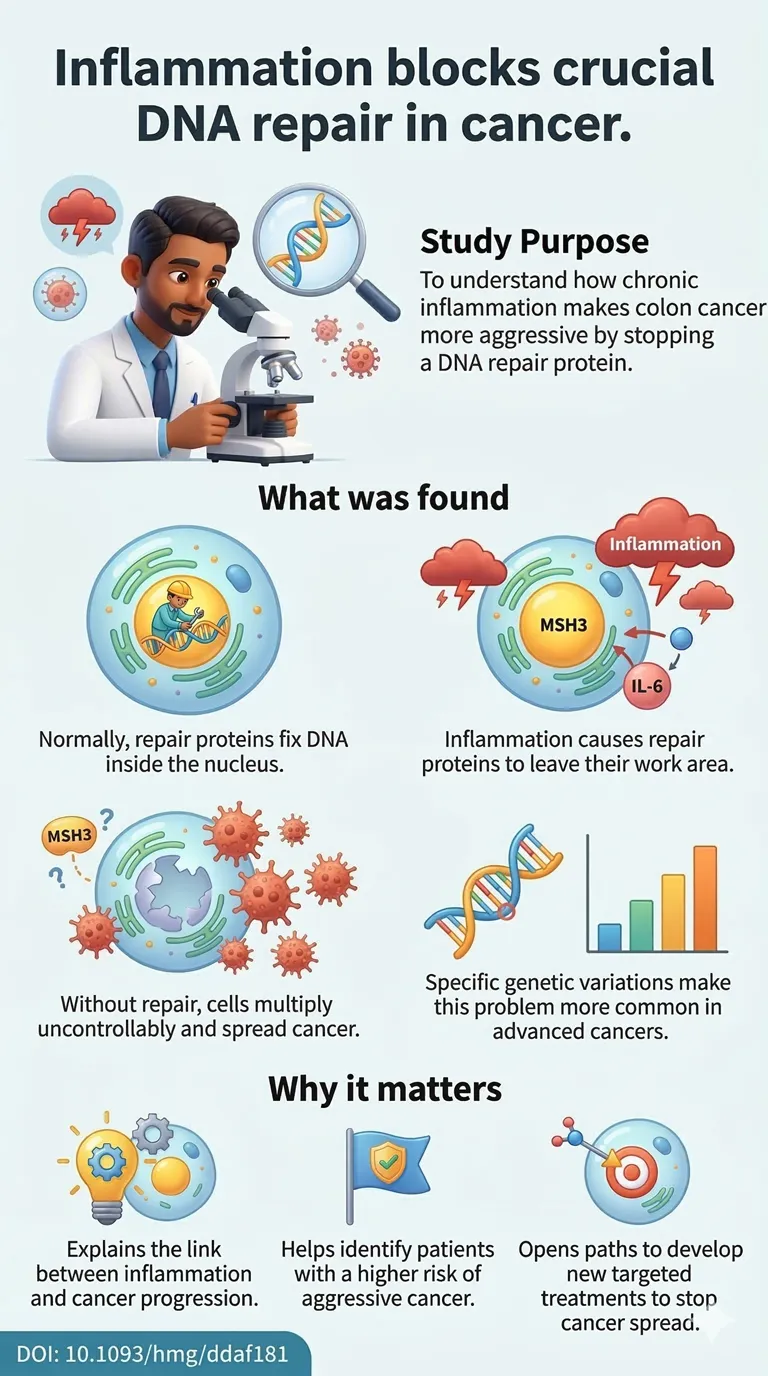
People with long-term bowel inflammation, like ulcerative colitis (UC), already have a higher risk of colorectal cancer. Scientists are trying to understand why chronic inflammation can sometimes lead to cancer. A new study points to a possible role for a specific gene involved in repairing damaged DNA.Researchers focused on a gene called MSH3, which normally helps fix mistakes in DNA. When this repair system works properly, it helps protect cells from turning into cancer.The study found that some people carry a small genetic change near the MSH3 gene. This change can affect how the repair protein works during inflammation. When inflammatory signals—especially a molecule called IL-6—are present, the altered MSH3 protein moves out of the cell nucleus, where DNA repair normally happens. As a result, the repair process becomes weaker.The researchers discovered this gene change slightly more often in people with ulcerative colitis and early-onset colorectal cancer than in people without these conditions. They also found it more often in patients with more advanced stages of colon cancer.

These findings suggest that in some people,inflammation combined with this genetic change could make it easier for cells to develop cancer over time.This research helps explain how chronic inflammation and genetics may work together in cancer development. 

Rate this post