

Last updated: 07-Nov-2026
Tapping Book on WhatsApp will likely open the WhatsApp app on your phone.
Facing food pipe cancer surgery? Send your reports to Dr Harsh Shah and he will walk you through the journey. · Call +91-63555-64601
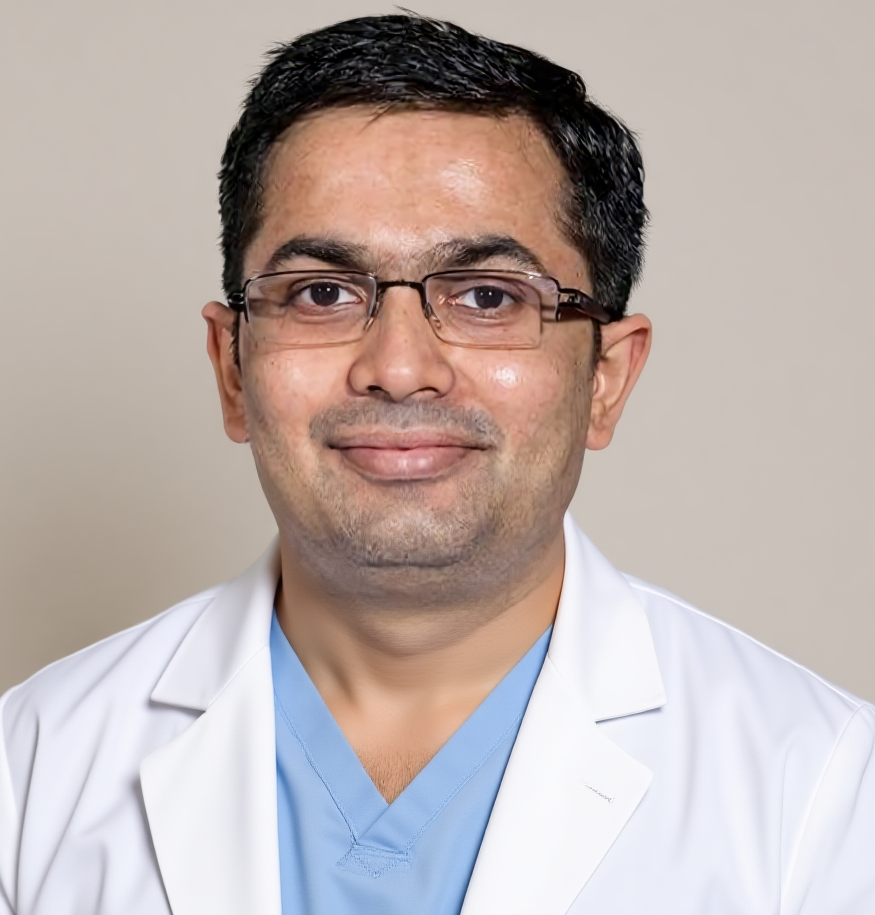
Dr Harsh Shah
MS, MCh (Surgical Gastroenterology), DrNB (Surgical Gastroenterology)
Registered with Gujarat Medical Council, Reg. No. G-38738
Gastro & Cancer Surgeon · Dr. Jivraj Mehta Hospital, Vasna, Ahmedabad
18 years of experience in surgery of the food pipe, stomach, liver, bile ducts, pancreas and bowel.
In short
Food pipe cancer surgery is a journey in stages: tests and planning, sometimes chemotherapy first, the operation, a stay in hospital with slow return to eating, and then regular follow-up. Knowing the stages ahead makes each one less frightening.
Eating, walking and breathing exercises start early. Recovery takes weeks to months, and your team stays with you throughout.
For the disease itself, read the oesophageal cancer guide by Dr Harsh Shah. This page describes what the surgery journey feels like.
Before surgery you have tests to stage the cancer and a check of your heart and lungs. Often you have chemotherapy or chemoradiation first.
The surgeon first needs to know how far the cancer has spread. This usually means an endoscopy with biopsy, a CT or PET scan, and sometimes an endoscopic ultrasound. Your heart, lungs and nutrition are also checked, because the operation is large. Many people with food pipe cancer have lost weight. Your diet may be built up first, sometimes with a feeding tube or supplement drinks. If the plan includes chemotherapy or radiation before surgery, the operation is done a few weeks after it ends.
| Stage | What happens |
|---|---|
| Planning | Scans, biopsy, fitness checks and a talk about the plan with your family |
| Before surgery | Chemotherapy or chemoradiation if advised, plus building up strength and nutrition |
| The operation | The diseased food pipe is removed and the rest is joined up, by keyhole, open or both |
| In hospital | Pain control, breathing exercises, walking and slow restart of drinks and food |
| At home | Small frequent meals, regular visits and a gradual return to routine |
The surgeon removes the diseased food pipe and nearby glands. A new food channel is then built, usually from the stomach.
The operation is called an oesophagectomy. Once the cancer is out, the stomach is shaped into a tube. It is joined to the rest of the food pipe, in the chest or neck. Part of it can be done by keyhole and part through an open cut. This depends on where the cancer sits and on your health. The operation takes several hours, and you are asleep throughout. Dr Harsh Shah will explain the exact plan for your case before the day.
Dr Harsh Shah is a surgical gastroenterologist. He has 18 years of experience in operations on the food pipe, stomach, liver, bile ducts and pancreas. He is registered with the Gujarat Medical Council, Reg. No. G-38738. He sees patients at Dr. Jivraj Mehta Hospital, Vasna, Ahmedabad.
Expect a stay of several days, with careful monitoring, early walking and a slow, stepwise return to drinking and eating.
Some discomfort, tiredness and a poor appetite are expected. Tell the team about any fever, breathlessness, chest pain or leakage from a wound at once, because early action matters.
Eat small meals often, sit upright after eating, and expect your strength and weight to return slowly over weeks to months.
Your stomach is now smaller and sits differently, so large meals feel heavy. Eat six or more small meals, chew well and do not lie flat for a couple of hours after eating. Some people have reflux or a feeling of fullness for a while. Light walking is encouraged, while heavy lifting waits until the surgeon allows it. Follow-up visits check your recovery, your weight and the report on the removed tissue, which decides whether more treatment is needed.
To plan the cost side, see cost and insurance for food pipe cancer treatment.
Most people return to a normal diet, though in smaller portions and more often. Eating takes time to settle, and a dietitian can guide you.
Many people spend the first day or two in intensive care or close watch, because the operation is large. The team will tell you before surgery.
Not always. It depends on the position of the cancer, earlier treatment and your health. The surgeon chooses the safest route for you.
Sometimes. The report on the removed tissue decides this, and the team will discuss it with you at the follow-up visit.
They can help with walking, small frequent meals and breathing exercises. They can also keep the visit dates and report any new symptom early.
Dr Harsh Shah — Dr. Jivraj Mehta Hospital, Vasna, Ahmedabad
Dr. Jivraj Mehta Hospital, Dr Jivraj Mehta Marg, Vasna, Ahmedabad 380007.
Consultations, review of reports and scans, operations and follow-up. OPD Monday to Saturday, 9 am to 5 pm.
Appointments: +91-63555-64601 · +91-63590-11009 · Hospital 079-2663 6363
Directions to the hospital · WhatsApp +91-63555-64601
Back to the main guide: Oesophageal cancer with Dr Harsh Shah.
Tapping Book on WhatsApp will likely open the WhatsApp app on your phone.
Swasth Parivar: every week, practical advice on recovery, diet and warning signs. No advertising. Stop any time.
Your number is used for these updates and for the clinic to reach you. It is never sold or passed on. To stop, reply STOP on WhatsApp.