

... WhatsApp

Inflammatory Diets Linked to Higher Colon Cancer Risk in Japanese Men

You are here >> Home > Latest Updates > Colon Cancer > Inflammatory…

Dietary Inflammatory Index and Risk of Colorectal Cancer in Japanese Men.DOI 10.3390nu18020338

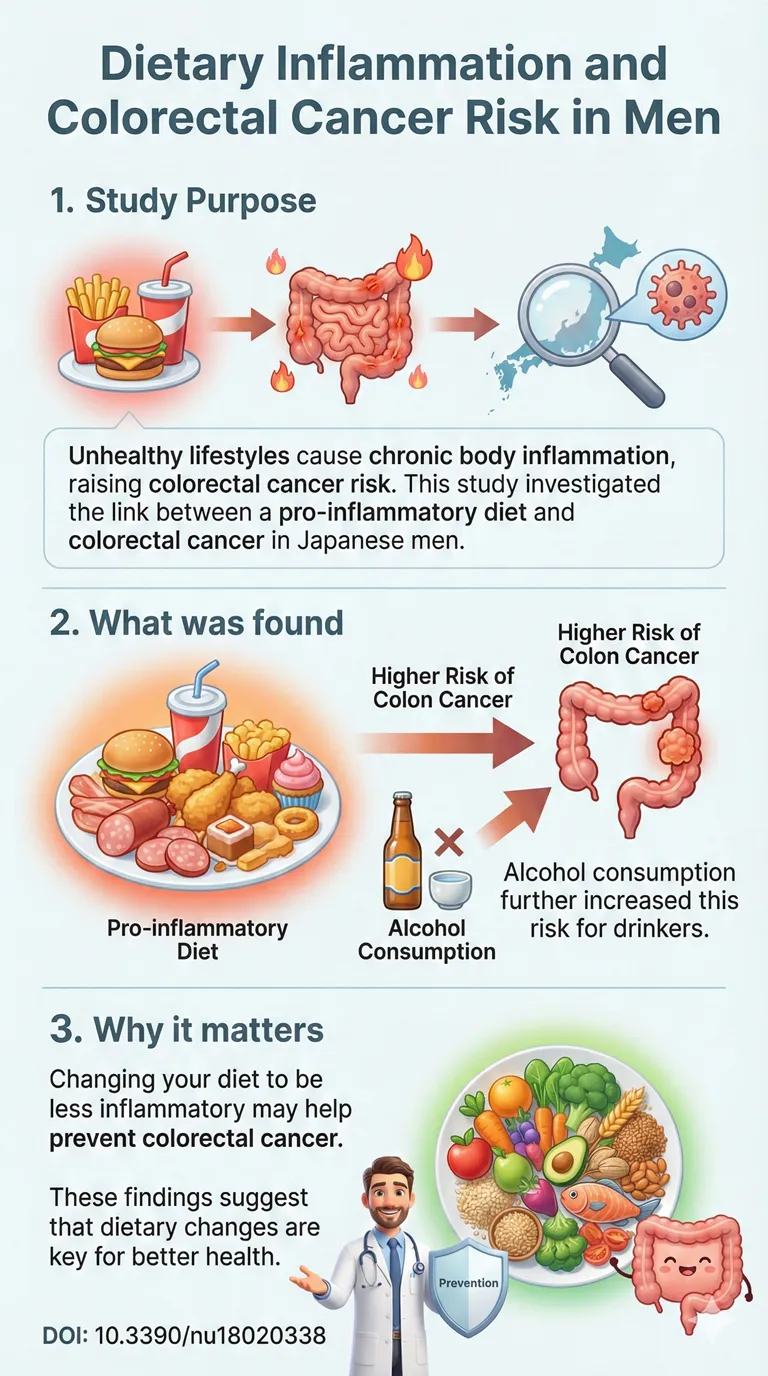
Long-term, low-level inflammation in the body is one of the things linked to colon and rectal cancer. What we eat can raise or lower this inflammation. Researchers measure it with a score called the dietary inflammatory index. Diets with more saturated fat and fewer vegetables, fruits and fibre score as more inflammatory.

This study from Japan followed 38,807 men aged 45 to 74 for about 14 years. During that time, 1,415 of them developed colorectal cancer.

Men whose diets scored as the most inflammatory had about a 20% higher risk of colorectal cancer than men with the least inflammatory diets. This overall result was just short of statistical significance. For colon cancer alone, the risk was about 28% higher, and this result was significant.

Alcohol seemed to add to the effect. Among men who drank, an inflammatory diet was linked to a higher risk of cancer in the right side of the colon.

This was an observational study. It shows a link, not proof that diet causes cancer. Still, it supports simple steps: eat more vegetables, fruits and whole grains, limit processed and fatty foods, and cut down on alcohol. If you are over 45 or have a family history of bowel cancer, ask your doctor about colon cancer screening.

Rate this post

Get health updates from Dr Harsh Shah on WhatsApp

Swasth Parivar: twice a month, practical advice on recovery, diet and warning signs. No advertising. Stop any time.

Your number is used for these updates and for the clinic to reach you. It is never sold or passed on. To stop, reply STOP on WhatsApp.

Dr Harsh Shah - Surgical Gastroenterologist and GI Robotic Surgeon, Ahmedabad

Privacy Overview

This website uses cookies so that we can provide you with the best user experience possible. Cookie information is stored in your browser and performs functions such as recognising you when you return to our website and helping our team to understand which sections of the website you find most interesting and useful.