
Shah's Gastro, Cancer & Robotic Surgery Centre · Ahmedabad & Gandhinagar
Anal canal cancer surgeon in Ahmedabad · Gota OPD, Gota, Ahmedabad · Apollo Hospital, Bhat, Gandhinagar
Last updated: 20-Oct-2026
Anal canal cancer is treated with chemoradiation. The surgeon’s first job is to confirm it, stage it and wait, not to operate on it.
Most families reach this page after two sentences in a clinic. The first is that the lump, the bleeding or the sore is a cancer of the anal canal. The second is that an operation is being discussed. This page is about the second sentence. It is not an explainer about the disease. It sets out who makes the operative decision, what evidence that decision rests on, how long the waiting really is, what would change the plan, when a second opinion is worth the week it costs, and what to ask before signing a consent form. For the wider bowel-cancer service pages, see Dr Harsh Shah’s rectal cancer treatment page.
Dr Harsh Shah examines you himself, takes the case to the tumour board, explains the plan, and performs the operation if one is needed.
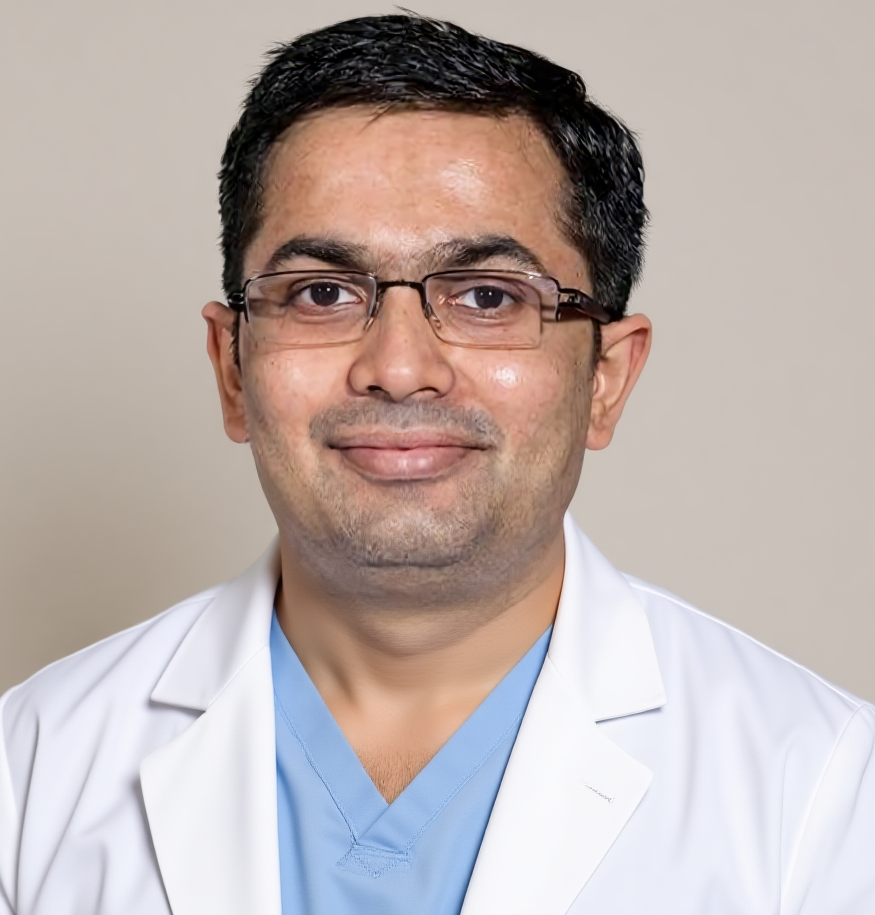
Shah’s Gastro, Cancer & Robotic Surgery Centre. He trained in super-specialty surgical gastroenterology and holds two higher degrees in that field. He has 18 years of experience in gastrointestinal and cancer surgery, including the lower bowel and the pelvis. You see the same surgeon from the first visit to the last follow-up.
Dr Harsh Shah
MS, MCh (Surgical Gastroenterology), DrNB (Surgical Gastroenterology)
Registered with Gujarat Medical Council, Reg. No. G-38738
Gastro & Cancer Surgeon · Apollo Hospital, Bhat, Gandhinagar · Gota OPD, Ahmedabad
Google rating 4.89 from 216 reviews at the Gota clinic, and 4.94 from 18 reviews at Apollo, Bhat.
One surgeon carries the case from the first examination to the last follow-up. He does the examination that sets the stage, presents the case at the board, sits with the family and explains why an operation is or is not the answer, and operates himself if the day comes. If a plastic surgeon is needed for the perineal wound, that surgeon is named in advance as well.
No plan is set by one doctor here. Every anal canal cancer goes to a tumour board, and the board sees the examination, the biopsy and the scans.
The decision needs facts that only a proper examination gives. The anal canal is examined by finger and through a short scope. The size, the distance from the anal opening, the quadrant it sits in, whether the muscle ring is involved and whether it moves are all written down. If pain makes that examination poor, it is repeated under anaesthesia. An incomplete examination is not accepted as the basis for a plan. The tissue answer comes from a biopsy. This diagnosis is never made from a scan alone.
| Check | What it settles |
|---|---|
| Finger examination and proctoscopy. | Size, distance from the anal opening, quadrant, muscle involvement, whether it is fixed. |
| Examination under anaesthesia, when pain limits the clinic examination. | A complete examination and a proper biopsy in one sitting. |
| Biopsy. | The tissue diagnosis. Nothing is planned without it. |
| Pelvic MRI. | How far the tumour reaches, whether the muscle ring is involved, and the pelvic nodes. |
| CT of the chest, abdomen and pelvis. | Disease outside the pelvis. |
| PET-CT. | Nodes a CT misses. It often changes the radiotherapy field, so it is worth doing. |
| Examination of the groin, with a needle sample of any suspicious node. | Groin nodes belong to this cancer’s own area. A node there is not the same as spread to a far organ. |
| An HIV test, with consent and counselling. | It changes how side effects are managed, not whether treatment is given. |
Two more things are settled before treatment starts, and both are easy to miss. Women are examined gynaecologically and have cervical screening, because a related change can sit there at the same time. Everyone of childbearing age is offered a fertility discussion before pelvic radiotherapy. That conversation is time-critical. Once radiotherapy has started, the chance to store eggs or sperm has gone. Blood counts and kidney function are checked before the chemotherapy drugs are chosen.
Chemoradiation is the treatment for this cancer. Most people who complete it keep the anal canal and keep control of the bowel.
This is the part that surprises people most. In nearly every other cancer of the digestive tract, the operation is the treatment and everything else supports it. Anal canal cancer is the exception. Radiotherapy given together with chemotherapy clears the disease in most people, and it does so while keeping the anal canal in place. Removing the anal canal at the start would take away something the treatment can usually save. So the surgeon’s work at the beginning is to confirm the diagnosis, stage it accurately, get the supportive things right and hand over to the radiation and medical oncologists.
Operating on an untreated anal canal cancer is the single avoidable error in this disease. That is why the board sees the case before anyone books a theatre date.
| Situation | What is done, and when |
|---|---|
| A small tumour at the anal margin, of a favourable grade, with the muscle ring not involved. | Local removal with clear margins is acceptable. Everything else has chemoradiation. |
| The tumour is blocking the passage. | A diverting stoma before chemoradiation, so treatment is not interrupted later. |
| There is a track between the anal canal and the vagina. | The same. A diverting stoma first, then treatment. |
| Control of the bowel is already lost. | A diverting stoma is discussed before treatment rather than during it. |
| The clinic examination is too painful to be complete. | Examination under anaesthesia with biopsy. |
| Bleeding that cannot be controlled, a tear, or a new blockage during treatment. | The consultant surgeon sees it the same day. |
Shrinking carries on for about six months after chemoradiation. A lump still felt at two months is usually still going down, not a failure.
This is the hardest part of the whole pathway, and it is where harm is done. After chemoradiation finishes, the tumour keeps regressing for months. Patients and referring doctors expect it to be gone by the first check. It usually is not. A firm lump at six to eight weeks is normal. If it is biopsied then, the report can show cancer cells that would have cleared on their own. A report like that, read as failure, leads straight to a large operation and a permanent colostomy in someone who never needed either.
So the assessment is staged, and the firm judgement is left until around twenty-six weeks. Dr Harsh Shah says this plainly at the first visit, because a family that expects a clear answer at two months spends four months in avoidable distress.
| When | What happens |
|---|---|
| During treatment. | Weekly review, skin care from the first day, pain relief raised early, weekly blood counts. |
| The six weeks after treatment ends. | Side effects peak now, not during treatment. Skin care, pain relief and diet support continue. |
| Six to eight weeks. | First examination. Firmness is expected. No biopsy unless the disease is clearly growing. |
| Twelve weeks. | Second examination. Still an interim reading, not a verdict. |
| Around twenty-six weeks. | The firm assessment, with an examination and an MRI. A biopsy only if persistence is genuinely suspected. |
| At any point. | A growing lump, new pain or a new groin node is assessed at once, not at the next appointment. |
The plan changes for growth during treatment, for disease proven to persist at the firm assessment, and for a return after a complete response.
A plan in this disease is not a single decision taken on day one. It is reviewed at fixed points, and a short list of findings moves it. Each of them goes back to the board before anything is booked.
| Finding | What follows |
|---|---|
| The tumour grows during chemoradiation. | Biopsy, restaging and a board discussion about a salvage operation. |
| Disease proven on biopsy at the firm assessment. | A salvage operation is discussed, with the board’s agreement. |
| The cancer returns after a documented complete response. | Restaging, then a salvage operation if it is confined. |
| Chemoradiation genuinely cannot be given. | An operation is considered from the start. This is uncommon. |
| A track opens to the vagina during treatment. | Oral intake stopped, board review, a diverting stoma. |
| Fever during chemoradiation. | Treated as sepsis from a low blood count. Cultures and antibiotics within the hour. |
| A groin node proven on a needle sample after treatment. | Groin node surgery for that proven node only, never as a precaution. |
| Fitness drops, or the kidneys are not strong enough. | A gentler drug plan, or radiotherapy alone, decided with the medical oncologist. |
A salvage excision is for disease proven to persist, for a return after a complete response, or for growth during treatment. It is not a first move.
The salvage operation is an abdominoperineal excision. The anal canal, the lowest part of the bowel and the surrounding tissue are removed together, through the abdomen and through the perineum. The bowel is then brought out onto the abdominal wall as a permanent colostomy. That is a certainty of this operation, not a risk attached to it, and it is said in those words at consent.
Two features make this operation different from the same operation done for an untreated rectal cancer. The tissue has had radiotherapy, so it heals slowly and poorly. And the gap left in the perineum is large. Both are planned for, not managed afterwards.
Groin nodes are removed only when a node there is proven to have returned. They are not removed as a precaution, because that adds swelling and wound problems without a reason.
A permanent colostomy is certain after this operation. It is explained at the first discussion, not disclosed on the morning of surgery.
Patients are rarely upset by a stoma they understood in advance. They are upset by one that arrives as a surprise. So the subject is opened early, even while chemoradiation is still the plan and the operation may never be needed. Dr Harsh Shah would rather have the conversation and not need it than need it and not have had it.
A stoma nurse meets the patient and the family before theatre. The appliance is shown, handled and changed in front of them. Going home is not timed by the calendar but by whether the patient or a family member can change the bag without help. How a stoma changes ordinary life is set out on the page about the temporary stoma after rectal cancer surgery; the stoma after this operation does not close, which is the one difference that matters.
| Question families ask | The honest answer |
|---|---|
| Is there a version of this operation without a stoma? | No. If the anal canal is removed, the colostomy is permanent. |
| Can it be reversed later? | No. This one is not a temporary stoma. |
| Who teaches us? | The stoma nurse, before the operation and again before going home. |
| Where will it sit? | Marked in advance, away from the belt line, scars and skin folds. |
| Can work and travel continue? | For most people, yes, once the appliance routine is settled. |
| What about the perineal wound? | It takes longer than the abdomen. A dressing plan and a plastic surgery review are arranged before discharge. |
The standard for anal canal cancer does not place a robot in the salvage operation. An irradiated pelvis is operated open, with a plastic surgeon.
On the question of the console, the honest answer is short. A pelvis that has already had radiotherapy is scarred, the tissue planes are not clean, and the perineal part of the operation is done in the open with a plastic surgeon in the room. Dr Harsh Shah performs robotic and keyhole operations in other gastrointestinal cancers, and the page on advances in anal cancer treatment describes where newer methods sit in this disease. For this operation, the route is chosen on the surgeon’s judgement for your pelvis, and the honest expectation is an open operation.
A named surgeon who answers those three questions directly is worth more than a brochure.
A salvage excision carries real risks, including a perineal wound that will not close and a risk to life. Your own figures are given at consent.
General risks include bleeding that needs a transfusion, infection, clots in the legs or lungs, a heart or lung event, and a problem with the anaesthetic. Risks of this operation are a perineal wound that breaks down or does not heal in irradiated tissue, problems with the muscle flap if one is used, a collection of pus in the pelvis, injury to a urine pipe, trouble passing urine, change in sexual function, a hernia through the perineum, a hernia around the stoma in the long run, and a return to theatre. Risk to life is real in this operation and is discussed openly, not glossed over.
Chemoradiation has its own list, and it is not a soft option. The skin of the perineum can burn severely. Loose stool and soreness are common. Blood counts fall, and a fever during treatment is an emergency. Later effects include narrowing of the anal canal, urgency or loss of control, dryness and narrowing of the vagina in women, difficulty with erections in men, loss of fertility, and a weak pelvic bone that can crack years later. Your own figures, adjusted for your age, your other illnesses and your disease, are given at the consent discussion, in person, with a family member present.
Recovery follows a planned path. You sit out of bed the same evening, and going home is decided by stoma independence, not by a date.
| When | What happens |
|---|---|
| Day of the operation. | Sitting out of bed, clear fluids, pain relief with as little morphine as possible, and checks on the perineal wound and flap. |
| Day 1. | Diet as tolerated, walking three times, stoma teaching begins. The urine catheter stays in for two to three days. |
| Days 2 and 3. | Full diet, drain review, flap checks, and sitting limits set by the plastic surgery team. |
| Days 4 to 7. | Stoma independence, a written plan for the perineal wound, and a discharge check. |
| Going home. | No fever for a day, eating, walking, pain controlled on tablets, and the appliance changed without help. |
Some signs stop this path at once. A dusky flap, a perineal wound that opens, a swinging fever or new pelvic pain is reported to the consultant surgeon the same day. None of these is watched overnight.
Follow-up is close for two years and continues to five. Each visit includes an examination of the anal canal and of the groin.
| When | What is done |
|---|---|
| Every 3 months for 2 years. | Finger examination, proctoscopy, examination of the groin nodes, and a symptom review. |
| Every 6 months, years 3 to 5. | The same checks. |
| Scans. | CT of the chest, abdomen and pelvis once a year for three years. A pelvic MRI whenever a return is suspected. |
| Women. | Cervical screening continues, because the same change can affect more than one site. |
| Anyone living with HIV. | HIV care and counts continue alongside cancer follow-up. |
| Living well afterwards. | Bowel control, sexual function, dilator use in women after pelvic radiotherapy, bone health and emotional support. These are asked about directly, because patients rarely raise them. |
Difficulty passing stool months later usually means the anal canal has narrowed, and gentle graded stretching is the answer. Hip or pelvic pain years later is often a radiation effect on the bone rather than a return of the cancer, and an MRI settles it. How bowel habit settles after lower bowel surgery is covered on the page about bowel control after lower rectal cancer surgery.
A second opinion helps most before an operation is agreed, and before a tumour is called persistent. Both are decisions that cannot be undone.
A second opinion is not a vote of no confidence. In this disease it protects against one specific harm: an operation done either too early or on the wrong reading of a shrinking tumour.
| What you notice | Why it matters |
|---|---|
| An operation is advised before any chemoradiation has been given. | Chemoradiation is the treatment. Operating first takes away the anal canal it could have saved. |
| A biopsy at six to eight weeks is being used to call the treatment a failure. | Shrinking carries on for about six months. That reading is too early. |
| There is no pelvic MRI, or no PET, in the file. | Both change the field of treatment and the staging. |
| The diagnosis rests on a scan, with no biopsy. | This diagnosis is never made on imaging alone. |
| No HIV test was offered. | It is part of the standard work-up and changes how side effects are handled. |
| Fertility was never discussed before pelvic radiotherapy. | Once treatment starts, that option has gone. |
| A salvage operation is planned with no plastic surgery input. | An irradiated perineum often needs a flap. Planning it afterwards is harder. |
| The case has not been to a tumour board. | Every case here goes, and every proposed operation goes again. |
| You are told nothing can be done, with no review of fitness. | A gentler plan or treatment aimed at symptoms is usually still possible. |
A second opinion that agrees with your plan is not wasted. You go into treatment with no question left open. Bring the biopsy report and, if you can, the slides or blocks, the MRI and PET on a disc, the radiotherapy summary with dates and doses, recent blood tests, and a list of your medicines. What to carry to a first appointment is listed on the page about your first visit to a cancer surgeon.
Eight questions settle most of what matters here. Ask them before you sign, and ask for the answers in writing if you prefer.
The last one is the question that matters most in this disease, and a good answer to it is specific. Ask also what is being done about fertility, about your skin during treatment, and about nutrition, because those three are the ones most often left out of a plan.
★★★★★
“We consulted Dr. Harsh Shah for rectal cancer treatment and had a very good experience. He is a very experienced and knowledgeable doctor who explained the treatment process clearly and guided us at every step. His supportive nature and professional approach gave us confidence throughout the treatment. We are grateful for his dedication and the care provided by him and his team. Highly recommended for rectal cancer treatment in Ahmedabad.”
— Mamta Somar, Google review
★★★★★
“Met with Dr. Harsh Shah for the consultation of one of my relative. Dr. Harsh Shah is an exceptional surgical oncologist in Ahmedabad. His expertise in treating complex GI cancers like liver, pancreas, and colon cancers is truly remarkable. He explains everything clearly and gives patients full confidence in their treatment. Highly recommended for anyone looking for a skilled and compassionate cancer specialist.”
— Nagesh Patidar, Google review
★★★★★
“From the very first moment I met Dr. Harsh Shah, I felt an incredible sense of comfort and trust. He listened to me with so much patience and attention, making me feel truly valued and respected. He never rushed through anything and explained every detail thoroughly, which gave me full confidence and peace of mind. What I appreciated the most was his calm nature, his genuine smile, and the way he balanced professionalism with kindness.”
— Imranali, Google review
These are Google reviews of Dr Harsh Shah’s cancer care, reproduced exactly as written. The first is a rectal cancer case; none is an anal canal cancer.
No review in the clinic’s Google record describes an anal canal cancer, so none is presented as one. The quotes above are shown for what they are: experience of this surgeon’s cancer care. No video of an anal canal cancer patient exists, so none is embedded.
The cost depends on the scans, the radiotherapy and chemotherapy, whether an operation is needed, and the days in hospital. A written estimate is given before admission.
Most of this pathway is not surgical, so most of the cost sits with radiotherapy and chemotherapy rather than with theatre. An examination under anaesthesia is a short separate admission, and its cost is shared in advance. If a salvage operation is needed later, it is a larger admission with a plastic surgery component, and that is estimated separately when it is planned. Apollo Hospital, Bhat, works with the major insurers and with cashless facilities, and the insurance desk handles pre-authorisation. On admission, bring every scan on a disc or drive, all reports, the radiotherapy summary, your medicines with doses, the insurance card and an identity proof. If you have questions about your report before booking, call +91-63555-64601.
No. Chemoradiation is the main treatment. An operation is kept in reserve for disease that does not clear, or that comes back.
Usually not. Shrinking carries on for about six months. The firm answer is taken at around twenty-six weeks, with an examination and an MRI.
Because a shrinking tumour can read as a persistent one. A biopsy taken too early can lead to a large operation and a permanent colostomy that was never needed.
Yes. In an abdominoperineal excision the colostomy is permanent. It is explained as a certainty, not as a risk, and the stoma nurse marks its place before the day.
The standard for anal canal cancer does not place a robot in the salvage operation. A pelvis that has had radiotherapy is operated open, with a plastic surgeon for the perineal wound.
An HIV test with counselling, a gynaecological examination and cervical screening in women, blood and kidney tests, and a fertility discussion. Fertility is time-critical and is easily missed.
Before any operation, and before a tumour is called persistent. Both are decisions that cannot be taken back once acted on.
Shah’s Gastro, Cancer & Robotic Surgery Centre — Gota, Ahmedabad
Consultations, review of reports and scans, follow-up and surveillance.
Google: Dr Harsh Shah · 4.89 · 216 reviews
Directions to the Gota clinic · +91-63555-64601
Apollo Hospital — Bhat, Gandhinagar
Apollo Hospital International Limited, Plot No. 1 A, GIDC Bhat Industrial Estate, Bhat, Gandhinagar.
Operations, examination under anaesthesia and hospital stay.
Google: Dr Harsh Shah – Robotic GI Surgeon · 4.94 · 18 reviews
Directions to Apollo, Bhat · WhatsApp +91-63555-64601
Families come to Ahmedabad from across Gujarat, including Gandhinagar, Mehsana, Banaskantha, Nadiad, Anand, Bhavnagar, Rajkot, Jamnagar and Kutch, and from southern Rajasthan and western Madhya Pradesh.
Told that an operation is being considered for an anal canal cancer? The biopsy report, the MRI and PET on a disc and the treatment summary can be sent ahead of your appointment, so the consultation starts with them already read. The plan is decided at the consultation, after examination. Call +91-63555-64601 · Send the reports ahead on WhatsApp
Swasth Parivar: twice a month, practical advice on recovery, diet and warning signs. No advertising. Stop any time.
Your number is used for these updates and for the clinic to reach you. It is never sold or passed on. To stop, reply STOP on WhatsApp.