
Shah's Gastro, Cancer & Robotic Surgery Centre · Ahmedabad & Gandhinagar
Peritoneal surface malignancy surgeon in Ahmedabad · Gota OPD, Ahmedabad · Apollo Hospital, Bhat, Gandhinagar
Last updated: 10 October 2026
Cytoreductive surgery (CRS) helps only when every visible deposit of cancer on the lining of the abdomen can be taken out. If that cannot be done, it is not done.
An operation that leaves cancer behind brings all of the risk and none of the benefit. That one rule shapes this whole page. It covers the scans, and the laparoscopy (a keyhole look inside) before the main operation. It covers which cancers qualify and who should not have surgery. It also lists the questions to ask before you sign a consent form for CRS, with or without heated chemotherapy (chemo) inside the abdomen, called HIPEC.
Dr Harsh Shah sees you at the Gota OPD and takes your case to the tumour board. He then does the laparoscopy and the main operation himself.
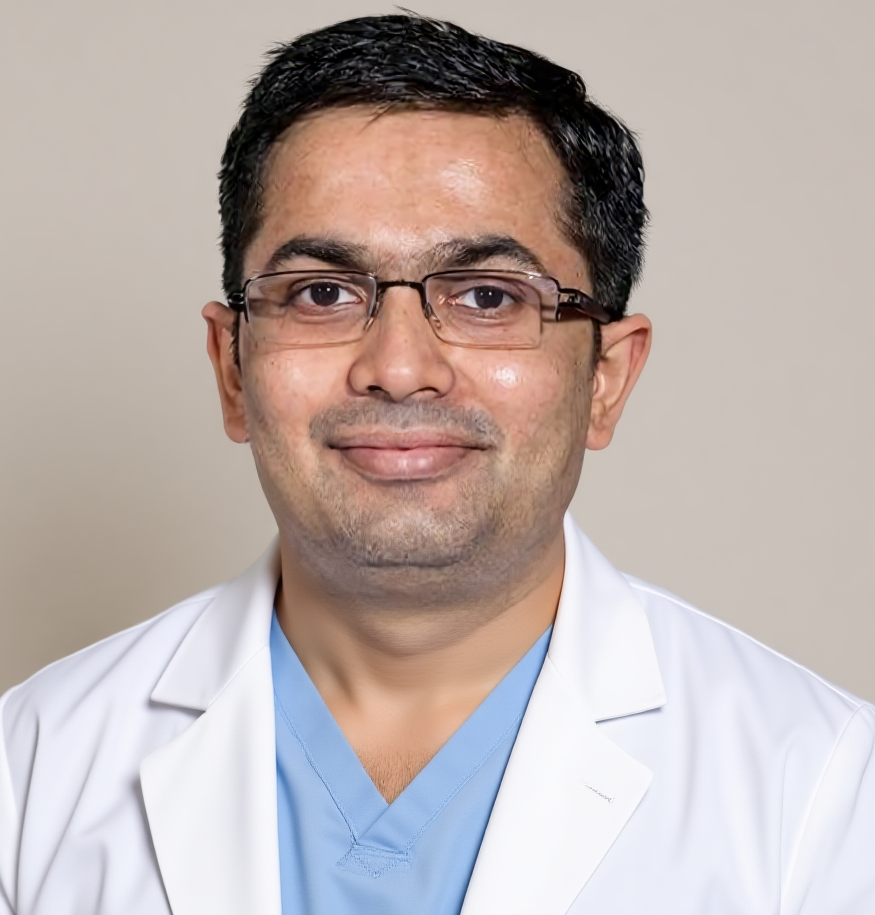
Shah’s Gastro, Cancer & Robotic Surgery Centre. Dr Harsh Shah trained in super-specialty programmes in surgical gastroenterology. He is qualified twice over in the field. He has 18 years of experience in GI and cancer surgery. This includes CRS and HIPEC for disease on the lining of the abdomen. The same surgeon sees you from the first visit to the follow-up visits.
Dr Harsh Shah
MS, MCh (Surgical Gastroenterology), DrNB (Surgical Gastroenterology)
Registered with Gujarat Medical Council, Reg. No. G-38738
Gastro & Cancer Surgeon · Apollo Hospital, Bhat, Gandhinagar · Gota OPD, Ahmedabad
Google rating 4.89 from 216 reviews at the Gota clinic, and 4.94 from 18 reviews at Apollo, Bhat.
At the tumour board, he states how far the disease has spread. He also states how complete he expects the removal to be. The laparoscopy confirms it, and he operates at Apollo Hospital, Bhat. In this field, choosing the patient is the treatment. CRS is one of the heaviest operations in abdominal surgery. It helps a small, carefully chosen group. It harms a poorly chosen one. So this page is about the decision, not the disease. It covers what is measured, what each finding changes, and when the honest answer is “not this operation”. What HIPEC is, in general terms, is explained on the HIPEC treatment page.
In India, tuberculosis (TB) of the abdominal lining can look just like peritoneal cancer. Tissue is tested for both before any treatment is planned.
TB can cause fluid in the abdomen, a thick fat apron, small nodules on the scan and even a raised CA-125. So nothing on the lining is treated as cancer until tissue has been checked for both. The tissue is taken by a guided needle or at laparoscopy. It goes for histology, which means study under the microscope. It also goes for the TB tests: an AFB smear, GeneXpert (MTB-PCR) and a TB culture. Tests on the fluid, such as ADA and the type of cells in it, add support. Operating on abdominal TB as if it were cancer does serious harm. It can be avoided, and it is seen in this region. If TB has not been ruled out, the case goes back to the tumour board. Nothing else is planned until then.
Two scores guide each decision about CRS, and both go in the operation note. One measures how much disease there is. The other records what is left at the end.
The first is the Peritoneal Cancer Index (PCI). It shows how much disease there is and where. The second is the completeness of cytoreduction (CC) score.
| Score | What it measures | Why it matters to you |
|---|---|---|
| Peritoneal Cancer Index (PCI). | The abdomen is split into regions. Each region gets a score for the size of the largest deposit in it. The total gives the amount of disease. | Along with the type of cancer, it decides if complete removal is realistic. The type of cancer matters more than the number alone. |
| Completeness of cytoreduction (CC score). | Recorded at the end of the operation. Either no visible disease is left, or only tiny specks are left, or larger nodules are left. | Only the first two are linked to a survival benefit. Leaving larger nodules gives the risk without the benefit. |
This is why each visit centres on one question. Can you remove it all? If the honest forecast is that larger nodules will be left, the operation should not be started.
The evidence for CRS and HIPEC differs for each cancer that spreads to the abdominal lining. So the decision is always made for your type of cancer.
Treating “peritoneal cancer” as one disease is the most common mistake in this field.
| Where it started | Cytoreductive surgery | HIPEC |
|---|---|---|
| Appendix: pseudomyxoma peritonei and low-grade mucinous tumours. | The strongest reason for this operation. Even widespread disease can benefit when it can all be removed. | The standard, with mitomycin-C, after complete removal. |
| Colon and rectum. | Offered to chosen patients with limited disease. The cancer must be well controlled elsewhere, with nothing outside the abdomen. Complete removal is what drives survival. | A randomised trial (PRODIGE 7) found no survival gain from adding oxaliplatin HIPEC to complete surgery. It also found more complications. If it is proposed, you are told this before you consent. |
| Stomach. | Very strict. Only very limited disease that has responded well to chemo, and ideally within a trial or specialist protocol. It is not offered as a routine option. | Weak evidence. Cancer cells found only in washings are treated as spread disease, with chemo. |
| Peritoneal mesothelioma. | Chosen patients at a specialist centre. | The standard of care in chosen patients. |
| Ovary. | Decided jointly with the gynaecological cancer team, usually after chemo. The GI surgeon’s role is the bowel work within that team. | Supported at that later operation, within the gynaecological pathway. |
Chemo for the whole body (systemic chemo) is given based on where the cancer started. It is given before and after the operation. Disease on the abdominal lining is never a reason to hold back chemo that works.
Saying no is part of choosing well. Dr Harsh Shah advises against CRS, or stops at the laparoscopy, when complete removal looks unlikely or the operation looks unsafe for you.
Any one of the findings below can lead to that advice.
When the operation is not the right step, care goes on. It includes chemo for the cancer it started from, and drainage of fluid when it builds up. A tunnelled catheter can drain fluid that keeps coming back. Early palliative care, which eases symptoms, is part of it too. Debulking only to control fluid is not done, because it does not help.
Each test before CRS answers a set question about extent, type or fitness. If one is missing, that is a reason to pause, not to go ahead.
| Test | What it decides |
|---|---|
| Tissue diagnosis, with the TB tests. | That this is cancer, and which type. |
| CT of the chest, abdomen and pelvis with oral and IV contrast. | How the disease is spread. Whether the small bowel is involved. Whether the mesentery is drawn in. |
| MRI with diffusion-weighted images. | Small deposits that CT may miss. |
| PET-CT, in some cases. | Spread outside the abdomen. It is poor at showing mucinous appendix disease, so it is not used for that. |
| Tumour markers: CEA, CA 19-9, CA-125. | A baseline for the cancer type, used later in follow-up. |
| Colonoscopy and upper endoscopy. | Where the cancer started, if that is not yet known. |
| Molecular tests on the tumour. | For bowel cancer, RAS, BRAF and MMR. For stomach cancer, HER2, PD-L1 and MSI. These guide chemo. |
| Nutrition, heart and lung checks, and performance status. | Whether the body can carry the operation, and what must be improved first. |
| Diagnostic laparoscopy. | The most accurate score of the disease, and whether complete removal can be done. |
Scans miss small deposits, most of all on the small bowel. A laparoscopy lets Dr Harsh Shah look directly, score the disease and judge completeness before the main operation.
It is a keyhole procedure under general anaesthesia, usually with a short stay. If complete removal looks possible, the main operation is planned. It may show small-bowel or mesenteric disease that cannot be cleared. Then the abdomen is not opened, and the plan turns to chemo and supportive care. The same rule holds once the abdomen is open. If complete removal turns out not to be possible, the operation is stopped. Stopping is not a failure of judgment. Pressing on with an incomplete operation would be. You are told about this, in plain words, before you sign.
CRS is not one procedure but a set. They are chosen during the operation to clear every visible deposit. Which ones you need depends on where the disease lies.
★★★★★
“My mother underwent laproscopic surgery for ovary cancer and then we found out that it had cancer. The cancer came from appendix and spread to all inside abdomen, omentum and peritoneum cytoreductive surgery and hipec was done by Dr Harsh shah and Dr swati shah. Thank u so much both of you.”
— Shradhdhaben Goswami, Google review, Google listing
★★★★★
“I had a truly positive experience with Dr. Harsh Shah. He is not only highly knowledgeable but also very compassionate and patient in explaining every detail. I underwent CRS HIPEC surgery under his care, and I couldn’t have asked for a better doctor. The entire process was smooth, and his expertise made a complex procedure feel manageable. Post-surgery recovery was well-monitored, and he was always available for any concerns. Highly recommend Dr. Harsh Shah for anyone needing advanced surgical oncology care.”
— Akram Khan, Google review, Robotic Cancer Surgery in Ahmedabad listing
★★★★★
“We are very thankful to Dr. Harsh Shah for successfully performing the Whipple’s procedure. From the beginning, he explained everything clearly and gave us great confidence throughout the treatment. Today, we are happy to share that we received the discharge and are going home with a positive feeling. Thank you, Dr. Harsh Shah, for your expertise, care, and support. Highly recommended for GI surgery.”
— Desai Sonal, Google review, Apollo Hospital, Bhat listing
Reviews are reproduced exactly as written on Google, including the words the families chose. This page itself makes no comparative claim. The first two describe cytoreductive surgery with HIPEC by Dr Harsh Shah. The third describes another major GI operation by him.
For this operation, getting ready truly changes how you come through it. Fitness training and nutrition start at the first OPD visit. An intensive care bed is booked ahead.
After CRS with HIPEC, patients go to intensive care. Recovery follows a slower plan than other abdominal operations. A slow return of bowel function is expected, not a complication.
| When | What happens |
|---|---|
| Day of surgery. | Intensive care with a close watch. Urine output is checked hourly. Blood clotting, salts and acidity are corrected. Pain relief comes from several medicines together. |
| The first days. | Daily blood counts and kidney and liver tests. Gentle movement out of bed. A step down from intensive care once stable. Feeding by vein or tube is planned early. |
| The rest of the first week. | Diet starts as the bowel wakes up. Drains are checked daily for any leak. Stoma teaching begins. The white cell count is watched with care. |
| The second week. | The white cell count usually reaches its lowest point after HIPEC, then recovers. Discharge usually falls in this window. It is later if there is any complication. |
You go home when all of these are true. You are eating, or settled on a nutrition plan. Your bowel is working. Your white cell count has passed its lowest point and is rising. You have had no fever for a day. Your pain is controlled with tablets. You can walk on your own and manage any stoma. Your kidney function is stable. You leave with a written follow-up plan and a list of warning signs.
Fever or a fast pulse at any point, falling urine output, or drain fluid that turns cloudy, bile-coloured or bowel-like is never watched overnight. The team acts the same day.
Each points to a leak, an infection while the white cells are low, or strain on the kidneys. A fever in the second week with a low white cell count is a chemo complication in a surgical patient. Blood cultures and antibiotics start within the hour. A growth-factor injection and isolation are added. Cloudy or bowel-like drain fluid with fever means a possible leak at a join. The patient takes nothing by mouth and gets antibiotics and an urgent CT. The operating surgeon is told at once. Falling urine output leads to fluid correction and a kidney review. Any medicine that could harm the kidneys is stopped.
CRS with HIPEC carries more risk than almost any other abdominal operation, and the consent talk says so plainly. Dr Harsh Shah gives your own figures at that talk.
The figures for your own case are given in person, not on a web page.
Around the operation. Bleeding may need a transfusion. There may be a wound infection, or clots in the legs or lungs. Heart or breathing problems can occur. A stay in intensive care is planned. Serious complications may need further procedures. A bowel join can leak, and this is more likely when there are several joins. Pus can collect inside the abdomen. The bowel can take a long time to start working. The heated chemo can lower the white cells, with a risk of serious infection. The kidneys can be strained, most of all with cisplatin. Fluid can gather around the lung after the diaphragm lining is stripped. Bile or pancreatic fluid can leak. You may need a return to theatre. You may need a stoma, for a time or for good. The hospital stay can be two to four weeks. There is a risk of dying, and it is stated plainly.
Later on. A hernia can form at the wound. Adhesions can block the bowel. Bowel habit can change. Tiredness can last for months. Where the womb and ovaries are removed, there is infertility and early menopause. The cancer can return even after complete removal. That is why follow-up is lifelong.
The first visit is about two weeks after discharge. It covers the pathology report and completeness score, the wound and any stoma, nutrition, and referral for chemo after surgery.
| Period | What is checked |
|---|---|
| First two years. | Every three months: symptoms, weight, fitness and tumour markers. A CT scan every three to six months. |
| Years three to five. | Every six months, with scans every six months. MRI when CT is unclear about small deposits. |
| Low-grade pseudomyxoma. | Checks go on well beyond five years. It can return late and is often still treatable. |
| Stoma. | Reversal is assessed once the disease and any chemo allow. |
Recovery from this operation takes months. Patients tend to under-report tiredness, poor appetite and low mood. Nutrition, fatigue, hernia checks and emotional support are part of follow-up, not extras.
Take a second opinion if CRS was offered without a tissue diagnosis that also ruled out TB. Do the same if no laparoscopy was done when completeness was in doubt.
It is also worth it if no one told you your PCI and the completeness the surgeon expects. The same goes if HIPEC was proposed for bowel cancer and no one mentioned the PRODIGE 7 result. Or if HIPEC was offered “to prevent” spread in high-risk bowel cancer. Or if a stomach cancer with spread is being sent straight to surgery outside a trial or specialist protocol. Or if the case was not discussed at a tumour board. Or if no one has explained what happens if complete removal turns out to be impossible on the day. A second opinion that agrees with your plan is not wasted. It lets you go into a long operation with no question left open.
Dr Harsh Shah does the laparoscopy and the main operation himself. CRS is an open operation, done at the table, not at a robotic console.
Any choice to stop, to remove another organ or to leave out HIPEC is his. He makes it in the theatre. Afterwards, he explains exactly what was done and why.
Dr Harsh Shah explains what CRS and HIPEC involve, and who they are considered for. Whether they suit you is decided only after your own tests and the tumour board.
The cost depends on how big the operation is, whether HIPEC is given, the days in intensive care and in hospital, and the chemo before and after.
A written estimate is given before admission and explained line by line. Apollo Hospital, Bhat, works with the major insurers and cashless schemes. The office handles pre-authorisation directly. If a stay runs longer, a request to raise the approved amount is made at the time. On admission, bring imaging on a disc or drive and the biopsy and chemo summaries. Also bring your medicines with doses, the insurance card and ID. Bring one family member who will learn stoma and drain care.
No. HIPEC is added only where the evidence supports it for your type of cancer. It is the standard for appendix tumours such as pseudomyxoma and for mesothelioma. For bowel cancer, a randomised trial showed no survival gain from adding oxaliplatin HIPEC to complete surgery, so if it is proposed you are told this first.
The operation is stopped, at the laparoscopy or after opening. An incomplete operation brings the risks without the benefit. Treatment then continues with chemotherapy and supportive care, and you are told about this possibility before you consent.
Scans miss small deposits, especially on the small bowel. Looking directly lets the surgeon score the disease and judge whether complete removal is possible before you are committed to a major operation.
Possibly. If a segment of bowel has to be removed, a stoma may be needed for a time or, less often, permanently. The stoma nurse marks a site before surgery in every case, and reversal is assessed later.
Usually a stay in intensive care first, then two to four weeks in hospital in all. Recovery at home takes months, and tiredness is common in that period.
Only rarely. It is considered for very limited disease that has responded well to chemotherapy, preferably within a trial or specialist protocol. For most patients, chemotherapy is the main treatment.
Shah’s Gastro, Cancer & Robotic Surgery Centre — Gota, Ahmedabad
Consultations, review of scans, follow-up and surveillance.
Google: Dr Harsh Shah · 4.89 from 216 reviews
Directions to the Gota clinic · +91-63555-64601
Apollo Hospital — Bhat, Gandhinagar
Apollo Hospital International Limited, Plot No. 1 A, GIDC Bhat Industrial Estate, Bhat, Gandhinagar.
Google: Dr Harsh Shah – Robotic GI Surgeon · 4.94 from 18 reviews
Directions to Apollo, Bhat · WhatsApp +91-63555-64601
Families come to Ahmedabad for cytoreductive surgery from across Gujarat. They come from Gandhinagar, Mehsana, Banaskantha, Nadiad, Anand, Bhavnagar, Rajkot, Jamnagar and Kutch. Some come from southern Rajasthan and western Madhya Pradesh.
Have you been told that cancer has spread to the lining of the abdomen, and that CRS or HIPEC might be possible? You can send your reports ahead of your visit. Send the biopsy report and your CT, MRI or PET-CT images on a disc. Add the tumour marker results, colonoscopy and endoscopy reports, any operation note and the chemo summary. The visit then starts with them already read. Treatment is decided at the visit, after an exam. Call +91-63555-64601 · Send the reports ahead on WhatsApp
Swasth Parivar: twice a month, practical advice on recovery, diet and warning signs. No advertising. Stop any time.
Your number is used for these updates and for the clinic to reach you. It is never sold or passed on. To stop, reply STOP on WhatsApp.