

Last updated: 13-Nov-2026
Tapping Book on WhatsApp will likely open the WhatsApp app on your phone.
Call For Appointment · Book on WhatsApp
Tapping Book on WhatsApp will likely open the WhatsApp app on your phone.
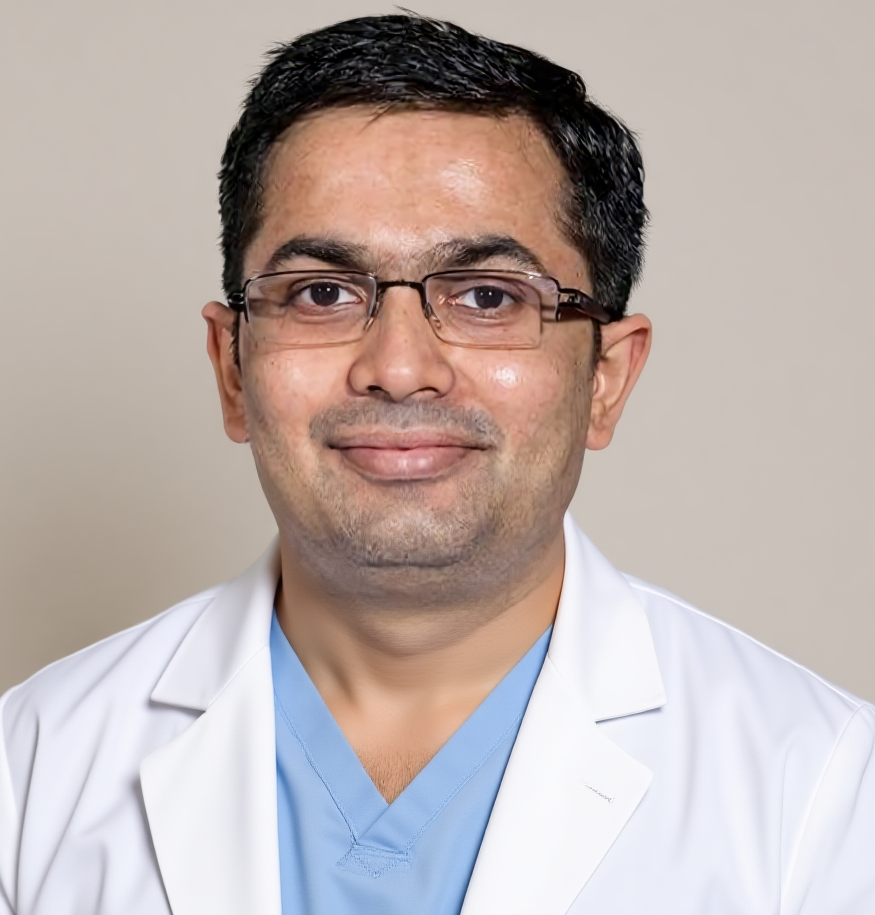
Dr Harsh Shah
MS, MCh (Surgical Gastroenterology), DrNB (Surgical Gastroenterology)
Registered with Gujarat Medical Council, Reg. No. G-38738
Gastro & Cancer Surgeon · Dr. Jivraj Mehta Hospital, Vasna, Ahmedabad
18 years of experience in surgery of the liver, bile ducts, pancreas, stomach, colon and rectum.
In short
The liver bleeds easily and must keep working after part of it is gone. That makes liver surgery a different kind of operation. A surgeon who works on the liver and bile ducts regularly plans each cut around the blood vessels and the liver left behind.
Good care also needs a team and a hospital with intensive care and a blood bank. You can check all of this yourself with a few plain questions.
This page explains why the surgeon’s focus matters. The full guide to scans, liver reserve and treatment options is in the liver cancer guide by Dr Harsh Shah.
The liver is full of large blood vessels and bile channels, and it has to keep working after surgery. Both facts shape the operation.
A liver tumour often sits close to the main veins that carry blood to and from the organ. A small slip can mean heavy bleeding. At the same time, the part that stays behind must be big enough and healthy enough to do the work of the whole liver while it grows back. This is why a clear plan before the first cut matters so much.
The difference is in the planning and in the small steps: how much liver stays, how bleeding is kept low, and how the bile channels are protected.
Dr Harsh Shah trained in surgical gastroenterology, which covers the liver, bile ducts and the rest of the digestive system. His operations are laparoscopic (keyhole) or open.
Liver cancer care is a team effort. The surgeon works with several other specialists, and each one affects the result.
| Member of the team | What they add |
|---|---|
| Surgical gastroenterologist | Plans and performs the operation, and handles problems afterwards |
| Radiologist | Reads the scans that map the tumour, the vessels and the liver left behind |
| Anaesthetist and intensivist | Keep you safe during surgery and watch you closely in the first days |
| Hepatologist or physician | Treats the underlying liver disease, such as hepatitis or cirrhosis |
| Medical oncologist | Advises on drug treatment when the tumour or report calls for it |
| Pathologist | Studies the removed part and confirms the final stage |
| Nurses, physiotherapist and dietitian | Help you move early, eat well and recover |
Before surgery, a case is often discussed with this group, so the plan is agreed and not made by one person alone. Ask whether this happens where you are treated.
A liver operation is safest in a hospital with intensive care, a blood bank, round-the-clock doctors and scans on site.
Most people recover smoothly. But bleeding, a bile leak or a drop in liver function can show up without warning in the first days. The treating surgeon should be reachable, should know your case, and should be able to act the same day. Ask who looks after you at night and who answers your family’s calls.
No. A famous name or a large hospital is not proof of fit. What matters is training, regular work on the liver, and honest, clear talk.
A good surgeon explains your scans in plain words, tells you the options and the risks, and does not hurry you. A good surgeon also welcomes a second opinion. If you feel rushed or confused, take that as a signal to ask more.
You can check a surgeon’s focus with a few questions and a look at their registration and training.
A longer list is in our page on questions to ask your liver cancer surgeon. If you want to compare views, read about getting a second opinion on a liver plan.
Yes, in how the operation is planned and done: how much liver is left, how bleeding is controlled and how the bile channels are protected. A focused surgeon meets these steps often.
Some can, if trained for it. Ask about their training and how often they operate on the liver. If you are unsure, a second opinion is reasonable.
Not always. Keyhole suits some tumours and can mean a quicker recovery. Open surgery is safer in other cases. The right choice depends on you and the tumour.
Fees depend on the hospital and room, not only on the surgeon. Ask for a written estimate before you decide.
You are free to take another view at any time. Bring your reports and scan discs, and it is fine to say you are comparing plans.
Dr Harsh Shah — Dr. Jivraj Mehta Hospital, Vasna, Ahmedabad
Dr. Jivraj Mehta Hospital, Dr Jivraj Mehta Marg, Vasna, Ahmedabad 380007.
Consultations, review of reports and scans, operations and follow-up. OPD Monday to Saturday, 9 am to 5 pm.
Appointments: +91-63555-64601 · +91-63590-11009 · Hospital 079-2663 6363
Directions to the hospital · WhatsApp +91-63555-64601
Back to the main guide: Liver cancer with Dr Harsh Shah.
Tapping Book on WhatsApp will likely open the WhatsApp app on your phone.
Swasth Parivar: every week, practical advice on recovery, diet and warning signs. No advertising. Stop any time.
Your number is used for these updates and for the clinic to reach you. It is never sold or passed on. To stop, reply STOP on WhatsApp.