

WhatsApp

Liver Tumour on the Scan: Who Should Plan the Surgery?

Dr. Jivraj Mehta Hospital · Vasna, Ahmedabad

Tapping Book on WhatsApp will likely open the WhatsApp app on your phone.

Liver cancer surgeon in Ahmedabad · Dr. Jivraj Mehta Hospital, Vasna, Ahmedabad

Last updated: 27-Oct-2026

A growth in the liver is judged by two things: the growth itself, and how much healthy liver will remain. A safe plan needs both answers before any operation is chosen. Ask for them in plain words.

A scan that shows a “lesion in the liver” is frightening. It may be cancer that began in the liver. It may be cancer that came from the bowel. Some lesions are not cancer at all. Each has a different path. This page explains how the liver is assessed, when an operation is possible, what the other options are, and what to ask before you agree to a plan. Our page on liver resection for hepatocellular carcinoma covers that one cancer in more detail.

About the surgeon

Dr Harsh Shah is a gut and cancer surgeon who operates on the liver, bile ducts, pancreas and bowel. Liver surgery sits within a wider practice, so each patient gets advice from a surgeon who knows the neighbouring organs well.
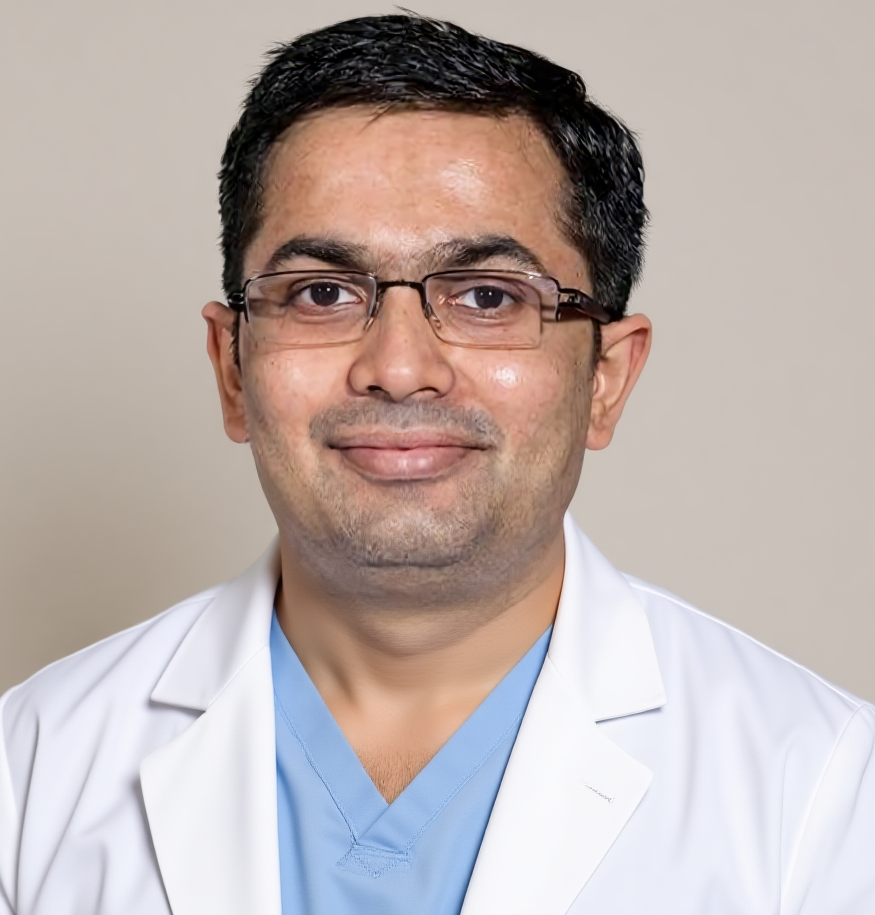
Dr Harsh Shah, liver cancer surgeon, Ahmedabad
Dr Harsh Shah — MS, MCh (Surgical Gastroenterology), DrNB (Surgical Gastroenterology).

Dr Harsh Shah. He trained at Maulana Azad Medical College and GB Pant Hospital in Delhi. His work is cancer and major surgery of the food pipe, stomach, liver, pancreas, gallbladder and bowel. He operates by the open and 3D HD laparoscopic routes. You see the same surgeon from the first visit to the last follow-up.

Dr Harsh Shah
MS, MCh (Surgical Gastroenterology), DrNB (Surgical Gastroenterology)
Registered with Gujarat Medical Council, Reg. No. G-38738
Gastro, Cancer & Laparoscopic Surgeon · Dr. Jivraj Mehta Hospital, Vasna, Ahmedabad

Google rating 4.94 from 18 reviews at Dr. Jivraj Mehta Hospital, Vasna, Ahmedabad.

New patients are seen at Dr. Jivraj Mehta Hospital, Vasna in Ahmedabad. Operations take place at Dr. Jivraj Mehta Hospital, Vasna, Ahmedabad. A liver surgeon works with a radiologist, a pathologist and a medical oncologist, and with a transplant team when a transplant is the better route.

Three kinds of liver cancer

Liver cancer is not one disease. Primary liver cancer, bile duct cancer inside the liver and cancer spread from the bowel are treated differently.

The main types and how they differ
TypeWhere it startsWhat shapes the plan
Hepatocellular carcinoma (HCC).In the liver cells, often on a liver already scarred by hepatitis or fatty liver.The health of the rest of the liver matters as much as the tumour.
Intrahepatic bile duct cancer.In the small bile ducts inside the liver.Nodes and the spread along the ducts.
Spread from the colon or rectum.The bowel, with seeds in the liver.Control of the bowel cancer and the number and position of the spots.

A fourth group is benign growths such as haemangioma or a simple cyst. These are found by chance and usually need only watching.

Signs that call for a scan

Early liver cancer often gives no signs. Many are found on a scan done for another reason, or during follow-up of a known liver disease.

  • Known cirrhosis, hepatitis B or C or fatty liver with a rise in the liver blood marker AFP.
  • A dull ache or a fullness in the upper right belly.
  • Weight loss and loss of appetite without a clear reason.
  • Yellow eyes or skin, with dark urine.
  • Swelling of the belly from fluid.
  • A new spot on the liver in a person treated for bowel cancer.

People with long-standing liver disease should have an ultrasound every six months, whether or not they feel well. That routine is how most early cancers are caught.

Tests that decide the plan

A good work-up answers three questions. What is the growth? Where is it in relation to the liver’s blood vessels? Will enough healthy liver be left behind?

  1. Triple-phase CT or MRI of the liver. This shows the growth, its blood supply and its relation to the main vessels.
  2. Blood tests. They include liver function, clotting and AFP. A CEA test is added when bowel cancer is suspected.
  3. Child-Pugh and similar scores. These grade how well a scarred liver is working.
  4. Volume of the liver that will remain. It is measured on the scan before a large resection.
  5. Biopsy, only when needed. Many liver growths in cirrhosis are diagnosed on the scan alone.
  6. Chest scan and, in some patients, PET. These look for spread outside the liver.
  7. Fitness checks. Heart, lungs, sugar and kidney tests prepare the patient.

The question that decides surgery

Liver surgery is a balance. The aim is to remove the whole growth and leave a liver big enough, and healthy enough, to keep the patient well.

A normal liver can regrow and tolerate removal of a large part. A cirrhotic liver cannot. For this reason the same tumour may be operable in one patient and not in another.

Factors that favour or limit an operation
FactorWhy it matters
Liver function and scarring.A poorly working liver may fail after a large resection.
Size and number of growths.A single growth is easier to remove than many.
Closeness to main blood vessels or ducts.It decides how much liver has to go with it.
Remaining liver volume.The remnant must be large enough to support the body.
Spread outside the liver.It may change the treatment from an operation to drugs.

The options, side by side

Surgery is one of several ways to treat a liver growth. The right choice depends on the type, the size and the state of the liver.

  • Resection. Removing the part of the liver that holds the growth, keeping the rest.
  • Ablation. Heat applied through a needle to small growths, in patients who cannot have a resection.
  • Liver transplant. For selected patients with early cancer in a failing, scarred liver. It is done at a transplant centre.
  • Artery-directed treatment. Drugs or beads placed in the vessel feeding the growth, by a radiologist.
  • Radiation or drug therapy. Used when an operation is not possible, or after it in selected cases.

Often two or more of these are combined, one after another. A tumour board looks at the whole picture before the order is set.

How the liver is removed

The liver is made of segments, each with its own blood supply and bile drainage. Surgeons remove the segments that hold the growth and spare the rest.

  • Segmentectomy or wedge resection for a small growth away from major vessels.
  • Hemihepatectomy, removal of the right or left half, for a larger growth.
  • Extended resection for a growth that spans both halves, when the remnant allows it.
  • Resection of the liver with the bile duct when the duct is involved.

Blood loss is the main risk in liver surgery. Careful control of the liver’s inflow and outflow vessels keeps it low.

Making a small liver bigger

If the liver that would remain is too small, it can sometimes be made to grow first. This turns some “unfit” tumours into operable ones.

  • Portal vein embolisation. The vein to the side being removed is blocked, so the other side grows over some weeks.
  • A staged plan. The two sides are operated on in two steps, when growths are in both halves.
  • Re-scan before the operation. The new volume is measured, and a decision is made then.

Keyhole or open surgery

Both methods aim for the same cancer clearance. The choice depends on the tumour’s position, its size and the state of the liver, not on fashion.

How the approach is chosen
FactorHow it affects the choice
Position of the growth.Growths at the front and edge of the liver suit keyhole surgery better.
Growths near major vessels.An open operation can give safer control.
Scarred liver and raised pressure in its veins.Smaller cuts help some patients and add bleeding risk in others.
Earlier belly operations.Scar tissue can make keyhole access harder.

If the keyhole route proves unsafe during the operation, the surgeon changes to an open one. That is a safe decision and not a failure.

Cancer spread from the bowel

Spots in the liver from a colon or rectal cancer can often be removed. The liver and the bowel plans are made together.

  • Drugs may come first to shrink the spots and test how the cancer behaves.
  • The bowel and liver operations may be done at the same time or in two steps.
  • A few small spots may be treated with ablation along with a resection.
  • Careful follow-up scans look for new spots in the following years.

How a plan is made here

Every case is looked at by the tumour board before a date is fixed. The question is simple: what is the least a patient needs for the safest result?

  1. First visit. Dr Shah takes the history, examines you and reads each report himself.
  2. Gaps filled. A missing scan, liver test or slide review is arranged first.
  3. Tumour board. The surgeon, medical oncologist, radiologist and pathologist agree the order of treatment.
  4. Family meeting. The plan is explained in plain words, with options and risks.
  5. After treatment. The reports are reviewed with you, and the next step is decided.

Getting ready for surgery

A patient who is strong, well nourished and free of infection tolerates liver surgery better. When time allows, a few weeks of preparation are worthwhile.

  • Protein-rich food and a dietitian’s advice.
  • Control of sugar, blood pressure and lung problems.
  • Treatment of fluid in the belly or of hepatitis, as advised.
  • Stopping alcohol and smoking.
  • Breathing and walking exercises before the operation.
  • A review of all medicines, including blood thinners and herbal products.

The risks, said plainly

Every major operation carries risks. Yours depend on your liver, your age and the extent of the operation, and will be discussed in person before you consent.

  • Bleeding, which is why the liver’s vessels are controlled with care.
  • Bile leak from the cut surface, which can be treated with a drain or a tube.
  • Liver failure after a large resection, which the planning described above tries to prevent.
  • Fluid in the belly or chest in the first days.
  • Infection of the wound or inside the belly.
  • Clots in the legs or lungs. Early walking and blood thinners lower this.
  • The cancer coming back, which is why follow-up continues for years.

Recovery and follow-up

Most patients walk the day after surgery and eat within a few days. The liver regrows over the next weeks, and follow-up scans continue for years.

The usual path after surgery
WhenWhat happens
First days.Careful monitoring, walking, light fluids and then food, and drains if placed.
Going home.Small meals, wound care, medicines and a review visit.
Some weeks later.The slide report is reviewed. Further treatment is planned if advised.
First two years.Blood tests and scans at set gaps.
Following years.Scans at longer gaps, and control of the underlying liver disease.

Keep every report and the final slide result. They tell any future doctor what was found and what was done.

Looking after the liver itself

Treating the growth is only part of the job. The liver that remains must be protected, or new growths may appear.

  • Treatment for hepatitis B or C, as advised by a liver physician.
  • No alcohol for patients with liver disease.
  • Weight and sugar control when the cause is a fatty liver.
  • Vaccination, as advised.
  • An ultrasound or scan every few months, even when you feel well.

When a second opinion helps

A second opinion is most useful before treatment starts, or when the advice seems rushed or unclear. It is also useful if the scan has not been explained in full.

Signs that a second look would help
What you noticeWhy it matters
Told the growth cannot be operated on, with no mention of liver volume.A smaller liver can sometimes be made to grow first.
Told that a transplant is the only option.Not every patient needs it, and not every patient qualifies.
Advised to start drugs, but no surgeon has seen the scan.Operability should be judged first.
No reasons given for choosing ablation over surgery.The size and position should be explained.
Told that spots from the bowel mean the end of treatment.Many can still be removed.

A second opinion that agrees with your plan is not wasted. Bring the scan images on a disc, the reports and all prescriptions.

Questions to ask any surgeon

  1. What is the type of the growth, and how sure are we?
  2. How much liver will be left, and how was that measured?
  3. Has a tumour board seen my case?
  4. Is ablation, a transplant or an artery-directed treatment better for me?
  5. Is keyhole or open surgery planned, and why?
  6. What will protect my liver afterwards?
  7. What does the follow-up schedule look like?

What patients and families have said

★★★★★

“Dr. Harsh performed my wife’s gallbladder surgery and has been a thorough professional. He truly assuaged our concerns and treated us with great care. I have never met a surgeon who is consistently upbeat, and that makes a real difference to families whose loved ones are undergoing a surgical procedure.”

— Gaurav Roy, Google review

★★★★★

“Precise and excellent surgical operation done by Dr.Harsh Shah, I really appreciate their consultation and guidance.”

— bikash tarafdar, Google review

★★★★★

“Dr harsh operated my sister for liver cancer .we came for follow up .Now she is good. Thank u so much sir”

— Natu Vadalia, Google review

Reviews are reproduced exactly as written on Google. They speak about Dr Harsh Shah’s care in GI surgery, and do not name liver cancer.

From first visit to follow-up

  1. First consultation. At Dr. Jivraj Mehta Hospital, Vasna, with every report and scan disc.
  2. Completing the tests. Liver volume, a blood test or a slide review, if anything is missing.
  3. Tumour board. A written plan follows.
  4. Treatment. Surgery at Dr. Jivraj Mehta Hospital, Vasna, Ahmedabad, or another route if advised.
  5. Further drugs, if advised. Given with the medical oncologist, close to home when possible.
  6. Follow-up. Regular checks, and a clear plan if anything changes.

Cost, insurance and admission

The cost depends on the operation, the hospital room and the number of days in hospital. A written estimate is given before admission.

Dr. Jivraj Mehta Hospital, Vasna, Ahmedabad, works with the major insurers and offers cashless admission. The insurance desk handles pre-authorisation. On admission, bring the scan reports and images, liver blood tests, your medicines with doses, the insurance card and an identity proof. For questions before booking, call +91-63555-64601.

Frequently asked questions

Can liver cancer be removed by surgery?

In many patients, yes, if the growth can be taken out and enough healthy liver is left behind. Scans and liver tests decide this, not the size of the growth alone.

Will I need a liver transplant?

Not usually. A transplant is for selected patients with early cancer in a badly scarred liver. Many patients are treated with an operation, ablation or other methods instead.

How much of the liver can be removed?

A healthy liver tolerates removal of a large part and regrows. A scarred liver tolerates much less. The remaining volume is measured on the scan before any large resection.

Is ablation as good as surgery?

For small growths in selected patients, ablation can work well. For others, surgery removes the growth more fully. The size, the position and the state of the liver decide.

How long is the hospital stay?

Many patients go home within about a week if recovery is smooth. Your own stay depends on the operation and your health.

Where does Dr Harsh Shah see patients?

Consultations are at Dr. Jivraj Mehta Hospital, Vasna in Ahmedabad. Operations are at Dr. Jivraj Mehta Hospital, Vasna, Ahmedabad. Call +91-63555-64601 to book.

Where Dr Harsh Shah sees and operates

Dr. Jivraj Mehta Hospital, Vasna, Ahmedabad
Dr. Jivraj Mehta Hospital, Dr Jivraj Mehta Marg, Vasna, Ahmedabad 380007.
Operations, endoscopic procedures and hospital stay.
Google: Dr Harsh Shah · 4.94 · 18 reviews
Directions to Dr. Jivraj Mehta Hospital, Vasna · WhatsApp +91-63555-64601

Families come to Ahmedabad from across Gujarat, including Gandhinagar, Mehsana, Banaskantha, Nadiad, Anand, Bhavnagar, Rajkot, Jamnagar and Kutch, and from southern Rajasthan and western Madhya Pradesh.

A scan or blood test points to a liver growth? Send the CT or MRI report, the scan images on a disc, the liver blood tests and any biopsy. Dr Shah reads them before you arrive, so the visit goes to the plan and not to repeat tests. Call +91-63555-64601 · Bring reports to the visit

Tapping Book on WhatsApp will likely open the WhatsApp app on your phone.

Get health updates from Dr Harsh Shah on WhatsApp

Swasth Parivar: every week, practical advice on recovery, diet and warning signs. No advertising. Stop any time.

Your number is used for these updates and for the clinic to reach you. It is never sold or passed on. To stop, reply STOP on WhatsApp.

Dr Harsh Shah, Gastro, Cancer & Laparoscopic Surgeon, Ahmedabad
Privacy Overview

This website uses cookies so that we can provide you with the best user experience possible. Cookie information is stored in your browser and performs functions such as recognising you when you return to our website and helping our team to understand which sections of the website you find most interesting and useful.