

Last updated: 09-Nov-2026
Tapping Book on WhatsApp will likely open the WhatsApp app on your phone.
Call For Appointment · Book on WhatsApp
Tapping Book on WhatsApp will likely open the WhatsApp app on your phone.
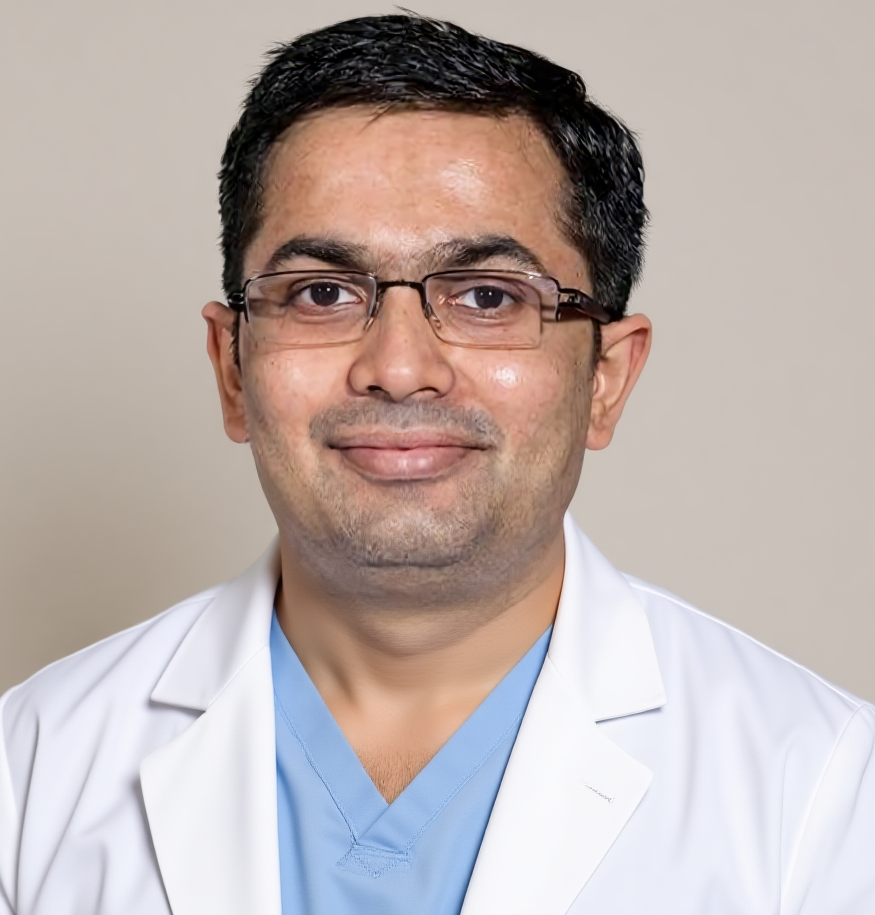
Dr Harsh Shah
MS, MCh (Surgical Gastroenterology), DrNB (Surgical Gastroenterology)
Registered with Gujarat Medical Council, Reg. No. G-38738
Gastro & Cancer Surgeon · Dr. Jivraj Mehta Hospital, Vasna, Ahmedabad
18 years of experience in surgery of the bowel, rectum, anal canal, liver, bile ducts and pancreas.
In short
Anal cancer is rare, so few surgeons see many cases. Care goes well when one team plans the whole path. A surgeon trained in gut cancer helps most when the cancer stays, returns or sits in an unusual place.
Radiotherapy and chemotherapy lead the first treatment. A surgical gastroenterologist joins that plan early, and does not wait for a crisis.
The disease itself is explained in the anal canal cancer guide by Dr Harsh Shah. This page answers one question: why the surgeon’s training matters.
A rare cancer gives each doctor little practice. Skill in a rare disease comes from training in the organs around it, and from working with a team.
Anal canal cancer sits between two worlds. It is close to the rectum, the muscles of continence, the pelvis and the groin glands. A general surgeon may meet it a few times in a career. A surgeon who works daily on the rectum and bowel meets the same anatomy every week.
That daily practice is the real reason training counts. It builds a steady hand in the pelvis. It also builds good judgement about what to leave alone.
A tumour board decides the plan. The surgeon, the radiation doctor, the medical oncologist and the pathologist look at your scans together.
The surgeon has a different role at each stage. In the first phase, the surgeon often does not operate. Their job is to read the scans, judge the tumour, and say plainly if surgery is not needed.
Skill counts most in the rare moments when an operation is needed. The table shows where the surgeon’s training changes the outcome for you.
| Situation | The question | What the surgeon brings |
|---|---|---|
| Small tumour at the edge | Can a local removal be enough? | Judgement on margins and on keeping the muscle that holds the stool |
| Cancer remains after radiotherapy | Is it scar or tumour? | Careful review of scans and biopsies before any operation |
| Cancer returns | Is a rescue operation possible? | Planning abdominoperineal resection and the stoma |
| Enlarged groin glands | Do they need removal? | Choosing the right groin procedure |
| Other bowel disease nearby | Does it change the plan? | One surgeon who treats the whole gut |
Much of the value is in the talk, not the knife. A good surgeon explains options, uncertainty and what each choice will change in your daily life.
Many people fear a stoma, or a loss of bowel control. These fears are fair, and they deserve straight answers. Dr Harsh Shah explains when a stoma is truly needed and when it is not. He also tells you when waiting and watching is the safer step.
Dr Harsh Shah performs his operations laparoscopically or by open surgery, chosen for your body and your cancer.
Look for a registered doctor with super-specialty training in gut surgery, and ask how often the team handles rectal and anal cancers.
Ask for the registration number and check it with the medical council. Ask whether your case will go to a tumour board. Ask who looks after you if there is a problem at night. Clear, calm answers are a good sign.
Dr Harsh Shah has completed super-specialty training in surgical gastroenterology and has 18 years of experience. He is registered with the Gujarat Medical Council, Reg. No. G-38738. The practical side of choosing is covered in how to choose a surgeon for anal canal cancer.
Yes, it helps. The surgeon reads your scans, joins the plan, and is ready if cancer stays or returns.
Many hospitals treat it, but it is rare. A centre with a gut cancer team and a tumour board gives you more safety.
A surgeon with extra training in operations on the food pipe, stomach, bowel, rectum, liver, bile ducts and pancreas.
No. A stoma is needed only if a major operation is required, such as removal of the anal canal and rectum.
Yes. A second opinion is a normal part of cancer care, and a good team welcomes it.
Dr Harsh Shah — Dr. Jivraj Mehta Hospital, Vasna, Ahmedabad
Dr. Jivraj Mehta Hospital, Dr Jivraj Mehta Marg, Vasna, Ahmedabad 380007.
Consultations, review of reports and scans, operations and follow-up. OPD Monday to Saturday, 9 am to 5 pm.
Appointments: +91-63555-64601 · +91-63590-11009 · Hospital 079-2663 6363
Directions to the hospital · WhatsApp +91-63555-64601
Back to the main guide: Anal canal cancer with Dr Harsh Shah.
Tapping Book on WhatsApp will likely open the WhatsApp app on your phone.
Swasth Parivar: every week, practical advice on recovery, diet and warning signs. No advertising. Stop any time.
Your number is used for these updates and for the clinic to reach you. It is never sold or passed on. To stop, reply STOP on WhatsApp.