

Last updated: 07-Nov-2026
Tapping Book on WhatsApp will likely open the WhatsApp app on your phone.
Want to know what the weeks ahead will look like? Book a visit with Dr Harsh Shah and bring your scans and reports to the consultation. · Call +91-63555-64601
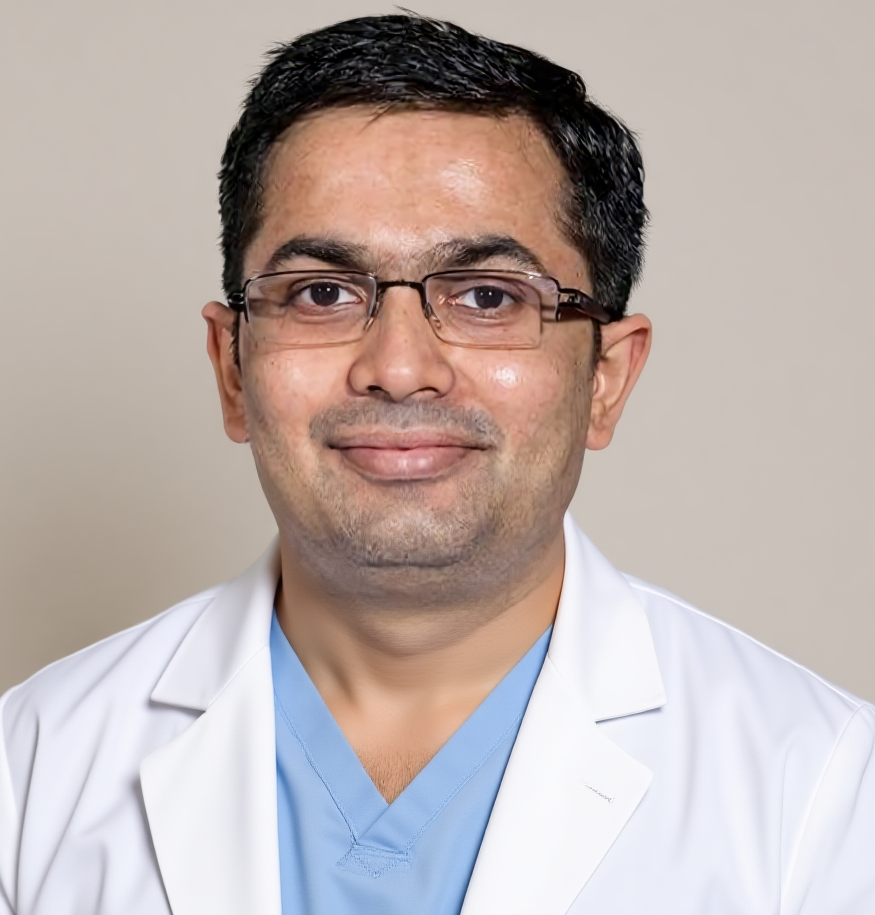
Dr Harsh Shah
MS, MCh (Surgical Gastroenterology), DrNB (Surgical Gastroenterology)
Registered with Gujarat Medical Council, Reg. No. G-38738
Gastro & Cancer Surgeon · Dr. Jivraj Mehta Hospital, Vasna, Ahmedabad
18 years of experience in surgery of the pancreas, liver, stomach, bowel and rectum.
In short
The journey has four parts. First come tests and preparation, then the operation. Recovery in hospital follows, and then months of care at home.
Knowing each part in advance makes it easier to cope. Most families say the unknown was harder than the steps themselves.
How pancreatic tumours are assessed and treated is explained in the pancreatic cancer guide by Dr Harsh Shah. This page walks through what the weeks around surgery feel like.
The first step is to check that the tumour can be removed and that your body is ready. This takes some days and sometimes a few weeks.
| Step | Why it matters |
|---|---|
| Pancreas protocol CT or MRI | Shows how close the tumour lies to the main blood vessels |
| Blood tests, including CA 19-9 | Checks the liver, kidneys, sugar and nutrition |
| Biliary drainage, if you are yellow | Clears jaundice when the bile duct is blocked |
| Chemotherapy first, in some cases | Shrinks borderline tumours so surgery works better |
| Heart, lung and anaesthesia check | Makes sure you can take a long operation safely |
Good food, short daily walks and breathing exercises before surgery help recovery. If jaundice is present, the surgeon may first place a small tube to drain the bile. Our page on borderline resectable pancreatic cancer explains when chemotherapy comes first.
You are asleep for the whole operation. It is a long one, because the surgeon must remove the tumour and then rejoin the digestive tract.
The common operation for a tumour in the head of the pancreas is the Whipple procedure. A tumour in the body or tail needs a distal pancreatectomy. Both are done by a trained surgical team, often with a drain left near the join. After the operation you are looked after in the intensive care unit first. Your family can read more about the operation itself in our page on the Whipple operation.
Recovery goes in small steps. Each day the team checks the drains, your pain, your breathing and how well you take food.
Some patients have a leak at the join, a delay in the stomach emptying, or an infection. The team watches for these closely and treats them early. Ask your surgeon how these are handled in the unit where you will be operated.
Strength comes back slowly over weeks. Eating little and often, and taking your medicines on time, matter most.
Many patients then need chemotherapy for some months to lower the chance of the cancer coming back. The medical oncologist plans this once the wound has healed and your strength allows.
Follow-up visits are frequent in the first year, then spread out. Each visit checks your weight, food, sugar and scans.
Bring your questions to every visit, and keep a family member beside you. A list of questions to ask your pancreatic surgeon can help you prepare. If cost is on your mind, read what pancreatic surgery costs and what insurance covers.
It differs for each person. Most patients stay one to two weeks, longer if a complication needs treatment. Your surgeon will guide you on the day.
Most people return to a near normal diet over some weeks. You may need enzyme capsules and smaller meals for a long time.
Some patients do, especially after removal of a large part of the pancreas. Sugar is checked often and treated if it rises.
Usually after a few weeks to a few months, depending on your job and whether chemotherapy follows.
One close family member who can help you walk, eat and speak with the team. A second can take turns.
Dr Harsh Shah — Dr. Jivraj Mehta Hospital, Vasna, Ahmedabad
Dr. Jivraj Mehta Hospital, Dr Jivraj Mehta Marg, Vasna, Ahmedabad 380007.
Consultations, review of reports and scans, operations and follow-up. OPD Monday to Saturday, 9 am to 5 pm.
Appointments: +91-63555-64601 · +91-63590-11009 · Hospital 079-2663 6363
Directions to the hospital · WhatsApp +91-63555-64601
Back to the main guide: Pancreatic cancer with Dr Harsh Shah.
Tapping Book on WhatsApp will likely open the WhatsApp app on your phone.
Swasth Parivar: every week, practical advice on recovery, diet and warning signs. No advertising. Stop any time.
Your number is used for these updates and for the clinic to reach you. It is never sold or passed on. To stop, reply STOP on WhatsApp.