


Introduction:
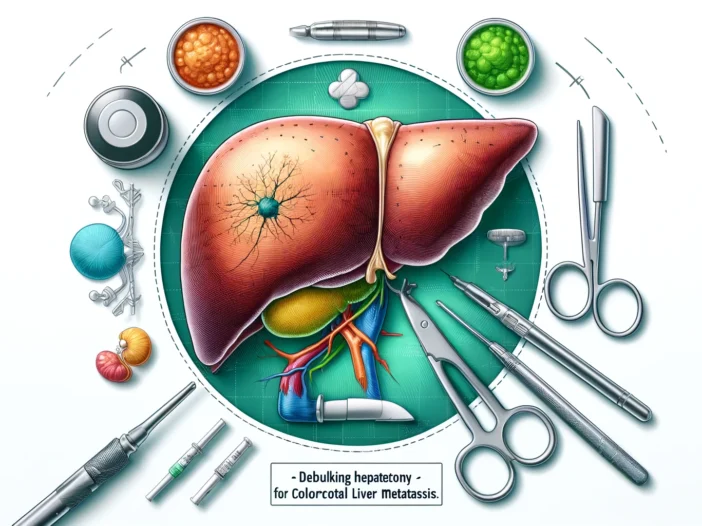
A recent study explored the role of debulking hepatectomy in patients with unresectable colorectal liver metastasis (CRLM). The aim was to identify risk factors affecting progression-free survival (PFS) and evaluate the feasibility and benefits of such an approach.
Study Details:
Population: Patients with advanced CRLM undergoing either curative intent hepatectomy or debulking hepatectomy.
Methodology: Comparison of outcomes, including overall survival (OS) and PFS, between two groups:
Group I: Resectable disease treated with curative intent.
Group II: Incompletely resectable disease treated with debulking hepatectomy.
Results:
No significant difference in intra-operative and post-operative outcomes between the groups.
OS Rates: 3-year OS was 69% for Group I and 64% for Group II; 5-year OS was 47% for Group I and 35% for Group II.
PFS Rates: 3-year PFS was 32% for Group I and 12% for Group II; 5-year PFS was 21% for Group I and 8% for Group II.
Independent predictors of lower PFS in the debulking group included bilobar metastases (HR=2.70), presence of extrahepatic metastasis (HR=2.65), and more than 9 metastases (HR=2.37).
Iterative liver surgery for CRLM was found to be a protective factor (HR=0.34).
Conclusion:
Aggressive debulking surgery may offer a survival benefit for selected patients with unresectable CRLM without increasing morbidity. The decision for surgery should be individualized based on patient-specific factors.
Read the full study here
https://doi.org/10.1016/j.suronc.2024.102056
Get health updates from Dr Harsh Shah on WhatsApp
Swasth Parivar: twice a month, practical advice on recovery, diet and warning signs. No advertising. Stop any time.
Your number is used for these updates and for the clinic to reach you. It is never sold or passed on. To stop, reply STOP on WhatsApp.
Leave a Reply