

WhatsApp

Colon Cancer Found? What to Ask Before Surgery Is Booked

Dr. Jivraj Mehta Hospital · Vasna, Ahmedabad

Tapping Book on WhatsApp will likely open the WhatsApp app on your phone.

Colon cancer surgeon in Ahmedabad · Dr. Jivraj Mehta Hospital, Vasna, Ahmedabad

Last updated: 27-Oct-2026

For most colon cancers, the operation is the main treatment, and what comes after depends on what the removed specimen shows. Stage, nodes and a few tissue tests decide whether drugs follow. Ask for that logic before a date is fixed.

A colonoscopy report that says “growth, biopsy taken” starts a fast chain of events. Scans, a surgeon, a date. Families often feel there is no time to think. A short, clear conversation at the start usually matters more than speed by a few days. This page explains how colon cancer is staged, when surgery alone is enough, when drugs are added, and what to check before you agree to a plan. Our page on colon cancer surgery goes further into the operation itself.

About the surgeon

Dr Harsh Shah is a surgical gastroenterologist who treats cancers of the whole gut. Colon cancer is a regular part of his operating list in Ahmedabad, with 18 years of experience behind it.
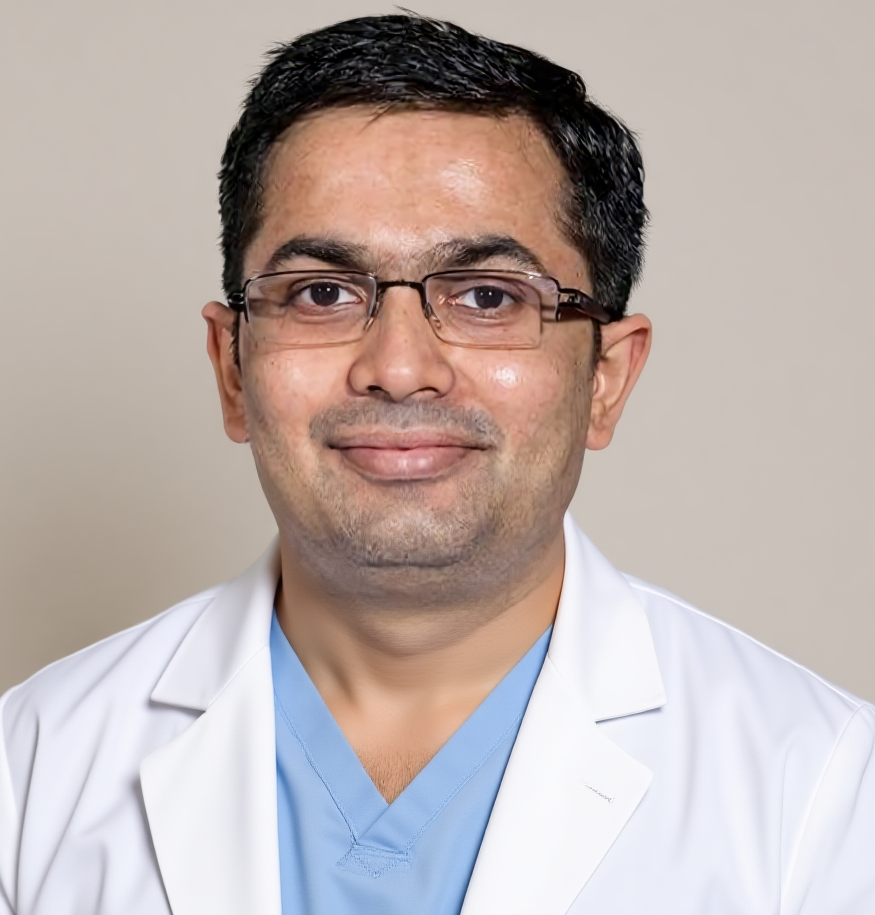
Dr Harsh Shah, colon cancer surgeon, Ahmedabad
Dr Harsh Shah — MS, MCh (Surgical Gastroenterology), DrNB (Surgical Gastroenterology).

Dr Harsh Shah. He trained at Maulana Azad Medical College and GB Pant Hospital in Delhi. His work is cancer and major surgery of the food pipe, stomach, liver, pancreas, gallbladder and bowel. He operates by the open and 3D HD laparoscopic routes. You see the same surgeon from the first visit to the last follow-up.

Dr Harsh Shah
MS, MCh (Surgical Gastroenterology), DrNB (Surgical Gastroenterology)
Registered with Gujarat Medical Council, Reg. No. G-38738
Gastro, Cancer & Laparoscopic Surgeon · Dr. Jivraj Mehta Hospital, Vasna, Ahmedabad

Google rating 4.94 from 18 reviews at Dr. Jivraj Mehta Hospital, Vasna, Ahmedabad.

Patients are first seen at Dr. Jivraj Mehta Hospital, Vasna in Ahmedabad. Operations are done at Dr. Jivraj Mehta Hospital, Vasna, Ahmedabad, where the intensive care unit and the stoma care team are close by. A medical oncologist joins the plan whenever drugs are likely to be needed.

What colon cancer is

Colon cancer starts in the inner lining of the large bowel. Most grow slowly from a polyp over years, which is why they can be caught early by a scope.

The colon is about one and a half metres long. It runs up the right side, across the upper belly, and down the left side to the rectum. Where the cancer sits changes the operation. It also changes the symptoms you notice first.

Site in the colon and what is usually noticed
SiteWhat patients often notice
Right side (caecum, ascending colon).Tiredness, low haemoglobin, vague discomfort. Blood is mixed in and not seen.
Transverse colon.Cramps, bloating, a change in bowel habit.
Left side (descending, sigmoid).Blood in stool, narrow stool, alternating loose and hard motions, blockage.

Signs that should not be ignored

A change in bowel habit that lasts beyond a few weeks, or blood in the stool, needs a colonoscopy. It should not be put down to piles or acidity without a scope.

  • Blood in the stool, red or dark.
  • A change in habit lasting more than three weeks.
  • Iron deficiency anaemia in an adult, with no clear cause.
  • Weight loss you cannot explain.
  • Cramping pain or a feeling of incomplete emptying.
  • Vomiting and swelling of the belly, which can mean a blockage.

Age is not a shield. A growing number of people in their thirties and forties are found to have colon cancer, so symptoms in a young adult still deserve a scope.

Tests that decide the plan

A good work-up answers three questions. What is the growth? How deep and how far has it gone? Is the patient fit for the operation?

  1. Colonoscopy with biopsy. It confirms cancer and checks the rest of the colon for other polyps.
  2. CT scan of chest and belly. It looks at nodes, the liver and the lungs.
  3. CEA blood test. It gives a baseline to follow after surgery.
  4. Mismatch repair test on the biopsy. It guides drug choice later and may point to an inherited condition.
  5. MRI or PET, in selected patients. They help when the CT is unclear.
  6. Heart, lung, sugar and blood checks. They prepare the patient for the operation.

Reading the stage

Stage describes how deep the cancer is in the bowel wall and whether nodes or other organs are involved. It is the main guide to what comes after surgery.

Stage and the usual path
StageUsual path
Early, confined to the inner layers.Operation alone, with regular follow-up.
Through the wall, nodes clear.Operation. Drugs are considered if the specimen shows higher-risk features.
Nodes involved.Operation followed by a course of drugs.
Spread to liver, lungs or the belly lining.A joint plan with the oncology team. Surgery may still have a role.

The final stage is known only after the specimen is studied. The scan gives an estimate, and the slide gives the answer.

The operation, in plain words

The surgeon removes the part of the colon holding the cancer, with its blood supply and the lymph nodes along it. The two healthy ends are then joined.

  • Right hemicolectomy for cancer on the right side.
  • Extended right or transverse colectomy for cancer in the middle colon.
  • Left hemicolectomy or sigmoid colectomy for cancer on the left side.
  • Subtotal colectomy in rare situations, such as cancer with an inherited condition.

The nodes along the blood vessels are removed together with the bowel, because they decide the stage and the next step. The join is made inside the belly. Most patients do not need a stoma.

Keyhole or open surgery

Both methods remove the same tissue. The choice depends on the tumour, the patient’s build and earlier surgeries, not on fashion.

How the approach is chosen
FactorHow it affects the choice
Size and position of the tumour.Large tumours stuck to nearby organs may need an open operation.
Earlier belly operations.Scar tissue can make keyhole access harder.
Bowel blockage.An emergency may need an open operation.
General health.Smaller cuts help recovery in many patients.

If the keyhole route proves unsafe during the operation, the surgeon changes to open surgery. That is a safe decision and not a failure.

When there is a blockage or an emergency

A blocked colon needs a different route. The aim is to relieve the blockage safely first, then remove the cancer once the patient is ready.

  • Colonic stent. A tube placed through the scope to open the narrowing, so that surgery can be planned after a few days.
  • A temporary stoma. Used when joining the bowel at once is unsafe.
  • Operation in one stage. Done when the patient is stable and the bowel is healthy enough.

A temporary stoma is usually closed after some months. Most families fear a stoma more than they need to. They should hear the facts early.

Drugs after surgery

Drugs are added when the specimen shows nodes with cancer, or other risk features. They lower the chance of the cancer returning.

  • The medical oncologist reviews the final slide report before deciding.
  • The course usually starts a few weeks after surgery, once healing is good.
  • The regimen depends on stage, age, kidney function and the mismatch repair result.
  • Side effects such as tiredness, numbness and loose stools are watched closely.

How a plan is made here

Every case is looked at by the tumour board before a date is fixed. The question is simple: what is the least a patient needs for the safest result?

  1. First visit. Dr Shah takes the history, examines you and reads each report himself.
  2. Gaps filled. A missing scan, slide review or blood test is arranged first.
  3. Tumour board. The surgeon, medical oncologist, radiologist and pathologist agree the order of treatment.
  4. Family meeting. The plan is explained in plain words, with options and risks.
  5. After surgery. The specimen report is reviewed with you, and the next step is decided.

Getting ready for surgery

A patient who is strong, well nourished and free of anaemia heals faster. A few weeks of preparation, when time allows, pay off.

  • Correct anaemia with iron or a transfusion if needed.
  • Protein-rich food and a dietitian’s advice.
  • Control of sugar, blood pressure and breathing problems.
  • Stop smoking, because it slows healing of the join.
  • Walking and breathing exercises, started before the operation.
  • A short meeting with the stoma nurse, even if a stoma is unlikely.

The risks, said plainly

Every major operation carries risks. Yours depend on your health, your stage and the urgency, and will be discussed in person before you consent.

  • Leak at the join. It is uncommon but serious, and may need another operation.
  • Wound infection or bleeding.
  • Slow return of bowel movement in the first days.
  • Clots in the legs or lungs. Early walking and blood thinners lower this.
  • Hernia at the scar in the following years.
  • The cancer coming back. This is why follow-up goes on for years.

Recovery and follow-up

Most patients walk the day after surgery and eat within a few days. Follow-up checks continue for years to catch any return early.

The usual path after surgery
WhenWhat happens
First days.Walking, light fluids and then food, pain relief and a drain if placed.
Going home.Normal diet in small meals, wound care and a review visit.
Some weeks later.Specimen report reviewed. Drugs begin if advised.
First two years.Visits, CEA tests and scans at set gaps.
Following years.Colonoscopy at advised intervals, and then less often.

Keep every report and the final slide result. They tell any future doctor exactly what was found and what was done.

Family history and young patients

Some colon cancers run in families. A young patient, or one with several relatives affected, should be checked for an inherited cause.

  • Cancer in two or more close relatives.
  • Colon cancer before the age of fifty.
  • Many polyps found at colonoscopy.
  • An abnormal mismatch repair result on the biopsy.

An inherited cause changes the extent of surgery and the follow-up. It also helps brothers, sisters and children decide when to be screened.

When a second opinion helps

A second opinion is most useful before the operation is booked, or when the advice seems rushed or unclear. It is also useful if the pathology report has not been explained.

Signs that a second look would help
What you noticeWhy it matters
A date was fixed within a day of the biopsy.Staging scans may be incomplete.
A blocked colon was sent straight to surgery.A stent or a stoma may give a safer route.
Drugs were advised before any operation.The reasons should be explained.
The slide report was never discussed.It decides the need for drugs.
You were told nothing can be done after spread.Some patients can still have surgery or targeted treatment.

A second opinion that agrees with your plan is not wasted. Bring the colonoscopy report, slides, scans on a disc and all prescriptions.

Questions to ask any surgeon

  1. What exactly is the stage, and what could change it?
  2. Has a tumour board seen my case?
  3. How much of the colon will be removed, and why?
  4. How many lymph nodes will be examined?
  5. Will I need a stoma, even for a short time?
  6. Is keyhole or open surgery planned, and why?
  7. What does the follow-up schedule look like?

What patients and families have said

★★★★★

“Dr. Harsh performed my wife’s gallbladder surgery and has been a thorough professional. He truly assuaged our concerns and treated us with great care. I have never met a surgeon who is consistently upbeat, and that makes a real difference to families whose loved ones are undergoing a surgical procedure.”

— Gaurav Roy, Google review

★★★★★

“Precise and excellent surgical operation done by Dr.Harsh Shah, I really appreciate their consultation and guidance.”

— bikash tarafdar, Google review

★★★★★

“Dr harsh operated my sister for liver cancer .we came for follow up .Now she is good. Thank u so much sir”

— Natu Vadalia, Google review

Reviews are reproduced exactly as written on Google. They speak about Dr Harsh Shah’s care in GI surgery, and do not name colon cancer.

From first visit to follow-up

  1. First consultation. At Dr. Jivraj Mehta Hospital, Vasna, with every report and slide.
  2. Completing the tests. Staging scan, slide review or blood tests, if anything is missing.
  3. Tumour board. A written plan follows.
  4. Surgery. At Dr. Jivraj Mehta Hospital, Vasna, Ahmedabad, with early walking from day one.
  5. Drugs, if advised. Given with the medical oncologist, close to home when possible.
  6. Follow-up. Regular checks, and a clear plan if anything changes.

Cost, insurance and admission

The cost depends on the operation, the hospital room and any extra days. A written estimate is given before admission.

Dr. Jivraj Mehta Hospital, Vasna, Ahmedabad, works with the major insurers and offers cashless admission. The insurance desk handles pre-authorisation. On admission, bring the colonoscopy report, biopsy slides, scans on a disc, your medicines with doses, the insurance card and an identity proof. For questions before booking, call +91-63555-64601.

Frequently asked questions

Is surgery always the first treatment for colon cancer?

For most colon cancers that can be removed, yes. The operation removes the growth and gives the exact stage. Drugs are added afterwards if the specimen shows higher risk.

Will I need a stoma after colon cancer surgery?

Most patients do not. A stoma is used mainly when the colon is blocked or the join is unsafe, and it is often temporary.

Do all patients need chemotherapy after surgery?

No. Early cancers with clear nodes are often followed up without drugs. The medical oncologist decides after reading the final slide report.

How long is the hospital stay?

Many patients go home within about a week if recovery is smooth. Your own stay depends on the operation and your health.

Can colon cancer be inherited?

Sometimes. Cancer in several close relatives, or at a young age, calls for a check of the biopsy and a talk about family screening.

Where does Dr Harsh Shah see patients?

Consultations are at Dr. Jivraj Mehta Hospital, Vasna in Ahmedabad. Operations are at Dr. Jivraj Mehta Hospital, Vasna, Ahmedabad. Call +91-63555-64601 to book.

Where Dr Harsh Shah sees and operates

Dr. Jivraj Mehta Hospital, Vasna, Ahmedabad
Dr. Jivraj Mehta Hospital, Dr Jivraj Mehta Marg, Vasna, Ahmedabad 380007.
Operations, endoscopic procedures and hospital stay.
Google: Dr Harsh Shah · 4.94 · 18 reviews
Directions to Dr. Jivraj Mehta Hospital, Vasna · WhatsApp +91-63555-64601

Families come to Ahmedabad from across Gujarat, including Gandhinagar, Mehsana, Banaskantha, Nadiad, Anand, Bhavnagar, Rajkot, Jamnagar and Kutch, and from southern Rajasthan and western Madhya Pradesh.

Colonoscopy or biopsy shows a growth in the colon? Send the colonoscopy report, biopsy slide report, CEA blood test and any CT scan. Dr Shah reads them before you come, so the visit is spent on the plan and not on repeating tests. Call +91-63555-64601 · Bring reports to the visit

Tapping Book on WhatsApp will likely open the WhatsApp app on your phone.

Get health updates from Dr Harsh Shah on WhatsApp

Swasth Parivar: every week, practical advice on recovery, diet and warning signs. No advertising. Stop any time.

Your number is used for these updates and for the clinic to reach you. It is never sold or passed on. To stop, reply STOP on WhatsApp.

Dr Harsh Shah, Gastro, Cancer & Laparoscopic Surgeon, Ahmedabad
Privacy Overview

This website uses cookies so that we can provide you with the best user experience possible. Cookie information is stored in your browser and performs functions such as recognising you when you return to our website and helping our team to understand which sections of the website you find most interesting and useful.