

WhatsApp

Told It Is Anal Cancer? Radiation May Come Before Surgery

Dr. Jivraj Mehta Hospital · Vasna, Ahmedabad

Tapping Book on WhatsApp will likely open the WhatsApp app on your phone.

Anal canal cancer surgeon in Ahmedabad · Dr. Jivraj Mehta Hospital, Vasna, Ahmedabad

Last updated: 27-Oct-2026

Most anal canal cancers are treated first with radiation and chemotherapy together, not with an operation. Surgery is kept for a few situations. Knowing which one you are in saves you from a stoma you may not need.

A growth at the anus is often taken for piles for months. When a biopsy finally says cancer, the next fear is a bag on the belly. For most patients that fear is misplaced. This page explains what the treatment usually is, when an operation really is needed, and how Dr Shah decides. Our page on anal canal cancer surgery covers the operation in more detail.

About the surgeon

Dr Harsh Shah is a Gastro, Cancer & Laparoscopic Surgeon in Ahmedabad. In 18 years he has operated on the rectum, colon, liver, pancreas and stomach, including cancers that return after other treatment.
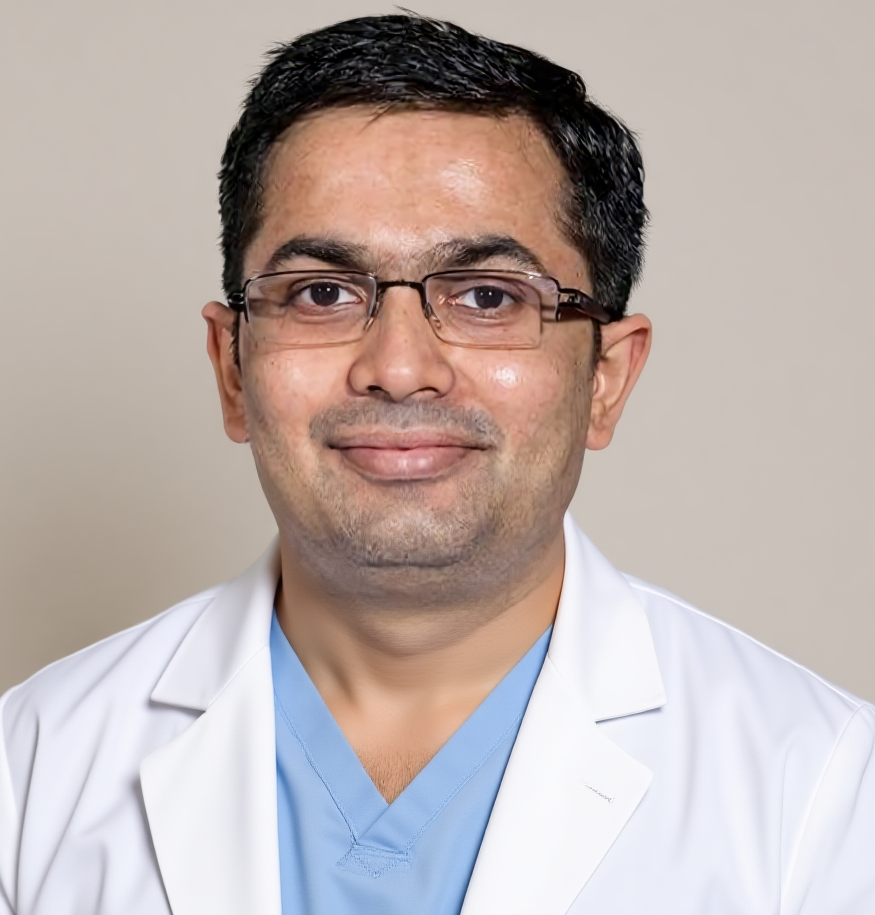
Dr Harsh Shah, anal canal cancer surgeon, Ahmedabad
Dr Harsh Shah — MS, MCh (Surgical Gastroenterology), DrNB (Surgical Gastroenterology).

Dr Harsh Shah. He trained at Maulana Azad Medical College and GB Pant Hospital in Delhi. His work is cancer and major surgery of the food pipe, stomach, liver, pancreas, gallbladder and bowel. He operates by the open and 3D HD laparoscopic routes. You see the same surgeon from the first visit to the last follow-up.

Dr Harsh Shah
MS, MCh (Surgical Gastroenterology), DrNB (Surgical Gastroenterology)
Registered with Gujarat Medical Council, Reg. No. G-38738
Gastro, Cancer & Laparoscopic Surgeon · Dr. Jivraj Mehta Hospital, Vasna, Ahmedabad

Google rating 4.94 from 18 reviews at Dr. Jivraj Mehta Hospital, Vasna, Ahmedabad.

Consultations are at Dr. Jivraj Mehta Hospital, Vasna in Ahmedabad. When an operation is needed, it is done at Dr. Jivraj Mehta Hospital, Vasna, Ahmedabad. Radiation is given by a radiation oncologist, and drugs by a medical oncologist. Dr Shah brings the team together and stays with you through the surgical part.

What anal canal cancer is

The anal canal is the last few centimetres of the bowel, held shut by the sphincter muscles. A cancer here behaves differently from a cancer of the rectum above it.

Most of these cancers grow from the skin-like lining of the canal. They are called squamous cell cancers. A smaller group start from glands and are called adenocarcinomas. A few are melanomas. The cell type decides the treatment, so the slide report matters more than any scan.

Cell type and the usual first treatment
Cell typeUsual first treatment
Squamous cell cancer.Radiation with chemotherapy. Surgery is held back.
Small growth at the outer skin edge.Sometimes a local removal alone.
Adenocarcinoma.Treated like a low rectal cancer, with drugs, radiation and surgery.
Melanoma.Surgery is usually central, with the oncology team.

Signs that should not be ignored

Bleeding from the anus is not always piles. A lump or ulcer that stays, or keeps coming back after piles treatment, needs a biopsy.

  • Bleeding with stool that continues despite treatment for piles.
  • A hard lump or non-healing sore at or inside the anus.
  • Itching, discharge or a change in stool shape.
  • Feeling of incomplete emptying, or leakage of stool.
  • Pain on passing stool that does not settle like a fissure would.
  • A swelling in the groin, which may be a node.

Piles, fissures and cancer can sit side by side. A doctor who examines the canal and takes a small piece of any suspicious area removes the doubt early.

Tests that decide the plan

A good work-up answers three questions. What cell type is it? How far has it grown? Have nodes or distant organs been reached?

  1. Biopsy. It confirms the cell type. Staining tests on the slide are sometimes added.
  2. Examination under anaesthesia. It shows the size and the muscles involved, and allows a deeper biopsy.
  3. MRI of the pelvis. It maps the tumour, the sphincter and the nodes around the canal.
  4. CT of chest and belly. It looks for spread to the liver or lungs.
  5. PET scan, in selected patients. It can show small nodes that other scans miss.
  6. Groin check. The nodes in the groin are examined, and a needle test is done if one is enlarged.
  7. Blood tests and HIV status. They guide the dose of drugs and radiation.

Why the first treatment is not usually an operation

Radiation with chemotherapy shrinks and clears most squamous anal cancers while keeping the muscles that hold stool. That is why it comes first.

The usual course lasts several weeks. Radiation is given daily, with chemotherapy given along with it. The aim is to remove the cancer and keep the patient’s own bowel control. A scan or examination follows after some weeks, because the tumour may take time to melt away. Going to surgery too soon would take out a canal that was still healing.

Many families hear “operation” first from a clinic that only does surgery. A surgeon who works with the oncology team has no reason to push an operation that is not needed.

When surgery does become necessary

Surgery is needed when cancer remains after radiation and drugs, when it returns, or when the cell type is a gland cancer. It is also used to rescue a blocked or damaged canal.

The situations where an operation enters the plan
SituationWhat surgery offers
Tumour still present after radiation and drugs.A rescue operation to remove what remains.
Cancer returns months or years later.A rescue operation, if scans show it can be removed.
Adenocarcinoma of the canal.Surgery as part of a combined plan.
Narrowing, a fistula or severe leakage.A stoma to rest the area and ease symptoms.
Enlarged groin nodes that did not clear.Removal of the groin nodes.
Very small growth at the outer edge.A local removal with a clear margin.

A decision to operate is made after a fresh scan and a repeat examination, not on the basis of the old report. If the cancer has cleared, no operation is advised, and regular checks follow instead.

The main operation, in plain words

The rescue operation removes the anal canal, the sphincter and the rectum together, and leaves a permanent stoma. It is a major operation, and it is done only when it is truly the right step.

  • Removal through the belly and the bottom. The lower bowel and anus are taken out as one piece, with the nodes around them.
  • A colostomy. The end of the bowel is brought out on the left side of the belly. A stoma nurse marks the right site beforehand.
  • A wound at the bottom. After radiation this wound heals slowly. A flap of healthy muscle and skin from the thigh or belly is often used to fill it.
  • Groin node removal, only if the nodes are involved.

A colostomy is not the end of a normal life. Patients return to work, travel and family functions. Teaching starts before the operation, so that care of the stoma feels familiar by the time you go home.

How a plan is made here

Every case is discussed by the tumour board before any decision. For anal canal cancer the board checks the cell type first, then asks whether surgery is needed at all.

  1. First visit. Dr Shah takes the history, examines you and reads every report himself.
  2. Gaps filled. A missing slide review, MRI or groin check is arranged first.
  3. Tumour board. The surgeon, radiation oncologist, medical oncologist and radiologist agree the order of treatment.
  4. Family meeting. The plan is explained in plain words, with the choices and the risks.
  5. Reassessment. After radiation and drugs, the response is judged by examination and scan, and the surgical question is answered then.

Getting ready, whatever the plan

A patient who enters treatment in good condition tolerates radiation and surgery better. Preparation is part of the plan.

  • Protein-rich food, with a dietitian’s advice, as radiation can lower appetite.
  • Control of sugar and blood count before treatment begins.
  • Stopping smoking, which slows healing of the skin and the flap.
  • Skin care advice, and sitz baths during radiation.
  • A meeting with the stoma nurse, if surgery is likely.
  • Discussion of fertility and sexual health before radiation, where relevant.

The risks, said plainly

Both radiation and surgery carry risks. Your own risks depend on your health and your stage, and are discussed in person before you agree to anything.

  • Skin soreness and tiredness during radiation. They are expected, and are treated with creams and rest.
  • Low blood counts during chemotherapy. They are checked often.
  • Changes in bowel habit and sexual function after radiation, which may last.
  • Slow healing of the bottom wound after surgery, especially in irradiated skin.
  • Infection, bleeding, or trouble passing urine after a major pelvic operation.
  • Hernia near the stoma, which can appear later.
  • The cancer coming back. It can happen even after good treatment, which is why follow-up goes on for years.

Recovery and follow-up

After radiation, recovery takes weeks as the skin and bowel settle. After a rescue operation, the hospital stay is longer and the wound at the bottom needs time and care.

The usual path after treatment
WhenWhat happens
During radiation.Daily visits, weekly blood tests and skin care.
Some weeks after.Examination and MRI to judge the response.
After an operation, in hospital.Drains, pain relief, stoma teaching, and early walking.
Going home.Eating well, walking, and managing the stoma and the wound.
Following years.Regular examinations, scans and blood tests, spaced out with time.

Keep every report and the radiation summary. They tell any future doctor exactly what has already been done.

When a second opinion helps

A second opinion is most useful before a stoma operation is booked, or when the advice is simply “operate now”. It is also useful when a growth called piles is still there.

Signs that a second look would help
What you noticeWhy it matters
Surgery was advised first for a squamous cancer.Radiation with drugs is usually the first step.
A stoma was planned with no tumour board discussion.A team view may avoid or delay it.
The growth was treated as piles with no biopsy.The cell type is still unknown.
Radiation finished, but no one has examined you or ordered an MRI.The response has not been judged.
You were told nothing more can be done after a recurrence.Some recurrences can still be removed.

A second opinion that agrees with your plan is not wasted. Bring the biopsy slides, all scans on a disc and the full treatment summary.

Questions to ask any surgeon

  1. What is the exact cell type, and who reviewed the slides?
  2. Is radiation with chemotherapy the first step for my cancer?
  3. Has a tumour board seen my case?
  4. How will you judge whether the cancer has cleared?
  5. If surgery is needed, will I need a permanent stoma?
  6. How do you close the wound at the bottom after radiation?
  7. How often does your team do this operation?

What patients and families have said

★★★★★

“Dr. Harsh performed my wife’s gallbladder surgery and has been a thorough professional. He truly assuaged our concerns and treated us with great care. I have never met a surgeon who is consistently upbeat, and that makes a real difference to families whose loved ones are undergoing a surgical procedure.”

— Gaurav Roy, Google review

★★★★★

“Precise and excellent surgical operation done by Dr.Harsh Shah, I really appreciate their consultation and guidance.”

— bikash tarafdar, Google review

★★★★★

“Dr harsh operated my sister for liver cancer .we came for follow up .Now she is good. Thank u so much sir”

— Natu Vadalia, Google review

Reviews are reproduced exactly as written on Google. They speak about Dr Harsh Shah’s care in GI surgery, and do not name anal canal cancer.

From first visit to follow-up

  1. First consultation. At Dr. Jivraj Mehta Hospital, Vasna, with every report and slide.
  2. Completing the tests. Slide review, MRI or groin check, if anything is missing.
  3. Tumour board. A written plan follows.
  4. Radiation and drugs. Given with the oncology team, close to home when possible.
  5. Reassessment and surgery if needed. At Dr. Jivraj Mehta Hospital, Vasna, Ahmedabad.
  6. Follow-up. Regular checks, and a clear plan if anything changes.

Cost, insurance and admission

The cost depends on the tests, radiation, drugs, and whether surgery is needed. A written estimate is given before any admission.

Dr. Jivraj Mehta Hospital, Vasna, Ahmedabad, works with the major insurers and offers cashless admission. The insurance desk handles pre-authorisation. On admission, bring the biopsy slides, all scans on a disc, your medicines with doses, the insurance card and an identity proof. For questions before booking, call +91-63555-64601.

Frequently asked questions

Is anal canal cancer always treated with surgery?

No. Most squamous cell cancers are treated first with radiation and chemotherapy together. Surgery is kept for cancer that remains, returns, or is a gland type.

Will I need a permanent stoma?

Not for most patients. A permanent colostomy is needed only if a rescue operation removes the anal canal and sphincter. Many patients keep their own bowel control.

Can anal cancer be mistaken for piles?

Yes. Bleeding and a lump can look like piles for months. A growth that does not settle with treatment needs an examination and a biopsy.

How long does radiation with chemotherapy take?

The course usually runs for several weeks, with daily radiation. A scan and an examination some weeks later judge the response.

What happens if the cancer remains after radiation?

A fresh scan and examination are done. If it can be removed, a rescue operation is planned with the tumour board.

Where does Dr Harsh Shah see patients?

Consultations are at Dr. Jivraj Mehta Hospital, Vasna in Ahmedabad. Operations are at Dr. Jivraj Mehta Hospital, Vasna, Ahmedabad. Call +91-63555-64601 to book.

Where Dr Harsh Shah sees and operates

Dr. Jivraj Mehta Hospital, Vasna, Ahmedabad
Dr. Jivraj Mehta Hospital, Dr Jivraj Mehta Marg, Vasna, Ahmedabad 380007.
Operations, endoscopic procedures and hospital stay.
Google: Dr Harsh Shah · 4.94 · 18 reviews
Directions to Dr. Jivraj Mehta Hospital, Vasna · WhatsApp +91-63555-64601

Families come to Ahmedabad from across Gujarat, including Gandhinagar, Mehsana, Banaskantha, Nadiad, Anand, Bhavnagar, Rajkot, Jamnagar and Kutch, and from southern Rajasthan and western Madhya Pradesh.

Biopsy says anal cancer, or a growth was called piles and did not settle? Send the biopsy slide report, any MRI or CT, and your treatment papers so far. Dr Shah reads them before the visit, so the first meeting is about your plan and not about repeating tests. Call +91-63555-64601 · Bring reports to the visit

Tapping Book on WhatsApp will likely open the WhatsApp app on your phone.

Get health updates from Dr Harsh Shah on WhatsApp

Swasth Parivar: every week, practical advice on recovery, diet and warning signs. No advertising. Stop any time.

Your number is used for these updates and for the clinic to reach you. It is never sold or passed on. To stop, reply STOP on WhatsApp.

Dr Harsh Shah, Gastro, Cancer & Laparoscopic Surgeon, Ahmedabad
Privacy Overview

This website uses cookies so that we can provide you with the best user experience possible. Cookie information is stored in your browser and performs functions such as recognising you when you return to our website and helping our team to understand which sections of the website you find most interesting and useful.