

WhatsApp

Gallbladder or Bile Duct Cancer: Which Operation Fits?

Dr. Jivraj Mehta Hospital · Vasna, Ahmedabad

Tapping Book on WhatsApp will likely open the WhatsApp app on your phone.

Gallbladder and bile duct cancer surgeon in Ahmedabad · Dr. Jivraj Mehta Hospital, Vasna, Ahmedabad

Last updated: 24-Oct-2026

Gallbladder cancer and bile duct cancer need different operations. Where the tumour began decides how much liver, bile duct and gland tissue must come out.

The words “biliary cancer” or “gallbladder mass” on a report mark only the start of the story. One family hears that the liver is too involved. Another is told to begin months of drugs, though no liver surgeon has seen the films. Below is how the site is pinned down, and how Dr Shah chooses the next step.

Dr Harsh Shah, in plain facts

Dr Harsh Shah trained as a surgical gastroenterologist and holds two higher degrees in the field. His 18 years of practice cover liver, bile duct, pancreas and bowel cancer surgery.
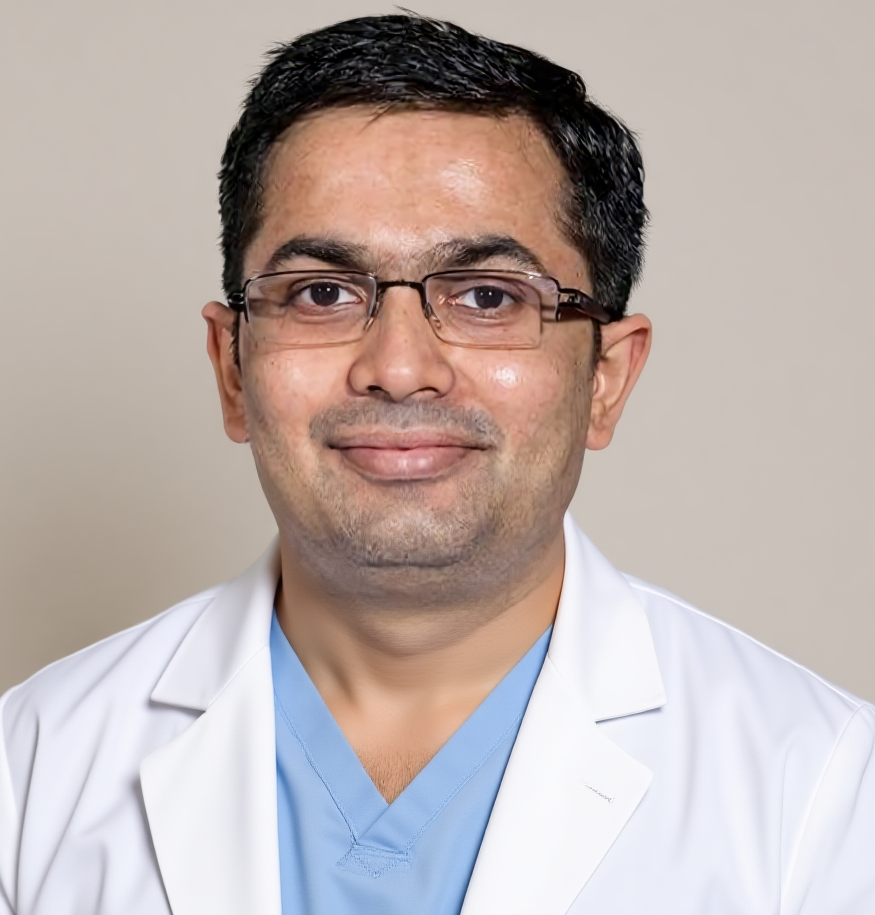
Dr Harsh Shah, gallbladder and bile duct cancer surgeon, Ahmedabad
Dr Harsh Shah — MS, MCh (Surgical Gastroenterology), DrNB (Surgical Gastroenterology).

Dr Harsh Shah. He trained at Maulana Azad Medical College and GB Pant Hospital in Delhi. His work is cancer and major surgery of the food pipe, stomach, liver, pancreas, gallbladder and bowel. He operates by the open and 3D HD laparoscopic routes. You see the same surgeon from the first visit to the last follow-up.

Dr Harsh Shah
MS, MCh (Surgical Gastroenterology), DrNB (Surgical Gastroenterology)
Registered with Gujarat Medical Council, Reg. No. G-38738
Gastro, Cancer & Laparoscopic Surgeon · Dr. Jivraj Mehta Hospital, Vasna, Ahmedabad

Google rating 4.94 from 18 reviews at Dr. Jivraj Mehta Hospital, Vasna, Ahmedabad.

Operations on the liver, the bile ducts and the gallbladder are part of his regular surgical work. He sees patients at Dr. Jivraj Mehta Hospital, Vasna in Ahmedabad and operates at Dr. Jivraj Mehta Hospital, Vasna, Ahmedabad. A web page cannot prove a surgeon’s skill, so this page sets out the method. Compare it with any other advice you have received.

What brings people in

Gallbladder cancer is often found by chance on a scan or after a stone operation. Bile duct cancer more often shows itself as yellow eyes.

  • Yellow eyes and skin, dark urine, pale stools and itching. The bile duct is blocked.
  • Pain under the right ribs that stays and does not look like a normal stone attack.
  • Weight loss and loss of appetite.
  • A thick gallbladder wall or a mass reported on ultrasound.
  • A surprise result in the pathology of a gallbladder removed for stones.

Any one of these can have a harmless cause. A new mass, or yellow eyes with no stone, should not be watched for weeks. It needs a proper scan.

Four sites, four different operations

Biliary cancer is named by where it starts. Each site has its own operation, and a surgeon who offers one plan for all four is not reading the scan closely.

The four tumour sites and the operation each one needs
SiteWhere it sitsUsual operation
Gallbladder.The wall of the gallbladder, next to the liver.Removal of the gallbladder with a wedge of liver and the glands around it.
Intrahepatic duct.A small duct inside the liver.Removal of the part of the liver that carries the tumour, with its glands.
Perihilar duct.The junction where the right and left ducts meet.Removal of the bile duct and a large part of the liver, then a new duct joined to the bowel.
Distal duct.The lower duct, inside the head of the pancreas.A Whipple operation.

Each of the four has its own page on this site: gallbladder cancer found after surgery, intrahepatic, perihilar and distal bile duct cancer.

Cancer found after gallbladder removal

Cancer found in the report of a gallbladder removed for stones is a common and frightening surprise. It does not mean the operation was wrong, and it does not always need another big one.

The question is how deep the cancer went into the wall. A very early cancer may need nothing more. A deeper one usually needs a second operation. It is done within a few weeks, to take a piece of liver and the glands. Before that, a new scan checks that the cancer has not spread. The scars of the first operation, and any spill of bile, are also checked.

  • Ask for the original pathology slip and the slides, not only the summary.
  • Ask whether the cystic duct edge was clear.
  • Do not let a port-site wound sit unexamined. It is looked at during the second operation.

How the scan and tests are read

A good scan answers three questions. How far does the tumour reach? Will the liver left behind be enough? Has the cancer spread? A surgeon who does this operation should read it.

  1. Multiphase CT or MRI with MRCP. It shows the tumour, the ducts, the liver vessels and the glands.
  2. CT of the chest. It looks for spread to the lungs.
  3. CA 19-9 and liver tests. The marker helps follow the response. A blocked duct can raise it on its own.
  4. PET scan, in selected patients. It is used when the scan leaves a doubt about distant spread.
  5. Biopsy. It is needed before drug treatment. It is not always needed before a clear-cut operation, and a needle through the gallbladder wall can spread cells.
  6. Fitness checks. Heart, lungs, sugar, nutrition and blood count.

Sometimes a keyhole look at the belly is done first. It can show small deposits on the lining that no scan can see. It then spares a patient a large cut that would not help.

Yellow eyes and the liver left behind

A large liver operation is safe only if the part left behind is healthy and big enough. That is why drainage and liver planning come before the cut.

When the duct is blocked, the liver is under strain. For a small operation, jaundice is often managed without a drain. For a big liver operation, the side that will stay is drained first. A stent or a thin tube is used until the bilirubin falls. The volume of the future liver is then measured on the scan.

  • If the remnant is small, the vein feeding the diseased side can be blocked in advance. The healthy side then grows over some weeks.
  • Infection in the duct is treated before surgery, not during it.
  • Nutrition is built up while the liver recovers.

How a plan is made here

A plan for biliary cancer is made by a team, and the order of treatment is written down. Nobody should start drugs or an operation before the group has agreed.

  1. First visit. Dr Shah takes the history, examines you and reads every scan himself.
  2. Gaps filled. A missing phase of the scan, a missing MRCP or a missing slide review is arranged first.
  3. Tumour board. A surgeon, a medical oncologist, a radiologist and a pathologist agree the sequence.
  4. Getting ready. Drainage, liver planning, nutrition, sugar and anaemia are handled.
  5. Family meeting. The plan, the choices and the risks are explained in plain words.

Keyhole or open

The route follows the tumour. Some gallbladder and liver operations suit keyhole surgery. A large perihilar tumour is usually safer through an open incision.

Dr Shah operates by both routes, so the choice is not limited by what one surgeon can do. A longer cut that removes the tumour with clear margins is better than a short cut that leaves disease behind.

Before the operation

The weeks before a liver and bile duct operation are used to make you stronger. Better nutrition and fitness lower the chance of a complication.

  • A dietitian plans high-protein food. Vitamin K is given when jaundice has lasted long.
  • Blood sugar is brought under control.
  • Smoking and alcohol stop at least two weeks before surgery.
  • Daily walking and a breathing exerciser prepare the chest.
  • Blood thinners and other medicines are reviewed.

The risks, said plainly

Liver and bile duct surgery is among the larger operations in the abdomen, and its risks are real. Your own risks are discussed at consent, in person.

  • Bile leak. Bile can seep from the liver edge or from a new join. A drain usually manages it, but some leaks need a procedure.
  • Liver weakness. After a large resection the liver may work poorly for some days. This is why the remnant is planned.
  • Bleeding. It can happen during the operation or some days later.
  • Infection. In the wound, the belly or the bile duct.
  • General risks. Clots in the legs or lungs, and heart or chest problems.
  • The risk to life. It is real. It is lower in a team that does these operations often, which is why the choice of surgeon matters.

After surgery, a fever, returning yellow eyes, new belly pain or a change in drain fluid is treated as a leak or a blocked join. This holds until it is shown otherwise. The consultant is told at once and a scan is done the same day.

Recovery and follow-up

Most patients sit out of bed on the day after surgery and go home in about a week to ten days. Drug treatment, if planned, starts once the wound and the liver have settled.

The usual path after a liver or bile duct operation
WhenWhat happens
First days.Sitting out of bed, walking, sips of water, and a drain near the wound.
Next few days.Liquids, then soft food. Liver tests and drain fluid are checked every day.
Going home.No fever, food kept down, drain out, walking alone and pain controlled on tablets.
Two weeks after.The final report is explained. Drug treatment is planned.
Following months.Drug treatment if advised, with blood tests and scans on a schedule.
Later years.Regular visits for scans, the marker, liver tests and nutrition.

The final report decides whether more treatment is advised. It is not a closing note, so keep every copy.

When a second opinion helps

A second opinion is most useful before treatment starts. Take one if you were told the tumour cannot be removed. Take one too if drugs were advised with no scan review.

Signs that a second look at the plan would help
What you noticeWhy it matters
You are told it cannot be operated, but no liver and bile duct surgeon has read the scan.Judging the liver and vessels is the surgeon’s task.
Your gallbladder was removed and cancer was found, but nobody has spoken of a second operation.A deeper cancer often needs one, and the weeks matter.
A needle biopsy was passed through a gallbladder mass.It may spread cells, and it is often not needed.
A stent was put in on both sides without planning.It may cause infection and complicate surgery.
You are offered an operation with no mention of the liver left behind.That is the main safety question.

A second opinion that agrees with your plan is not wasted. Bring every scan on a disc and all reports. Bring the pathology slides if you can get them, and a list of your medicines.

Questions to ask any surgeon about biliary cancer

  1. Where exactly did my cancer start, and how was that decided?
  2. Has a tumour board seen my case?
  3. Will I need a second operation, and when?
  4. How much liver will be left, and how was it measured?
  5. Do I need a drain or stent first?
  6. Will drug treatment come before or after the operation?
  7. How often does your team do this operation?
  8. Who treats a leak or a bleed if it happens?

What patients and families have said

★★★★★

“My mother was operated by Dr. Harsh Shah for gallstone disease, and she is doing very well now. We are very thankful to Dr. Harsh Shah for his excellent treatment, care, and support throughout the process. He is a highly skilled and experienced gastro surgeon. I would highly recommend him to anyone looking for a good gastro surgeon in Ahmedabad. Thank you, Doctor, for taking such good care of my mother”

— Sachin Yadav, Google review

★★★★★

“I am very thankful to Dr. Harsh Shah for treating me for gallstone disease and performing my laparoscopic cholecystectomy. The entire treatment and surgery were handled very professionally. Dr. Harsh Shah explained everything clearly and made me feel comfortable throughout the process. My recovery has been very good, and I am extremely satisfied with the care I received. Highly recommended for laparoscopic and gastrointestinal surgery.”

— Akshaya Shaw, Google review

Reviews are reproduced exactly as written on Google. They speak about Dr Harsh Shah’s care in complex GI surgery, and do not name gallbladder or bile duct cancer.

From first visit to follow-up

  1. First consultation. At Dr. Jivraj Mehta Hospital, Vasna, with every report and scan.
  2. Completing the tests. Scan, MRCP, biopsy or slide review, if anything is missing.
  3. Tumour board. A written plan follows.
  4. Getting ready. Drainage, liver planning and nutrition are handled.
  5. Treatment. Drugs first or operation first, as the plan says. Surgery is at Dr. Jivraj Mehta Hospital, Vasna, Ahmedabad.
  6. Report and follow-up. The final report is explained, and the follow-up plan starts.

Cost, insurance and admission

The cost depends on the tests, the operation and the days in hospital. A written estimate is given before admission.

Dr. Jivraj Mehta Hospital, Vasna, Ahmedabad, works with the major insurers and offers cashless admission. The insurance desk handles pre-authorisation. On admission, bring all scans on a disc, all reports, your medicines with doses, the insurance card and an identity proof. For questions before booking, call +91-63555-64601.

Frequently asked questions

Does Dr Harsh Shah operate on gallbladder and bile duct cancer himself?

Yes. He examines you, explains the plan and performs the operation himself at Dr. Jivraj Mehta Hospital, Vasna, Ahmedabad. He also sees you at every follow-up visit.

Is a second operation needed if cancer is found after gallbladder removal?

Often, if the cancer has gone deeper than the inner layer of the wall. It is done within a few weeks to take a piece of liver and the glands. A fresh scan and the original pathology slides decide this.

Can gallbladder or bile duct cancer be removed by surgery?

Sometimes. It depends on where it began, how far it reaches along the duct and the liver, and whether it has spread. A scan read by a liver and bile duct surgeon decides.

Do I need a biopsy before surgery?

Not always. A clear, removable tumour may go straight to operation. A needle through a gallbladder mass can spread cells, so it is avoided unless drug treatment must come first.

Is a stent needed for jaundice before the operation?

Not always. For a big liver operation, the side that will stay is often drained first until the bilirubin falls. The plan is made before any stent is placed.

Where does Dr Harsh Shah see patients and operate?

Consultation is at Dr. Jivraj Mehta Hospital, Vasna, Ahmedabad. Operations are at Dr. Jivraj Mehta Hospital, Vasna, Ahmedabad.

Where Dr Harsh Shah sees and operates

Dr. Jivraj Mehta Hospital, Vasna, Ahmedabad
Dr. Jivraj Mehta Hospital, Dr Jivraj Mehta Marg, Vasna, Ahmedabad 380007.
Operations, endoscopic procedures and hospital stay.
Google: Dr Harsh Shah · 4.94 · 18 reviews
Directions to Dr. Jivraj Mehta Hospital, Vasna · WhatsApp +91-63555-64601

Families come to Ahmedabad from across Gujarat, including Gandhinagar, Mehsana, Banaskantha, Nadiad, Anand, Bhavnagar, Rajkot, Jamnagar and Kutch, and from southern Rajasthan and western Madhya Pradesh.

Not sure what your gallbladder or bile duct report really means? Share the scan films, the MRCP, any pathology or biopsy report and your liver blood tests. A gallbladder removed lately? Add its pathology slip. Dr Shah goes through every page before you arrive. Call +91-63555-64601 · WhatsApp the files

Tapping Book on WhatsApp will likely open the WhatsApp app on your phone.

Get health updates from Dr Harsh Shah on WhatsApp

Swasth Parivar: every week, practical advice on recovery, diet and warning signs. No advertising. Stop any time.

Your number is used for these updates and for the clinic to reach you. It is never sold or passed on. To stop, reply STOP on WhatsApp.

Dr Harsh Shah, Gastro, Cancer & Laparoscopic Surgeon, Ahmedabad
Privacy Overview

This website uses cookies so that we can provide you with the best user experience possible. Cookie information is stored in your browser and performs functions such as recognising you when you return to our website and helping our team to understand which sections of the website you find most interesting and useful.