

WhatsApp

Oesophageal Cancer: Which Treatment Comes First?

Dr. Jivraj Mehta Hospital · Vasna, Ahmedabad

Tapping Book on WhatsApp will likely open the WhatsApp app on your phone.

Oesophageal cancer surgeon in Ahmedabad · Dr. Jivraj Mehta Hospital, Vasna, Ahmedabad

Last updated: 24-Oct-2026

For most oesophageal cancers, the order of treatment matters as much as the operation itself. Drugs, radiation and surgery each have a place, and the scan decides which one leads.

A report that says “growth in the food pipe” starts a hard season for a family. Some are told to go straight to surgery. Others are sent for radiation with no word on whether an operation is still possible. This page explains how the first steps are chosen, and what Dr Shah looks for before he advises any of them.

About the surgeon

Dr Harsh Shah is a surgical gastroenterologist. His 18 years of practice include operations on the food pipe, stomach, liver, pancreas and bowel.
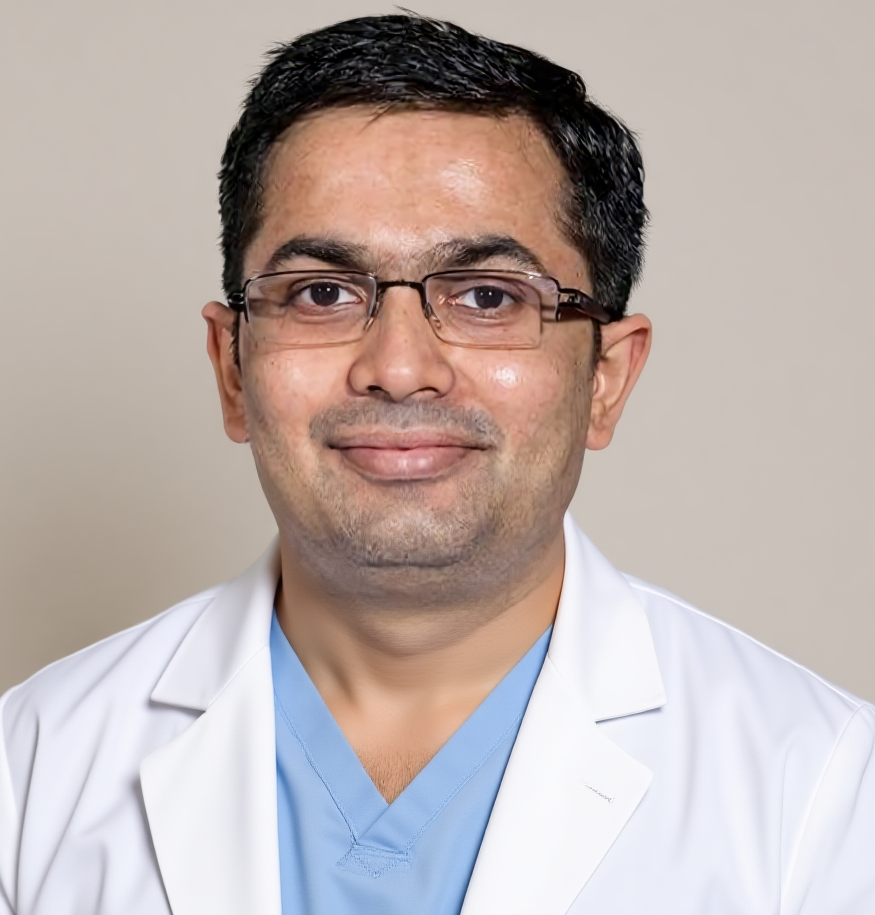
Dr Harsh Shah, oesophageal cancer surgeon, Ahmedabad
Dr Harsh Shah — MS, MCh (Surgical Gastroenterology), DrNB (Surgical Gastroenterology).

Dr Harsh Shah. He trained at Maulana Azad Medical College and GB Pant Hospital in Delhi. His work is cancer and major surgery of the food pipe, stomach, liver, pancreas, gallbladder and bowel. He operates by the open and 3D HD laparoscopic routes. You see the same surgeon from the first visit to the last follow-up.

Dr Harsh Shah
MS, MCh (Surgical Gastroenterology), DrNB (Surgical Gastroenterology)
Registered with Gujarat Medical Council, Reg. No. G-38738
Gastro, Cancer & Laparoscopic Surgeon · Dr. Jivraj Mehta Hospital, Vasna, Ahmedabad

Google rating 4.94 from 18 reviews at Dr. Jivraj Mehta Hospital, Vasna, Ahmedabad.

He sees patients at Dr. Jivraj Mehta Hospital, Vasna in Ahmedabad and operates at Dr. Jivraj Mehta Hospital, Vasna, Ahmedabad. A web page cannot show a surgeon’s skill. So this page shows the method instead. Hold it against any other advice you have been given.

How food pipe cancer first shows itself

The first sign is almost always trouble swallowing. It starts with solid food and slowly moves to soft food and then liquids.

  • Food that sticks behind the breastbone. Many people change what they eat without noticing.
  • Weight loss that was not planned, often by several kilos.
  • Pain or burning when swallowing, or a feeling of pressure in the chest.
  • Bringing food back soon after a meal, or a cough at night.
  • Black stools or tiredness from slow blood loss.
  • Long-standing acid reflux in someone who has never had an endoscopy.

Many harmless problems cause these signs. Swallowing trouble that is new and keeps worsening is never a thing to watch for weeks. It needs an endoscopy.

Where the tumour sits changes the plan

The food pipe is long, and a tumour in the neck end is treated differently from one near the stomach. Two main cell types, squamous and adenocarcinoma, also behave differently.

Level of the tumour and the usual first approach
LevelWhat is nearbyUsual first approach
Upper third.The voice box, windpipe and neck vessels.Radiation with drugs is often first, to keep the voice and the swallow.
Middle third.The windpipe, the main airway branches and the aorta.Drugs with radiation, then a scan to judge an operation.
Lower third.The diaphragm and the upper stomach.Drugs with or without radiation, then an operation.
Junction with the stomach.The upper stomach and its glands.Drugs before and after surgery, or drugs with radiation first.

Each level has its own page on this site: upper third, middle third, lower third and the stomach junction.

The tests that decide the order

A good work-up answers three questions. How deep is the tumour? Have the glands or other organs been reached? Is the patient strong enough for the plan?

  1. Endoscopy with biopsy. It shows the length, the level and the cell type.
  2. Endoscopic ultrasound. It measures the depth and looks at nearby glands. It is the most reliable test for an early stage, so it is not skipped lightly.
  3. CT of the chest and belly. It looks for spread to the liver, lungs and distant glands.
  4. PET scan. It is used when the plan depends on a doubtful spot.
  5. Bronchoscopy. It is done when an upper or middle tumour lies close to the windpipe.
  6. Fitness review. Heart, lungs, sugar, nutrition, blood count and kidney tests.

Sometimes a keyhole look at the belly comes first. It can show small deposits on the lining that no scan can see, and it spares a patient a large operation that would not help.

Drugs, radiation or surgery first?

Very early cancers can be treated through the endoscope. Larger ones usually need drugs, with or without radiation, before surgery. A tumour in the neck end may be treated by radiation alone.

Common starting points, by stage
SituationUsual first stepSurgery’s role
Tumour limited to the inner layer.Removal through the endoscope.Kept for tumours that go deeper than expected.
Tumour into the wall, glands doubtful.Drugs with radiation, or drugs alone for some adenocarcinomas.The main operation, after a gap of some weeks.
Neck-end tumour.Drugs with radiation.Held back for a tumour that returns or does not shrink.
Spread to distant organs.Drug treatment, often with a stent or feeding tube.Not the first tool.

The board may also ask for a repeat scan after the first phase. Most plans have a pause point where the group looks again and chooses between operation and watching. That choice is made with you, not for you.

How a plan is made here

Food pipe cancer is handled by a team, and the sequence is written down. Nobody should begin drugs, radiation or an operation before the group has agreed.

  1. First visit. Dr Shah takes the history, examines you and reads every scan himself.
  2. Gaps filled. A missing ultrasound, a missing PET or a missing slide review is arranged first.
  3. Tumour board. A surgeon, a medical oncologist, a radiation oncologist and a radiologist agree the sequence.
  4. Getting ready. Swallowing support, nutrition, sugar and anaemia are handled while treatment is planned.
  5. Family meeting. The plan, the choices and the risks are explained in plain words.

Eating well before treatment

A patient who cannot swallow loses strength fast, and a weak patient has a harder operation. Feeding is therefore part of the cancer plan, not an extra.

  • Soft, high-protein food in small meals, with ready-made supplements if needed.
  • A thin feeding tube, placed through the nose or the belly, if swallowing has failed.
  • A stent only when the patient cannot wait for treatment to open the way.
  • Stopping smoking and alcohol at least two weeks before an operation.
  • Daily walking and a breathing exerciser to prepare the chest.

The operation, in plain words

An oesophagectomy removes the diseased food pipe and the nearby glands. The stomach is usually shaped into a tube and lifted up to take its place.

The common routes and what each one means
RouteWhere the cuts goWhere the join sits
Two-stage (Ivor Lewis).The belly and the right chest.Inside the chest.
Three-stage (McKeown).The belly, the right chest and the neck.In the neck.
Through the diaphragm (transhiatal).The belly and the neck, without opening the chest.In the neck.

The route follows the level of the tumour and the fitness of the patient. Some of these operations suit keyhole work. Others are safer through a larger cut. A longer cut that removes the tumour with clear edges is better than a short cut that leaves disease behind.

The risks, said plainly

An oesophagectomy is one of the larger operations in surgery, and its risks are real. Your own risks are discussed at consent, in person.

  • Leak at the join. The new join can seep in the first days. It is watched for closely and treated early, sometimes with a stent or a drain.
  • Chest infection. It is the most common problem. Walking and breathing exercises start the day after.
  • Voice change. A nerve near the neck can be bruised. It often recovers.
  • Narrowing of the join. It can show weeks later as trouble swallowing. A simple stretch usually helps.
  • Reflux and small meals. The new tube does not hold food down as before, so sleeping propped up and eating small meals become habits.
  • The risk to life. It is real. It is lower in a team that does these operations often, which is why the choice of surgeon matters.

After surgery, a fever, a fast pulse, new chest pain or a change in drain fluid is treated as a leak until it is shown otherwise. The consultant is told at once and a scan is done the same day.

Recovery and follow-up

The first days are in the intensive care unit, with a drain and a feeding tube. Mouth feeding begins only after the join is checked.

The usual path after an oesophagectomy
WhenWhat happens
First days.Intensive care, sitting out of bed, breathing exercises, and feeding through the tube.
About a week.A swallow test shows the join has sealed. Sips of water begin.
Next days.Liquids, then soft food in small amounts. Drains come out.
Going home.No fever, food kept down, walking alone, and the family trained in tube care.
Two weeks after.The final report is explained. Further treatment is planned.
Following months and years.Regular visits for weight, swallowing, scans and nutrition.

The final report decides whether more treatment is advised. It is not a closing note, so keep every copy.

When a second opinion helps

A second opinion is most useful before treatment starts. Take one if you were told the tumour cannot be operated on, or if radiation was advised with no surgeon in the room.

Signs that a second look at the plan would help
What you noticeWhy it matters
You are told it cannot be operated, but no food pipe surgeon has read the scan.Judging the windpipe, aorta and glands is the surgeon’s task.
Radiation was started with no endoscopic ultrasound.The depth and the glands may have been judged wrongly.
A metal stent was put in before any plan was made.It can make a later operation harder.
You are offered an operation with no talk of nutrition.A weak patient faces higher risk.
The scan after treatment looks clear, but nobody has discussed what comes next.Choosing between operation and watching is a joint decision.

A second opinion that agrees with your plan is not wasted. Bring every scan on a disc and all reports. Bring the biopsy slides if you can get them, and a list of your medicines.

Questions to ask any surgeon about food pipe cancer

  1. Which cell type is it, and at what level?
  2. Has an endoscopic ultrasound been done?
  3. Will treatment begin with drugs, radiation or surgery, and why?
  4. Has a tumour board seen my case?
  5. How will I be fed before and after treatment?
  6. Where will the join be, in the chest or the neck?
  7. How often does your team do this operation?
  8. Who treats a leak if one happens?

What patients and families have said

★★★★★

“My mother had colon cancer which came back again.There was cancer in urine bag and vagina. It was big pelvic tumour.She underwent pelvic Examination by Dr. Swati and harsh saha.After surgery my mother is absolutely very good now.Thank you so much ma'am and sir.”

— Ruby Pathan, Google review

Reviews are reproduced exactly as written on Google. They speak about Dr Harsh Shah’s care in complex GI surgery, and do not name oesophageal cancer.

From first visit to follow-up

  1. First consultation. At Dr. Jivraj Mehta Hospital, Vasna, with every report and scan.
  2. Completing the tests. Ultrasound, PET or slide review, if anything is missing.
  3. Tumour board. A written plan follows.
  4. Getting ready. Feeding, fitness and breathing work are handled.
  5. Treatment. Drugs, radiation or surgery first, as the plan says. Surgery is at Dr. Jivraj Mehta Hospital, Vasna, Ahmedabad.
  6. Report and follow-up. The final report is explained, and the follow-up plan starts.

Cost, insurance and admission

The cost depends on the tests, the treatment and the days in hospital. A written estimate is given before admission.

Dr. Jivraj Mehta Hospital, Vasna, Ahmedabad, works with the major insurers and offers cashless admission. The insurance desk handles pre-authorisation. On admission, bring all scans on a disc, all reports, your medicines with doses, the insurance card and an identity proof. For questions before booking, call +91-63555-64601.

Frequently asked questions

Does Dr Harsh Shah operate on oesophageal cancer himself?

Yes. He examines you, explains the plan and performs the operation himself at Dr. Jivraj Mehta Hospital, Vasna, Ahmedabad. He also sees you at every follow-up visit.

Is surgery always the first step for food pipe cancer?

No. Many tumours are treated first with drugs, with or without radiation, and surgery follows after a repeat scan. Only a very early tumour may be removed through the endoscope.

Can I eat normally after an oesophagectomy?

Mostly yes, but in small meals. The new food tube does not hold food down as before, so you eat little and often and sleep propped up.

Why is an endoscopic ultrasound needed?

It shows how deep the tumour goes and whether nearby glands are involved. This decides whether to start with drugs, radiation or an operation.

Is a stent or feeding tube needed before treatment?

Not always. A thin feeding tube is placed if swallowing has failed and strength is falling. A stent is kept for patients who cannot wait for treatment to open the way.

Where does Dr Harsh Shah see patients and operate?

Consultation is at Dr. Jivraj Mehta Hospital, Vasna, Ahmedabad. Operations are at Dr. Jivraj Mehta Hospital, Vasna, Ahmedabad.

Where Dr Harsh Shah sees and operates

Dr. Jivraj Mehta Hospital, Vasna, Ahmedabad
Dr. Jivraj Mehta Hospital, Dr Jivraj Mehta Marg, Vasna, Ahmedabad 380007.
Operations, endoscopic procedures and hospital stay.
Google: Dr Harsh Shah · 4.94 · 18 reviews
Directions to Dr. Jivraj Mehta Hospital, Vasna · WhatsApp +91-63555-64601

Families come to Ahmedabad from across Gujarat, including Gandhinagar, Mehsana, Banaskantha, Nadiad, Anand, Bhavnagar, Rajkot, Jamnagar and Kutch, and from southern Rajasthan and western Madhya Pradesh.

Holding an endoscopy or biopsy report for the food pipe? Send the endoscopy report, the biopsy slip, the CT or PET films and any blood tests. If a feeding tube or stent has been placed, say so. Dr Shah reads every page before you come in, so the visit starts with a plan and not with questions. Call +91-63555-64601 · Bring reports to the visit

Tapping Book on WhatsApp will likely open the WhatsApp app on your phone.

Get health updates from Dr Harsh Shah on WhatsApp

Swasth Parivar: every week, practical advice on recovery, diet and warning signs. No advertising. Stop any time.

Your number is used for these updates and for the clinic to reach you. It is never sold or passed on. To stop, reply STOP on WhatsApp.

Dr Harsh Shah, Gastro, Cancer & Laparoscopic Surgeon, Ahmedabad
Privacy Overview

This website uses cookies so that we can provide you with the best user experience possible. Cookie information is stored in your browser and performs functions such as recognising you when you return to our website and helping our team to understand which sections of the website you find most interesting and useful.