

Dr. Jivraj Mehta Hospital · Vasna, Ahmedabad
Stomach cancer surgeon in Ahmedabad · Dr. Jivraj Mehta Hospital, Vasna, Ahmedabad
Last updated: 23-Oct-2026
A good stomach cancer operation is judged by the steps around it. Firm diagnosis, full staging, a tumour board, the right extent and a close follow-up.
Families who hear the words stomach cancer often ask one question first. Who should do the operation? A name alone does not answer it. What answers it is how the surgeon works. This page sets out the marks of a careful stomach cancer operation, in plain words, so you can check any plan you are given. It also explains how Dr Harsh Shah meets each mark, from the first visit to the last follow-up. It does not repeat every detail of each operation. Those are on the stomach cancer treatment page and the linked pages below. Here the subject is the surgeon and the method.
Dr Harsh Shah is a surgical gastroenterologist with two higher degrees in that field. He has 18 years of experience in GI and cancer surgery.
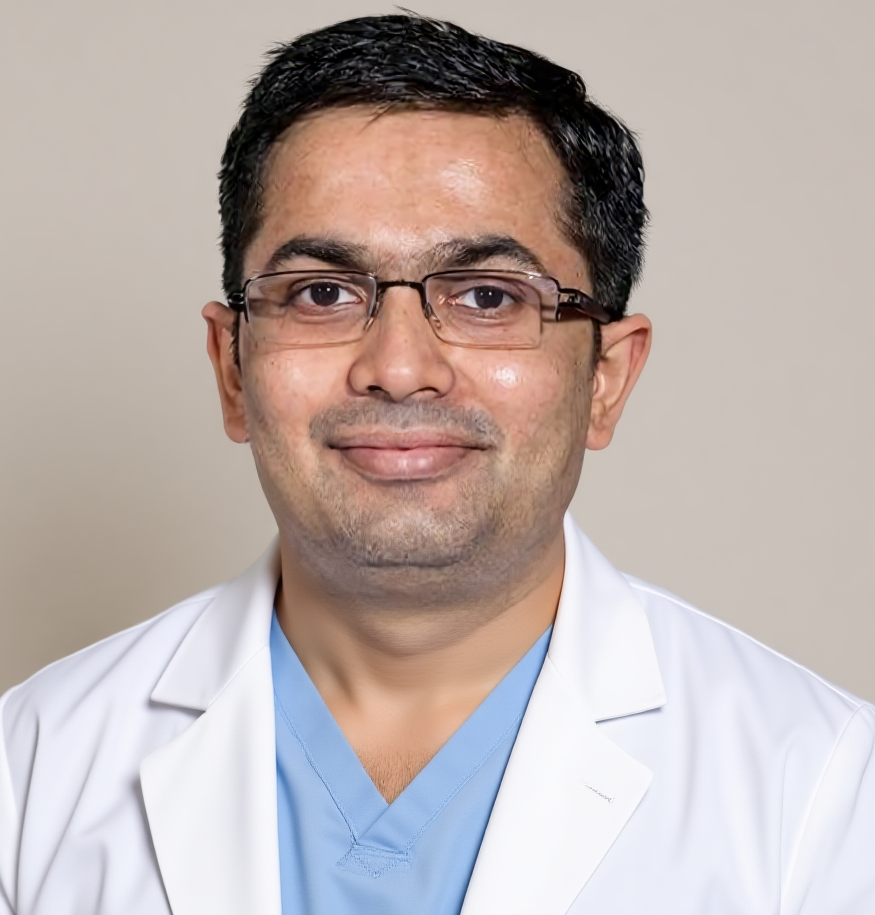
Dr Harsh Shah. He trained at Maulana Azad Medical College and GB Pant Hospital in Delhi. His work is cancer and major surgery of the food pipe, stomach, liver, pancreas, gallbladder and bowel. He operates by the open and 3D HD laparoscopic routes. You see the same surgeon from the first visit to the last follow-up.
Dr Harsh Shah
MS, MCh (Surgical Gastroenterology), DrNB (Surgical Gastroenterology)
Registered with Gujarat Medical Council, Reg. No. G-38738
Gastro & Cancer Surgeon · Dr. Jivraj Mehta Hospital, Vasna, Ahmedabad
Google rating 4.94 from 18 reviews at Dr. Jivraj Mehta Hospital, Vasna, Ahmedabad.
Stomach cancer surgery is a core part of his work. He sees patients at Dr. Jivraj Mehta Hospital, Vasna in Ahmedabad and operates at Dr. Jivraj Mehta Hospital, Vasna, Ahmedabad. What you can check, before you decide, is his method. The rest of this page sets it out.
The operation depends on where the cancer sits, its type and its stage. Each one below has its own page with the detail.
| Operation | When it is usually chosen |
|---|---|
| Staging laparoscopy with washings. | Before a planned removal, to check the lining of the abdomen for spread that scans miss. |
| Subtotal (distal) gastrectomy with D2 lymph node removal. | A cancer in the lower stomach, with enough healthy stomach above it. |
| Total gastrectomy with D2 lymph node removal. | A cancer in the upper or middle stomach, or the diffuse type. |
| Operation for a cancer at the junction with the food pipe. | A cancer at the top of the stomach. The level decides the operation. |
| Bypass or feeding tube. | When food cannot pass and removal is not the right step. |
For a very early cancer that sits only in the lining, removal through the scope may be enough. That is done by an endoscopist. Dr Shah will tell you if your case fits, and refer you. The pages on distal gastrectomy, total gastrectomy and cancer at the junction explain each one.
These six marks apply to any surgeon and any hospital. Use them to check the plan you have been given, here or elsewhere.
| Mark | Question to ask | Why it matters |
|---|---|---|
| A firm diagnosis. | How many biopsies were taken? | The standard is at least six. Too few can miss the cancer or its type. |
| Full staging. | Has a CT scan and a staging laparoscopy been done? | Spread to the lining is often too small for any scan. |
| A tumour board. | Has a team seen my case? | A surgeon, a cancer physician, a radiologist and a pathologist see more together. |
| The right order. | Will I have chemotherapy first? | For many stomach cancers, treatment before the operation is the standard. |
| The right extent. | How much stomach, and which lymph nodes? | Clear margins and a D2 node removal lower the chance of a return. |
| A plan for after. | Who follows me up, and how often? | Eating, vitamins and early signs of a return all need watching. |
Treatment starts only when the biopsy has confirmed cancer and its type. A doubtful report is repeated within days, not left to wait.
The endoscopy report should say where the cancer is. Its distance from the food pipe and from the stomach outlet decides how much stomach must go. At least six biopsies are taken from the edge of the ulcer or the lump. Blood tests check for low blood count, iron and vitamin B12. A CT scan of the chest, abdomen and pelvis looks for spread. An endoscopic ultrasound is added when its answer would change the plan. A PET scan is not routine for stomach cancer. If the cancer has spread, the biopsy is tested for markers called HER2, PD-L1 and MSI. Those results guide which drugs are used, so they are back before treatment starts.
No plan to remove a stomach cancer is made by one doctor alone. Every case that has not spread goes to the tumour board first.
The board also sees cases where cancer cells were found in the washings, where spread is limited, and where an operation after chemotherapy is being weighed. Cancer cells in the washings are treated as spread, even when nothing can be seen. The page on deciding whether an operation will help explains this step in detail.
For a fit patient whose cancer is past the earliest stage, chemotherapy usually comes first. The operation follows a few weeks after it ends.
The usual plan is a four-drug combination called FLOT. It is given in cycles before the operation, and again after recovery. A two-drug plan is used when four drugs would be too strong for you. Your fitness is scored at every visit. Food often becomes hard during this time, so nutrition is planned from the start. If food cannot pass, a feeding tube into the small bowel is the usual bridge. The aim is simple. Chemotherapy should not stop halfway because of weight loss.
The route is chosen for the cancer, not the other way round. Keyhole and robotic surgery suit many lower stomach cancers. Larger operations are often open.
Dr Shah operates by all three routes, so the choice is not limited by what one surgeon can do. Trials have shown that keyhole surgery is a safe choice for cancer in the lower stomach. For a bulky cancer, a cancer stuck to another organ, or a whole stomach removal, the open route is often chosen. That choice is made on his judgement for your case. Whatever the route, the same rules apply. The margins must be clear, and the same lymph nodes must be removed. Ask which route is planned for you, and why.
A complete operation removes the cancer with clear margins and a D2 lymph node removal. Healthy organs nearby are kept unless the cancer demands otherwise.
The final report from the pathologist shows whether these standards were met. Dr Shah explains that report to you in person, about two weeks after the operation. It tells the team whether more treatment is needed. For the margin question in upper and middle stomach cancers, see the gastric body cancer margin page.
The weeks before the operation are used to make you stronger. Walking, breathing exercises, good food and stopping smoking all lower the risks.
Stomach cancer surgery is a major operation with real risks, including a leak from the join. Your own risks are discussed at consent, in person.
A fast pulse, fever, new pain or a change in the drain fluid after surgery is treated as a leak until proven otherwise. The consultant surgeon is told at once, and a scan is done the same day.
Most patients sit out of bed on the day of surgery and move from liquids to soft food over a few days. Follow-up continues for five years.
| When | What happens |
|---|---|
| Day of the operation. | Sitting out of bed, small sips of water, and pain relief with little morphine. |
| The next few days. | Liquids, then soft food. Walking several times a day. |
| Going home. | No fever, soft food kept down, walking alone and pain controlled on tablets. |
| Two weeks after. | The final report is explained. Chemotherapy and diet are planned. |
| First two years. | A check every three months, with scans on schedule. |
| Up to five years. | A check every six months, then yearly. |
After a total gastrectomy, vitamin B12 injections are needed for life. After a subtotal gastrectomy, an endoscopy is done at one year. The same surgeon sees you at each visit.
A second opinion is most useful before the operation. Take one if a key step is missing, or if you are unsure of the plan.
| What you notice | Why it matters |
|---|---|
| An operation is booked with no CT of the chest and abdomen. | Spread to the lungs or liver changes the plan. |
| No staging laparoscopy, for a cancer past the earliest stage. | Spread to the lining is often missed on scans. |
| Surgery first, with no talk of chemotherapy. | For many stomach cancers, chemotherapy comes first. |
| No tumour board has seen your case. | Every plan to remove the cancer should be seen by one. |
| You are told nothing can be done. | Treatment that helps may still be possible. |
A second opinion that agrees with your plan is not wasted. You start treatment with no question left open. Bring every report, the biopsy slides if you can get them, the CT on a disc and a list of your medicines.
★★★★★
“My father has carcinoma of stomach ,Harsh sir did radical gastrectomy and he is recovering very nicely under Dr.Harsh's observation ,he listen each and every complain calmly and with patience and make patient very comfortable during treatment , during procedure and during stay at hospital. we are satisfied with the treatment and very confident about the fully recovery of disease as we are under treatment of Dr.Harsh & team.Thank you Dr.Harsh & his whole team and staff.”
— tina parmar, Google review
★★★★★
“Excellent doctor for stomach cancer. We r very happy. Recommend for gastro cancer treatment in Ahmedabad”
— Purshottam Meena, Google review
★★★★★
“Met with Dr. Harsh Shah for the consultation of one of my relative. Dr. Harsh Shah is an exceptional surgical oncologist in Ahmedabad. His expertise in treating complex GI cancers like liver, pancreas, and colon cancers is truly remarkable. He explains everything clearly and gives patients full confidence in their treatment. Highly recommended for anyone looking for a skilled and compassionate cancer specialist.”
— Nagesh Patidar, Google review
Reviews are reproduced exactly as written on Google. The first two speak about stomach cancer care by Dr Harsh Shah. The third speaks about his cancer care in general.
A patient speaks about recovery after stomach cancer surgery by Dr Harsh Shah. Recorded and shared with consent. Every patient’s plan and recovery are different.
The cost depends on the tests, the chemotherapy, the operation and the days in hospital. A written estimate is given before admission.
Dr. Jivraj Mehta Hospital, Vasna, Ahmedabad, works with the major insurers and offers cashless admission. The insurance desk handles pre-authorisation. The staging laparoscopy is a short separate admission, and its cost is shared in advance. On admission, bring all scans on a disc, all reports, your medicines with doses, the insurance card and an identity proof. For questions before booking, call +91-63555-64601.
Yes. He examines you, explains the plan and performs the operation himself at Dr. Jivraj Mehta Hospital, Vasna, Ahmedabad. He also sees you at every follow-up visit.
Check six things. A firm diagnosis, full staging, a tumour board, the right order of treatment, clear margins with a D2 node removal, and a follow-up plan.
Not always. It is the usual plan for a fit patient whose cancer is past the earliest stage. A very early cancer may need only the operation, or removal through the scope.
No route is right for every case. Keyhole and robotic surgery suit many lower stomach cancers. Larger operations are often done open. The route is chosen for your cancer.
Yes. Bring every report, the biopsy slides if possible, the CT on a disc and your medicine list. Reports can be sent on WhatsApp before the visit.
Consultations are at Dr. Jivraj Mehta Hospital, Vasna in Ahmedabad. Operations are at Dr. Jivraj Mehta Hospital, Vasna, Ahmedabad.
Dr. Jivraj Mehta Hospital, Vasna, Ahmedabad
Dr. Jivraj Mehta Hospital, Dr Jivraj Mehta Marg, Vasna, Ahmedabad 380007.
Operations, endoscopic procedures and hospital stay.
Google: Dr Harsh Shah · 4.94 · 18 reviews
Directions to Dr. Jivraj Mehta Hospital, Vasna · WhatsApp +91-63555-64601
Families come to Ahmedabad from across Gujarat, including Gandhinagar, Mehsana, Banaskantha, Nadiad, Anand, Bhavnagar, Rajkot, Jamnagar and Kutch, and from southern Rajasthan and western Madhya Pradesh.
Been told you need stomach cancer surgery? Send the endoscopy and biopsy reports, the CT scan on a disc and recent blood tests ahead of your visit. The consultation then starts with them already read. The plan is made at the consultation, after examination. Call +91-63555-64601 · Send the reports on WhatsApp
Swasth Parivar: every week, practical advice on recovery, diet and warning signs. No advertising. Stop any time.
Your number is used for these updates and for the clinic to reach you. It is never sold or passed on. To stop, reply STOP on WhatsApp.